Britain is not facing a freak season. It is facing a warning shot. By late April 2026, a record 29,200 hectares had already burned across the UK, turning a familiar spring landscape into a geopolitical stress point. What should have been a damp, green start to the year has instead exposed how quickly British land can become combustible.
For readers looking to understand the scale of this shift, the headline figure matters. So does where the damage is happening, why long-standing natural protections are failing, and what that means for communities, supply chains and climate resilience. As an independent news uk source committed to the untold stories, this crisis demands more than surface-level reporting.
1. The 29,200-hectare figure changes the conversation
This is not a marginal increase or an unusually bad patch of weather. Reaching 29,200 hectares burned before summer has properly begun marks a sharp break from what Britain has historically considered normal wildfire risk. It signals that the burn season is starting earlier, stretching longer and striking harder.
That figure also reframes the crisis politically. Once this much land is lost so early in the year, the issue moves beyond local incident reporting and into national resilience. Land use, emergency planning, insurance exposure and rural economic stability all come under pressure at once.
2. Galloway Forest has become a frontline
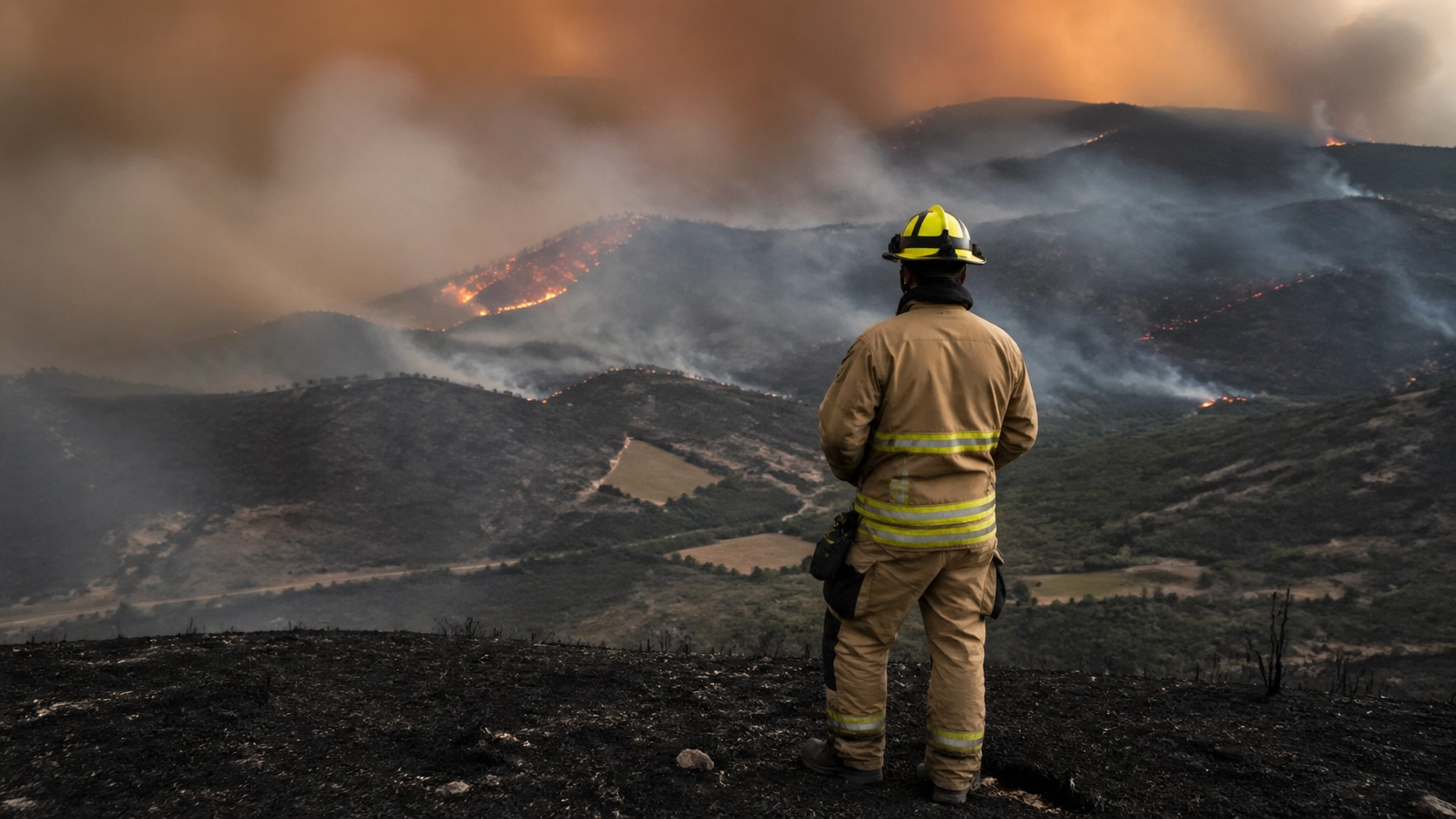
The Galloway Forest stands out because it overturns assumptions about where severe fire risk belongs. Known for wet conditions, dense woodland and a landscape shaped by rainfall, it now reads as a warning from the future arriving early. In 2026, Galloway has become one of the clearest examples of how quickly British terrain can flip from resilient to vulnerable.
The destruction there is not only visual. Burned woodland, damaged peat and weakened biodiversity mean losses that will take years, if not decades, to repair. In geopolitical terms, Galloway matters because it shows domestic natural assets can no longer be treated as stable in a more volatile climate.
3. The 'Sea Shield' failure has removed a natural firebreak
One of the most significant untold stories of this season is the collapse of the so-called 'Sea Shield'. Coastal vegetation and moisture patterns have traditionally helped keep parts of Britain’s edge landscapes damp enough to slow or interrupt fire spread. In 2026, that protective buffer appears to have failed.
When sea air, mist and coastal dampness stop acting as a brake, fire can move across land with far greater speed and unpredictability. That raises the stakes well beyond one bad season. It suggests that natural systems once relied upon as passive protection can no longer be assumed to hold the line.
4. Britain’s fire response model is being outpaced
Britain’s emergency services were not built around the expectation of prolonged, large-scale rural wildfire events in spring. They are now being forced to adapt in real time. Crews face longer incidents, difficult terrain and a type of fire behaviour more often associated with hotter, drier regions.
That creates a strategic gap. Equipment, staffing models and land coordination all come under strain when fires move faster than planning assumptions. The result is not just operational pressure but a broader question about whether national infrastructure has caught up with the climate reality now taking shape.
5. This is no longer only an environmental story
Wildfires at this scale reach into food systems, forestry, transport disruption, wildlife loss and public health. They also change how communities think about safety and permanence. In affected areas, people are no longer simply watching unusual weather; they are adjusting to the possibility that evacuation planning, smoke exposure and land loss may become part of ordinary life.
That is why this story belongs in a wider national conversation. The fires in Galloway Forest, the 'Sea Shield' failure and the record 29,200 hectares burned are not isolated facts. Together, they point to a Britain entering a more combustible era, with consequences that are ecological, economic and political in equal measure.
The wildfire season of 2026 is already one of the clearest signs that Britain’s climate risk is shifting faster than many institutions were prepared for. The scale of destruction, the pressure on natural defences and the exposure of vulnerable regions all underline the need for a more serious response. The challenge now is to treat these fires not as anomalies, but as evidence of a changing national baseline.