The music industry has always been a bit of a Wild West. From the payola scandals of the 1950s to the Napster-fuelled chaos of the early 2000s, the battle for ears and pounds has often been fought in the shadows. But in 2026, we are witnessing a new kind of frontier justice. This isn't about shady promoters handing out cash under the table or teenagers downloading MP3s in their bedrooms. This is about a sophisticated, silicon-driven heist that has managed to siphon off millions of pounds from the pockets of legitimate artists.
Welcome to the era of the automated superstar. For years, we’ve been told that artificial intelligence would eventually write our symphonies and compose our pop hits. What we weren't told was that AI would also be the one listening to them: billions of times over: while a few clever operators sat back and watched the royalty checks roll in. It is one of those untold stories that highlights just how fragile the digital economy can be when faced with a sufficiently motivated algorithm.
As part of our commitment to independent news UK, we’ve been digging into the mechanics of what is being called the first major criminal case of AI-driven music fraud. It’s a story of 10,000 bots, hundreds of thousands of fake songs, and a mountain of cash that should have gone to the people who actually pick up a guitar or sit at a piano.
The Great Digital Heist: Bots, Beats, and Billions
The mastermind behind this particular operation wasn't a shadowy hacker in a hoodie, but a 54-year-old man from North Carolina named Michael Smith. Over the course of several years, Smith orchestrated a scheme so vast and so automated that it managed to extract more than £8 million ($10 million) from major streaming platforms like Spotify, Apple Music, and Amazon Music. His weapon of choice? Not a catchy hook, but a massive army of bots and a bottomless pit of AI-generated tracks.
The genius: or the audacity: of the plan lay in its scale. Smith didn't just try to make one fake song a hit. That would have been too easy to spot. Instead, he understood that the streaming giants look for anomalies. If a brand-new artist suddenly gets ten million plays in a day, red flags go up. To bypass these digital bouncers, Smith took the opposite approach. He created an astronomical number of songs and spread a moderate number of streams across all of them.
Imagine a digital warehouse filled with thousands of virtual listeners. At its peak, Smith’s operation was generating roughly 661,440 streams every single day. By spreading these plays across tens of thousands of different tracks, he ensured that no single song looked suspicious. To the algorithms at the big streaming houses, it just looked like a lot of very obscure indie bands were getting a bit of love from a very dedicated, albeit very quiet, fan base.
This wasn't just a hobby; it was a factory. By October 2017, Smith had established over a thousand bot accounts, distributed across dozens of cloud service providers. Each account was a ghost in the machine, programmed to play his music on a loop, 24 hours a day. It was a closed loop of content creation and consumption where no human ear ever actually heard the music, yet the financial systems processed every "play" as a legitimate transaction.
The Architecture of a Ghost Industry
How do you create enough music to feed a monster like that? You can’t exactly hire a songwriter to churn out 10,000 tracks a week. This is where the AI comes in. Smith allegedly collaborated with the CEO of an AI music company and a music promoter to generate a constant stream of "content." These weren't Grammy-winning compositions; they were procedurally generated soundscapes, often given nonsensical titles and attributed to bands that existed only in a database.
The tracks had names that felt almost human, but just slightly off: the kind of thing you might find on a "Deep Focus" or "Rainy Day" playlist. By using AI to generate the music, Smith removed the only overhead that usually keeps the music industry honest: the cost of human creativity. Once the AI was programmed, the cost of producing the next thousand songs was essentially zero.
To keep the lights on and the authorities off his scent, Smith used a complex web of fake names and debit cards to maintain his bot army. He was effectively running a shadow record label where the artists were algorithms and the fans were lines of code. This is one of the many untold stories of the AI revolution; while we worry about robots taking our jobs, some people are busy using them to create entire fake economies.
The impact of this kind of fraud is far from victimless. Streaming platforms pay out from a "pro-rata" pool. This means that every pound generated by a fake bot stream is a pound taken away from a real artist who is struggling to pay their rent. When a fraudulent operation takes £8 million out of the system, that money is being siphoned directly from the global community of creators. It’s a systemic drain on the industry that hurts independent news UK and global artists alike, making it even harder for genuine talent to break through the noise of the machine.
A Wake-up Call for the Streaming Giants
The legal walls finally closed in on Smith, who recently pleaded guilty to conspiracy to commit wire fraud. He has agreed to forfeit more than £6 million ($8 million) and faces a potential prison sentence when he is sentenced in July 2026. While this provides some level of closure, the case has sent shockwaves through the industry. If one man could do this with relatively basic bot technology, what happens when the tools become even more sophisticated?
The streaming platforms are now in an arms race. They are deploying their own AI to catch the AI, developing "fraud detection" algorithms that look for the tell-tale signs of non-human listening patterns. They are looking for accounts that never sleep, listeners who never skip a track, and accounts that only ever listen to a very specific, obscure catalogue of music.
However, as any cybersecurity expert will tell you, the attackers usually have the advantage of being first to move. As detection gets better, the fraudsters will simply make their bots more "human." They will program them to skip tracks, to build diverse playlists, and to "rest" during the night. The battle for the soul of the music industry is moving away from the recording studio and into the server room.
For the average listener, this might seem like a distant problem. But it affects the very fabric of the culture we consume. When the charts and the "Recommended for You" sections are influenced by bot-driven data, the human connection to music is diluted. We risk entering a feedback loop where machines create music for machines, and human artists are left shouting into the void.
The sentencing of Michael Smith in a few months will be a landmark moment, but it’s unlikely to be the end of the story. It serves as a stark reminder that in the world of content creation, the line between innovation and exploitation is razor-thin. As we navigate this new landscape, staying informed through independent news UK and keeping an eye on these untold stories will be essential for anyone who cares about the future of human creativity.
The music industry must now decide how it values "the stream." If a play can be manufactured by a bot, does it still have the same economic value as a play by a human? This question goes to the heart of the digital economy. For now, the industry is breathing a sigh of relief that one of its biggest "ghost" moguls has been caught, but the shadow of the bot army remains, waiting for the next opportunity to steal the show.
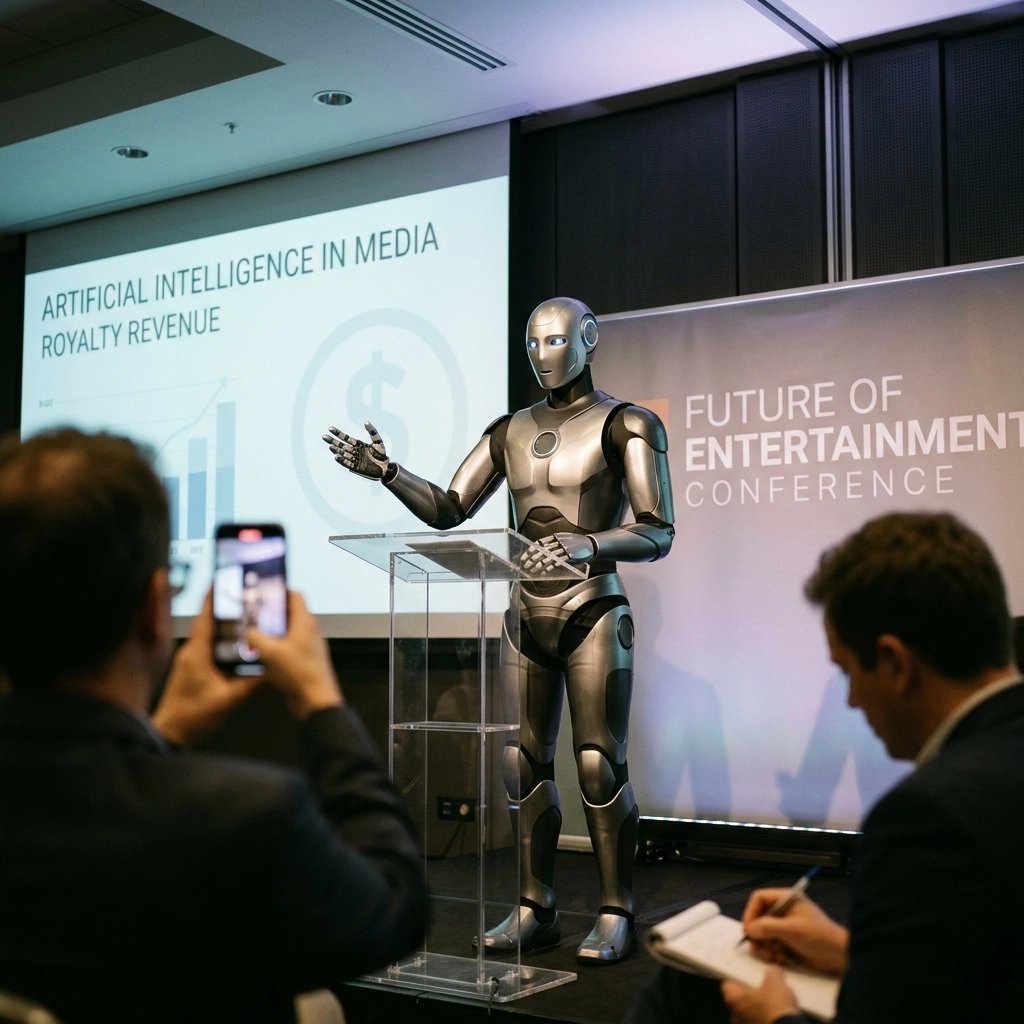
The case of the AI-generated royalty heist serves as a significant turning point in the regulation of digital content. As streaming platforms continue to evolve, the emphasis on verifying human engagement will likely become as important as the content itself. The legal and ethical frameworks surrounding artificial intelligence in the arts are still being written, and this case will undoubtedly serve as a primary reference point for years to come. Ensuring that royalties reach the intended human creators remains a fundamental challenge for the modern music business.