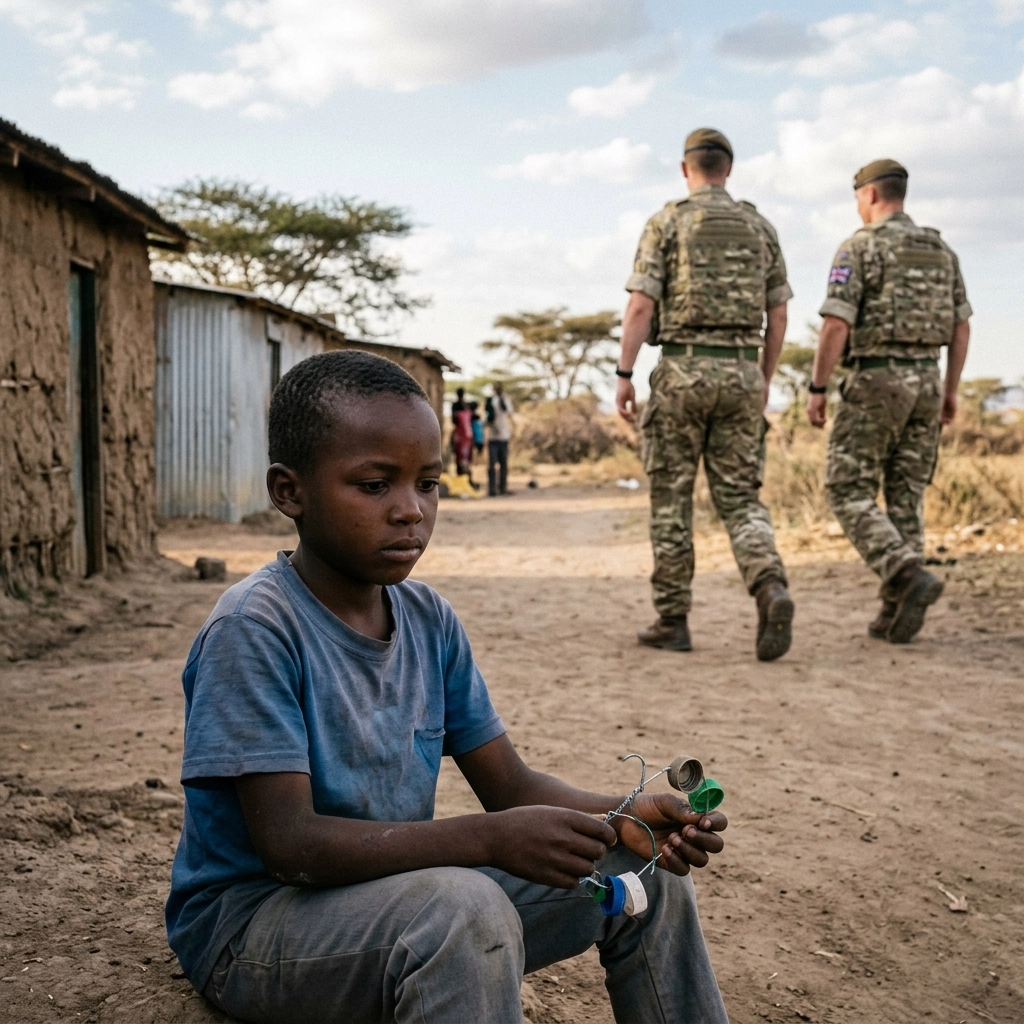
Let’s be honest: when you think of the British Army abroad, you probably picture camouflage, drills, and perhaps the occasional peacekeeping mission. You don’t usually think of a trail of abandoned families stretching back seventy years. But as we dive into the untold stories that mainstream headlines often gloss over, a much darker picture is emerging from the dusty plains of Nanyuki, Kenya. We’re talking about nearly a hundred children fathered by British soldiers and then left behind to navigate a world that doesn’t always want them. It is ghosting on a geopolitical scale, and it’s finally being dragged into the light.
At NowPWR, we’re committed to providing the kind of independent news uk readers need to see, the stuff that isn’t just a PR spin for the Ministry of Defence. This isn’t just a story about a few bad apples; it’s about a systemic "culture of impunity" that has allowed men in uniform to walk away from their responsibilities for decades.
The Messy Reality of the BATUK Connection
Q: Let’s start with the basics. What exactly is BATUK, and why are we talking about it?
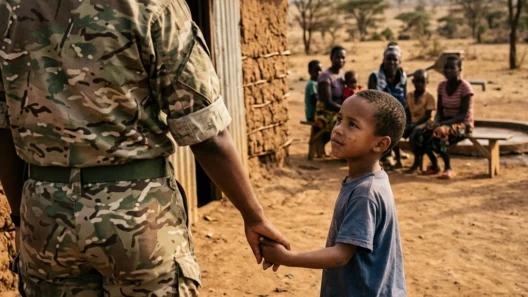
A: BATUK stands for the British Army Training Unit Kenya. It’s a permanent training support unit based mainly in Nanyuki, about 200 kilometres north of Nairobi. Every year, more than 5,000 British personnel head out there to take advantage of the rugged terrain for large-scale exercises. It’s a massive operation. But where there’s a massive influx of young soldiers with disposable income in a relatively poor area, things get complicated. We aren't just talking about a few pints at the local pub. We are talking about long-term relationships, short-term flings, and everything in between that resulted in children who are now searching for their fathers.
Q: How many children are we actually looking at here?
A: The numbers are staggering. A two-year investigation has documented nearly 100 cases, but the lawyers on the ground think that’s just the tip of the iceberg. These children range in age from three years old to people in their 70s. This means British soldiers have been fathering and abandoning children in Kenya since the 1950s, before Kenya even gained independence. It’s a multi-generational legacy of neglect that has been kept quiet for far too long.
Q: Why hasn’t this been sorted out before now?
A: There are a few reasons, and none of them are particularly pleasant. First, there’s the power imbalance. You have soldiers from a wealthy nation and local women who are often living in extreme poverty. When a soldier’s tour of duty ends, he flies back to the UK, and the woman is left with no way to contact him, no legal recourse, and no money to hire a lawyer. Then there’s the social stigma. In many of these communities, being a mixed-race child with an absent father brings a specific kind of discrimination. These kids have grown up being called names, facing poverty, and wondering why their "Soldier Dad" never came back. It’s one of those untold stories that stayed buried because the people affected didn’t have a microphone, until now.
Q: What has the British Army’s stance been on all this?
A: Historically? A lot of "no comment" or claims that these are private matters. The official line often leans on the idea that soldiers are responsible for their own personal conduct. But when you have a pattern that lasts seven decades, it stops being an individual issue and starts being a policy failure. A Kenyan parliamentary inquiry recently pulled no punches, accusing the soldiers of operating within a "culture of impunity." Essentially, they felt they could do what they wanted because they were shielded by the base and the British government.
How DNA Changed the Game for Abandoned Families
Q: If these men disappeared decades ago, how is anyone finding them now?
A: This is where the story gets really interesting. Science has finally caught up with the secrets. For years, these mothers and children had nothing but a first name, a blurry photo, or a unit patch. But the rise of commercial DNA ancestry databases has changed everything. By using the same kits people use to find out if they’re 5% Viking, investigators have been able to link Kenyan children to their British relatives.
Q: Wait, so a £79 DNA kit can solve a 50-year-old military mystery?
A: Precisely. It’s bold, it’s modern, and it’s working. By uploading DNA profiles to these databases, the legal teams identified matches with cousins, siblings, or even the fathers themselves back in the UK. James Netto, a children's rights lawyer, and Kelvin Kubai, a Kenyan human rights lawyer, have been doing the heavy lifting. They’ve managed to identify 19 British soldiers and contractors so far.
Q: Has this actually held up in court?
A: Remarkably, yes. For the first time, DNA evidence from these databases was accepted in the UK’s highest Family Court. A judge legally confirmed paternity in 12 cases. That is a massive win. It’s not just a moral victory; it’s a legal one that carries real-world weight. For these children, it’s the difference between being a "nobody" and having a documented identity and a father who is legally recognised by the British state.
Q: What does the DNA reveal about the soldiers?
A: Some of the fathers were found to be living quiet lives in the UK, some with new families who had no idea about their Kenyan children. In some cases, the fathers had already passed away, but the DNA link to their British relatives was enough to prove the connection. It’s a bit of a shock for everyone involved, but for the kids in Nanyuki, it’s the first time they’ve had an answer to the question: "Where do I come from?"
Q: Is there a sense of wit or irony in using "leisure" DNA kits for this?
A: There’s definitely a bold irony there. These databases were built for people to find out they have a distant relative in Ireland, not to hold the British military to account for decades of abandonment. But that’s the beauty of independent news uk: showing how technology can be repurposed to find justice in the most unexpected ways. The "Soldier Dads" thought they were safe behind the passage of time and thousands of miles of ocean. They didn't count on their own relatives' curiosity about their family trees bringing the truth to light.
The Legal Fallout and the Road to Responsibility
Q: Now that paternity is proven, what happens to the children?
A: This is the life-changing part. Most of the 12 children whose paternity was confirmed in court are now eligible to register for British citizenship. Imagine growing up in a slum in Nanyuki and suddenly being told you have a legal right to a British passport. It opens doors to education, healthcare, and a future they never dreamed of. Furthermore, those who are still under 18 or in education can now apply for child support. We aren't just talking about a "sorry"; we're talking about financial accountability.
Q: You mentioned a parliamentary inquiry. What else did that find?
A: The inquiry, which wrapped up in late 2025, was pretty explosive. It didn't just look at abandoned children; it looked at allegations of sexual abuse, environmental damage, and even unsolved murders involving British personnel. The inquiry called for a complete overhaul of how BATUK operates. They want mandatory DNA testing for soldiers accused of fathering children and a formal mechanism for mothers to seek support without having to jump through impossible legal hoops in a foreign country.
Q: Is the UK government finally stepping up?
A: They are being forced to. Between the court rulings and the Kenyan government’s pressure, the "ignore it and it will go away" strategy is failing. There’s a push for better psychosocial support for the families and a more transparent way to handle claims. However, there’s still a lot of resistance. Providing citizenship and support to 12 people is one thing; opening the floodgates for hundreds more is something the Ministry of Defence is likely eyeing with a fair amount of trepidation.
Q: What's the takeaway from all this?
A: The takeaway is that the era of "what happens on tour stays on tour" is officially over. Whether it's through DNA technology or the work of dedicated human rights lawyers, the truth has a way of coming out. These aren't just statistics; they are people who have spent their lives in the shadows of a military base. For the first time in 70 years, the power balance is shifting.
Q: Does this change how we view British military presence abroad?
A: It should. It highlights the need for better oversight and a reminder that "training" doesn't happen in a vacuum. It happens in communities with real people. When the British Army sets up shop in a country like Kenya, they bring more than just tanks and uniforms; they bring a responsibility to the people living outside the fence. These untold stories remind us that justice doesn't have an expiration date.
The investigation into the children left behind by BATUK soldiers reveals a complex legacy of the British military's long-standing presence in Kenya. Through the combined efforts of legal professionals and the use of modern genetic testing, many individuals who were once ignored are now receiving legal recognition and the possibility of a different future. The findings of the recent parliamentary inquiry suggest that significant changes in accountability and support mechanisms are necessary to address these historical and ongoing issues. As legal precedents are set, the focus remains on the rights of the children and the responsibility of the institutions involved.