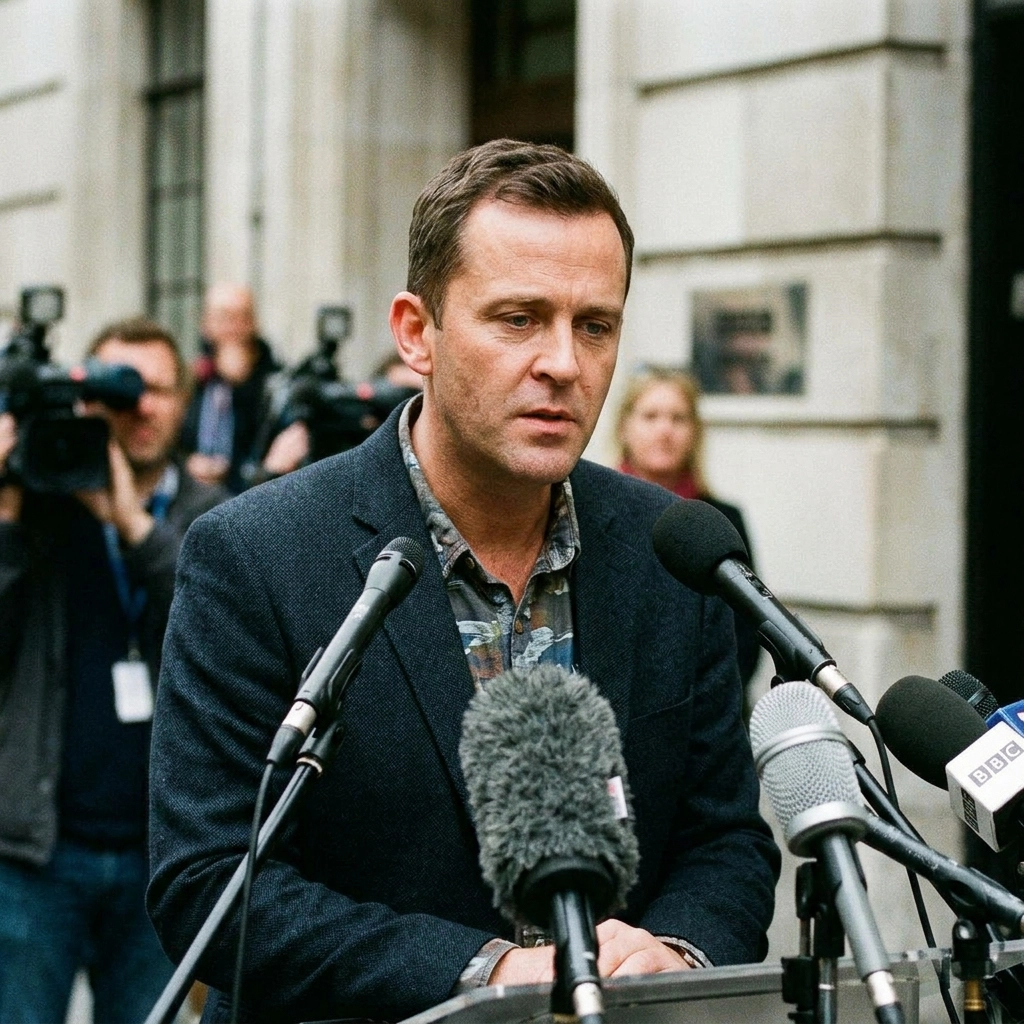
The landscape of British broadcasting has been rocked by the sudden and controversial departure of one of its most recognisable voices. Scott Mills, a man who has been a staple of the airwaves for decades, was recently dismissed from his high-profile role, leaving a trail of questions in his wake. While the headlines focus on the immediate exit, the real story lies in the timeline of knowledge within the corporation. For those seeking independent news uk, the focus often shifts to what happens behind the scenes and the untold stories that institutions might prefer to keep quiet.
The fallout from this situation is not just about a single presenter; it is about the accountability of a national broadcaster and the systems meant to protect both staff and the public. As details emerge regarding what was known and when, the pressure on the BBC to explain its long-term handling of the situation has reached a fever pitch.
A Deep Dive into the 2017 Notifications
To understand the current crisis, we have to look back to 2017. It has come to light that the broadcaster was informed by police nearly a decade ago that an investigation was underway. The allegations were serious, involving sexual offences against a teenage boy that reportedly took place between 1997 and 2000. At the time of these alleged incidents, Mills would have been in his 20s, while the individual involved was under the age of 16.
Despite this early notification, the corporation's top-level management: specifically the Director General at the time: was reportedly not briefed on the specifics. This raises significant questions about internal communication and the "need to know" basis on which such sensitive information is handled. While the police investigation began in 2016, it wasn't until 2019 that the Crown Prosecution Service (CPS) decided not to proceed with charges. Their reasoning was based on the "evidential threshold," essentially stating there wasn't enough to secure a conviction in a court of law.
For an organisation that prides itself on its editorial standards, the decision to maintain the status quo following a dropped police case is a point of contention. When we look at editorial standards and ethics, we expect a certain level of proactive inquiry. In this instance, it appears the corporation was content to let the matter rest as soon as the legal threat was removed, allowing Mills to continue his trajectory as one of the most popular radio hosts in the country, earning a salary in excess of £350,000.
The Missed Opportunity of May 2025
Perhaps the most damaging aspect of this saga is the revelation that a separate warning was sounded much more recently. In May 2025, a former presenter contacted the broadcaster to raise concerns regarding inappropriate communications involving Mills. This wasn't a historical allegation from decades ago; this was a contemporary red flag raised by someone within the industry.
Remarkably, this inquiry went unanswered. The broadcaster has since apologised for this failure, admitting that the warning was not followed up or investigated. This administrative or systemic lapse allowed Mills to remain on the air for nearly another year, hosting Britain’s most popular radio breakfast show and maintaining his position as a face of the brand.
This oversight is where the narrative of "untold stories" becomes particularly relevant. Independent news uk outlets often highlight these gaps in corporate responsibility where internal complaints seem to vanish into a vacuum. The failure to act in 2025 suggests that the lessons of the past: where early warnings about high-profile talent were ignored: have not been fully integrated into the corporate culture. The apology issued by the broadcaster mentions a desire to examine why the warning was missed, but for many, an apology is a small comfort when the stakes involve the safety and integrity of the broadcasting environment. This context is vital for anyone reviewing our defamation and content disclaimer, as we aim to present the facts of the public record while navigating the complexities of ongoing corporate investigations.
Why the Corporation Finally Acted in 2026
The final straw came on March 30, 2026. The broadcaster announced that Mills had been fired, citing "new information" that had come to light in the weeks prior. This information specifically related to the age of the alleged victim at the time of the historical offences. While the police had investigated years earlier, the corporation claims this specific detail provided the necessary impetus to act "decisively in line with its culture and values."
Critics argue that "decisive action" taken nine years after the initial police contact is a contradiction in terms. The timeline suggests an organisation that was forced into a corner rather than one leading with its values. Mills, for his part, has maintained that he fully cooperated with the police and has consistently pointed out that no charges were ever brought against him. This legal reality creates a complex situation for any employer, but the broadcasting world operates on a currency of public trust that often requires a higher standard than the "insufficient evidence" threshold of the CPS.
The decision to fire Mills just as more details were becoming public knowledge feels like a move to mitigate reputational damage. The focus has now shifted to the broader internal culture. If an organisation receives a police notification, a separate warning from a colleague, and continues to pay a top-tier salary for years, at what point does the responsibility lie with the board? These are the types of questions we explore at NowPWR as we look at the intersection of media, power, and accountability.
The exit of Scott Mills marks the end of an era for Radio 1 and Radio 2 listeners, many of whom have grown up with his voice. However, the legacy of this period will likely be defined by the "what they knew" aspect rather than the "what he did" aspect. As the broadcaster attempts to move forward, it faces an uphill battle to prove that its internal safeguarding and reporting mechanisms are fit for the modern age.
For the public, the demand for transparency is higher than ever. The era of the "untouchable" presenter is over, and the scrutiny now falls on the institutions that create and sustain them. Whether through legal frameworks or public pressure, the push for a more open and honest media landscape continues. The story of Scott Mills is a reminder that even the biggest names are subject to the changing tides of corporate accountability, and that sometimes, the most important news is what wasn't said for a very long time.
As this situation continues to evolve, the importance of independent voices in the UK media cannot be overstated. When large corporations hold the keys to the narrative, it is up to smaller, agile content creators to ask the difficult questions. The timeline of silence within the BBC regarding Scott Mills is a case study in why the public is increasingly turning away from traditional gatekeepers in favour of more direct, transparent sources of information. The transition from 2017 to 2026 has been a long one, and the full impact of these revelations is likely only just beginning to be felt.