The British justice system is facing a period of intense scrutiny following a series of administrative blunders that have allowed high-risk individuals to walk free. In a development that has sent shockwaves through the Home Office and the Ministry of Justice, a convicted child abductor has managed to flee the United Kingdom after being mistakenly released from HMP Pentonville. This latest failure has not only embarrassed the prison service but has left a family in turmoil and raised urgent questions about the competency of our correctional facilities.
Ifedayo Adeyeye, a dual British-Nigerian national, was at the centre of a high-profile legal battle involving the abduction of his five-year-old son, Laurys N’Djosse Adeyeye. The child had been living in France with his mother, Claire N’Djosse, before being taken to Nigeria via the UK during a scheduled overnight visit. Despite a landmark ruling from the English High Court ordering the child’s return, Adeyeye refused to comply. His defiance eventually led to his arrest upon his return to the UK, where he was jailed for contempt of court.
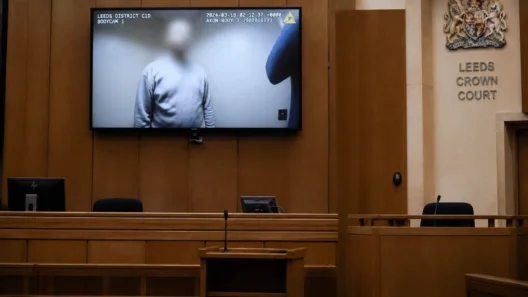
The timeline of his release reads like a script from a dark comedy, yet the reality is far more sobering. On 20 April 2026, Adeyeye appeared in court where he was handed a further twelve-month sentence for his continued refusal to disclose his son's whereabouts. Crucially, the court also ordered his extradition to France to face further charges once his UK sentence was served. However, less than twenty-four hours after this hearing, staff at HMP Pentonville processed his paperwork and allowed him to walk out of the front gates.
A Catalogue of Administrative Failures
The error occurred on 21 April 2026, a date that will now be synonymous with one of the most significant security lapses in recent penal history. Despite the fresh twelve-month sentence and the pending extradition order, the prison’s administrative systems failed to flag that Adeyeye was to remain in custody. This was not a sophisticated escape plot or a daring breach of security perimeters; it was a simple failure of communication between the courts and the prison staff.
Mr Justice Hayden, who presided over the case in the High Court, was scathing in his assessment of the situation. He described the state as having fundamentally failed the young boy and his mother. The judge condemned what he called an alarming lack of urgency from the prison service once the mistake was eventually discovered. Perhaps most damning was the initial suggestion by prison officials that there had been a communication failure on the part of the court. Mr Justice Hayden dismissed this as an entirely groundless suggestion, pointing out that the orders were clear and the sentencing had been immediate.
The consequences of this mistake were felt almost instantly. Once Adeyeye left the confines of HMP Pentonville, he did not go into hiding immediately. Instead, intelligence suggests he spent several days moving freely around London. He was reportedly spotted in various pubs and restaurants, appearing unconcerned about any potential pursuit. During this period, he also managed to transfer thousands of pounds from a bank account, effectively funding his flight from justice. The most harrowing aspect of this timeline is that the police were not officially notified of his mistaken release until the afternoon of 24 April: three full days after he had walked free.
The Hunt for Ifedayo Adeyeye
By the time the Metropolitan Police were alerted to the error, the trail had already gone cold in the capital. Investigative teams believe that Adeyeye utilized the delay to secure passage out of the country. Current intelligence suggests he may have entered Spain as early as 22 April, just one day after his release. This quick movement indicates a level of premeditation or, at the very least, a swift realization that he had been gifted an opportunity to evade the law. Spanish authorities have since been notified, and an international manhunt is currently underway to bring him back to the UK.
The impact on Claire N’Djosse, the mother of the abducted child, has been devastating. Having spent years fighting through the international legal system to have her son returned, she now faces the reality that the man responsible for his disappearance is once again at large. The sense of betrayal is palpable. For a parent, the knowledge that the state had the perpetrator in custody, only to let him walk out of the front door due to a paperwork error, is an unbearable burden.
This case has also brought the wider issue of "releases in error" into the spotlight. While the public might assume such incidents are rare, the data tells a different story. Between April 2025 and March 2026, a staggering 179 inmates were wrongly released from prisons across England and Wales. While many of these individuals are returned to custody relatively quickly, the high-profile nature of Adeyeye’s crime makes this particular failure impossible to ignore. It follows another recent scandal involving the mistaken release of Hadush Kebatu, who had been jailed for the sexual assault of a minor, which triggered widespread protests and demands for reform.
Restoring Public Confidence in Justice
The Ministry of Justice has attempted to get ahead of the growing public anger by announcing a series of measures aimed at modernising prison administration. A spokesperson for the department confirmed that an investigation into the Pentonville incident is underway and that they are working closely with the police and international partners to secure Adeyeye’s recapture. However, for many critics, these are reactionary steps that do little to address the systemic rot within the service.
The government has pledged an investment of up to £82 million to improve the digital infrastructure within the prison system. The goal is to create a seamless link between the courts and correctional facilities, ensuring that sentencing data is updated in real-time. The current system, which often relies on manual entry and fragmented communication channels, is clearly no longer fit for purpose. In an era of digital banking and global logistics, the fact that a prison can remain unaware of a new sentence for several days is an indictment of the current state of public services.
Beyond the technology, there are also calls for greater accountability for the staff involved in these errors. The "culture of complacency" that Mr Justice Hayden alluded to suggests that this is more than just a software problem. It is a human problem, born of overstretched staff and a lack of oversight. Until there are clear consequences for administrative negligence that puts the public at risk, it is unlikely that the frequency of these errors will diminish.
The case of Ifedayo Adeyeye serves as a stark reminder that the justice system is only as strong as its weakest link. In this instance, the link was a filing cabinet or a missed email at HMP Pentonville. As the search continues across Europe, the priority must remain the safe return of Laurys to his mother. But for the UK prison service, the work is just beginning. They must now convince a sceptical public that they are capable of performing the most basic function of their mandate: keeping those sentenced by the courts behind bars. The road to restoring that confidence will be long, and it will require more than just financial investment; it will require a total overhaul of the standards and practices that allowed a child abductor to simply walk away.