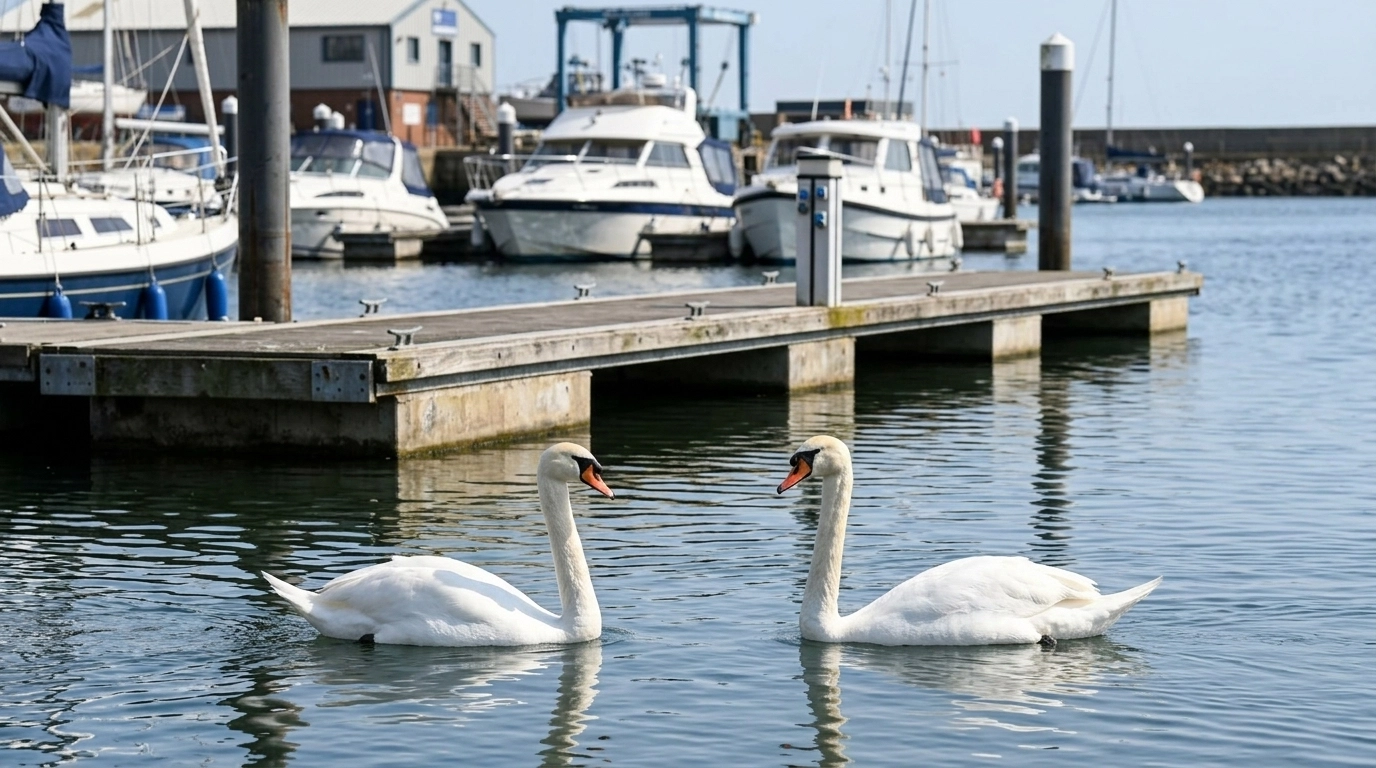
Bonnie and Ash are two mute swans currently living at Sunderland Marina in the North East of England.
Bonnie has been a resident of the marina for several years and has become a familiar sight to locals and boat owners alike. Recently, the community has rallied together to support these birds after their previous nesting arrangements were compromised by severe weather and urban development. Mute swans typically mate for life, but Bonnie’s history at the marina has been marked by significant challenges and the loss of several previous partners.
The pair recently faced a housing crisis when the floating nesting platform they had used in previous seasons was destroyed during a series of storms. This platform was originally part of an environmental pilot project designed to provide a safe space for urban wildlife to breed away from the concrete edges and human activity of the marina. Without this dedicated raft, Bonnie and Ash began attempting to build a nest on a steep maintenance ramp. Local volunteers and wildlife enthusiasts raised concerns that this location was entirely unsuitable for eggs and young cygnets, as it offered no protection from predators or rising tides.
Local residents started a campaign and a petition to secure a permanent nesting solution for the birds. This effort highlights the strong connection between urban communities and the wildlife that shares their spaces. The situation at Sunderland Marina is reflective of a wider trend across the United Kingdom, where traditional nesting sites are being lost to coastal erosion, extreme weather events, and increased human footfall. By advocating for Bonnie and Ash, the local community is pushing for a better balance between commercial marina operations and environmental stewardship.
A History of Resilience at the Marina
Bonnie’s life at Sunderland Marina has been far from peaceful. Over the last few years, she has lost three previous mates. Her previous partner, Bruce, was a well-known figure at the marina but had to be moved to a specialist swan sanctuary in late 2025 due to failing eyesight. Before Bruce, Bonnie lost two other partners to dog attacks and other environmental hazards. These incidents underscores the vulnerability of swans in urban environments where they must navigate boat traffic, litter, and unsecured pets. Ash is Bonnie’s newest partner, and the pair appeared to have bonded well before the spring nesting season began.
The loss of the original floating raft was a major blow to the pair's chances of successful breeding. That raft had been a temporary installation, but its success in previous years proved that artificial nesting sites could work effectively in deep-water marinas. When the raft was swept away or damaged beyond repair during winter storms, Bonnie was left with no choice but to seek out the next available flat surface. The maintenance ramp they chose was far from ideal, as it is frequently used by staff and provides easy access for foxes and other land-based predators.
The resilience of these birds is a testament to the adaptable nature of mute swans. Despite the noise of the marina and the loss of her previous mates, Bonnie has remained loyal to this specific stretch of water. This loyalty is common among swans, who often return to the same nesting site year after year, even if the environment has changed significantly. For Bonnie and Ash, the marina is home, but without the correct infrastructure, it is a home that poses constant risks to their offspring.
The Community Campaign for a Safe Haven
When it became clear that Bonnie and Ash were struggling to find a safe spot, the people of Sunderland stepped in. A dedicated group of volunteers has been monitoring the birds daily, ensuring they are fed and keeping a close eye on their nesting attempts. This group launched a formal campaign to pressure the marina management and local authorities to install a new, heavy-duty floating platform. The campaign quickly gained momentum on social media, with hundreds of people signing a petition to protect the "Marina Swans."
The safety of the eggs is the primary concern for these volunteers. Mute swans typically lay between five and seven eggs, which require a stable and dry environment for an incubation period of around 35 to 41 days. Once the cygnets hatch, they are extremely vulnerable for the first few weeks of their lives. On a steep ramp, there is a high risk of eggs rolling into the water or cygnets being unable to climb back up once they take their first swim. A floating platform, designed specifically for waterfowl, provides the necessary height to stay above the waterline while remaining accessible for the birds.
Negotiations between the community and the marina management have been ongoing. Initial reports suggest that the management is open to a long-term solution, provided it does not interfere with the primary functions of the marina. This dialogue is a crucial step in urban wildlife management. It shows that commercial interests and conservation efforts can coexist if there is enough public support and a willingness to adapt. The cost of such platforms is often cited as a barrier, but in this case, local fundraising efforts have shown that the community is willing to contribute to the cost of keeping Bonnie and Ash safe.
Looking Forward to a Brighter Breeding Season
The installation of a new nesting platform would provide Bonnie and Ash with the stability they need to raise a healthy brood of cygnets. For the residents of Sunderland, the success of these swans is about more than just two birds; it is a symbol of the health of their local environment. Urban marinas can often become "ecological traps" where animals are attracted to the water but find no safe places to breed or rest. Correcting this through the use of floating islands and rafts is an increasingly popular method used by conservationists across Europe.
Swans play a vital role in the ecosystem of the marina, helping to manage aquatic vegetation and providing a point of interest for visitors. Their presence encourages people to engage with nature in an urban setting, which has been shown to have positive effects on community well-being. If the new platform is successfully installed, it will likely be anchored in a quieter corner of the marina, away from the busiest boat lanes but still visible to the public. This ensures the birds have the privacy they need during the sensitive incubation period while allowing the community to enjoy watching the family grow.
As the nesting season progresses, the window for action is narrowing. If a platform is not in place soon, Bonnie and Ash may be forced to proceed with their nest on the ramp, leading to a likely failure of this year's brood. However, the level of public engagement and the proactive stance of the volunteers provide a strong reason for optimism. The story of the Sunderland Marina swans is a reminder that even in the heart of a busy city, there is room for nature to thrive if we are willing to provide a little extra support. The goal is to ensure that Bonnie and Ash have a permanent, secure home that can withstand future storms and provide a legacy for many generations of cygnets to come.
Mute swans are protected under the Wildlife and Countryside Act 1981, making it an offence to intentionally take, damage, or destroy the nest of any wild bird while it is in use or being built. This legal protection highlights the importance of ensuring that management activities at the marina do not inadvertently harm the birds. By providing a dedicated raft, the marina can ensure they are meeting their environmental responsibilities while also supporting a much-loved local attraction. The coming weeks will be critical for Bonnie and Ash as they wait to see if their new home will be ready in time for their next chapter.