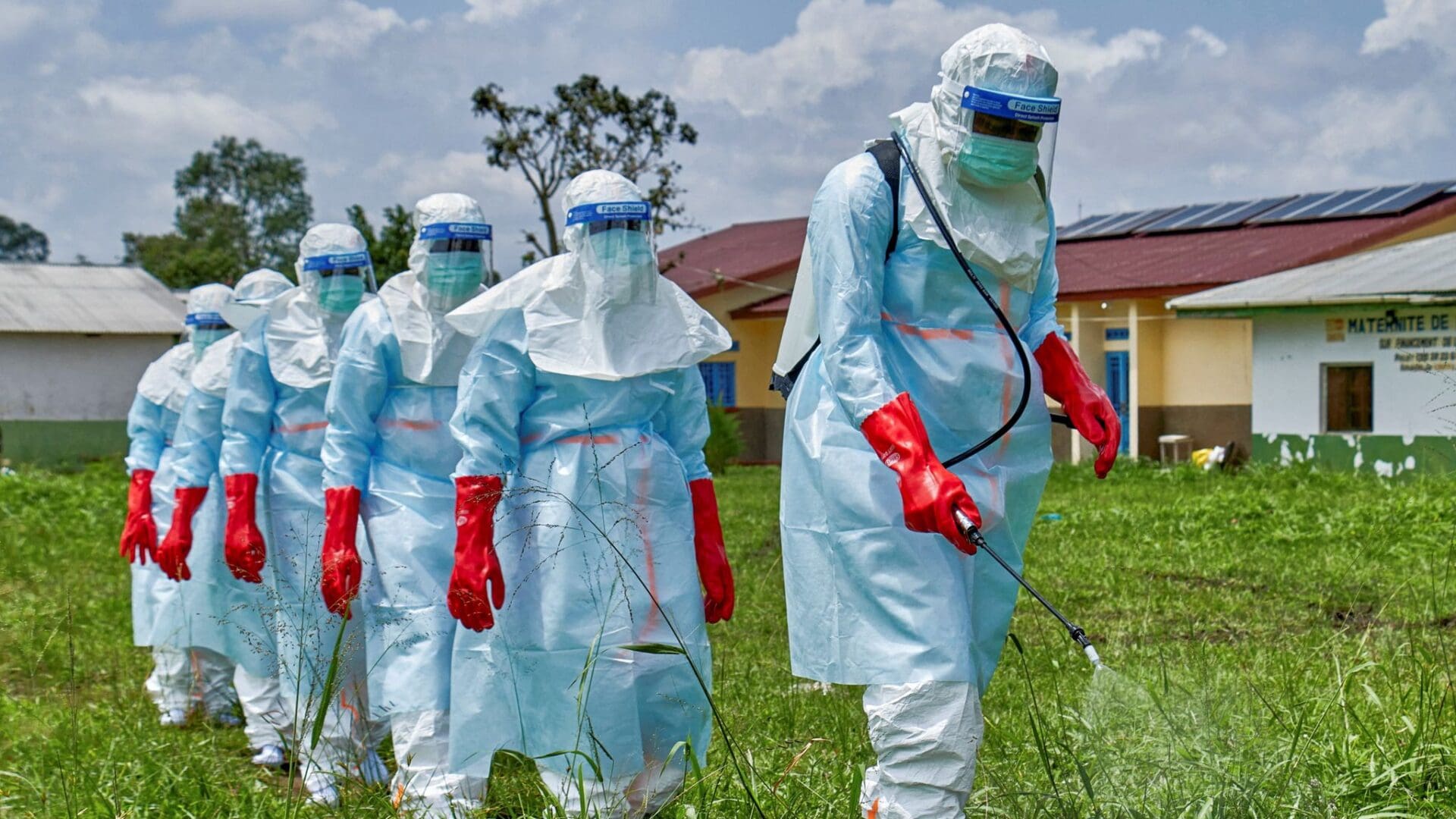
The smell of smoke still hangs heavy over the Rwampara health zone in the Democratic Republic of the Congo’s Ituri Province. What was, only hours ago, a vital frontline facility in the battle against one of the world’s most feared pathogens now lies in charred ruins. Two medical tents, designed to isolate and treat those suffering from the Bundibugyo ebolavirus, were reduced to ash as a local crowd, fuelled by a toxic cocktail of grief, rage and deep-seated mistrust, set the facility alight. This act of desperation and defiance has sent shockwaves through the international health response, marking a dangerous turning point in an epidemic that is rapidly spiralling out of control.
Reports from the ground suggest the violence erupted following the death of a young man at the clinic. His family, adamant that he had succumbed to typhoid, reacted with fury when health officials attempted to implement strict Ebola-safe burial protocols. These procedures, while essential for preventing the transmission of the virus from the highly infectious deceased, often run counter to local cultural traditions, creating a friction point that has ignited before in previous outbreaks. As the situation escalated, the medical charity running the site was forced to flee as protesters torched the isolation wards. Security forces eventually restored a fragile peace with tear gas and warning shots, but the damage to the regional response is catastrophic.
The timing of this destruction could not be more perilous. This latest epidemic, which has been smouldering since late April, has now been officially recognised as a Public Health Emergency of International Concern. With over six hundred suspected cases and more than one hundred and thirty confirmed deaths already recorded across northeastern DRC, the fire at Rwampara represents more than just the loss of canvas and equipment; it is the collapse of a fragile lifeline between the medical response and the community it is trying to save.
A Virus With No Margin for Error
The current crisis is compounded by the specific nature of the virus currently circulating. Unlike the more frequent Ebola Zaire outbreaks, which have benefited from the development and deployment of highly effective vaccines like Ervebo, this epidemic is driven by the Bundibugyo ebolavirus. This is a rarer, though no less lethal, species of the virus for which there is currently no proven vaccine or specific therapeutic treatment. The tools that helped bring previous outbreaks in the Kivu region to a standstill are largely ineffective here, leaving health workers to rely on the most basic of interventions: isolation, hydration and symptom management.
Without the safety net of a vaccine, the response hinges entirely on early detection and the swift isolation of cases. When treatment centres are attacked and destroyed, the entire surveillance system breaks down. Patients who should be under medical supervision are instead pushed back into the community, where they continue to shed the virus. The destruction of the Rwampara tents means that dozens of high-risk contacts and symptomatic individuals are now unaccounted for, likely hiding in densely populated urban areas or moving across the porous borders into neighbouring provinces.
This lack of medical counter-measures also fuels the cycle of mistrust. When communities see their loved ones taken into isolation only to die without receiving a 'miracle' cure or a vaccine, the clinics are viewed not as places of healing, but as houses of death. Rumours spread quickly in the absence of tangible results. In the markets of Bunia and the mining camps of Ituri, whispers persist that the virus is a fabrication or a tool for political suppression. These narratives are far more contagious than the virus itself, and they are directly responsible for the matches that were lit in Rwampara this week.
Borders Mean Little to an Outbreak
The geographic location of this outbreak adds another layer of complexity to an already dire situation. Northeastern DRC is a crossroads of intense human mobility, driven by trade, mining, and the persistent insecurity caused by various armed groups. The provincial capital, Bunia, is a hub of activity with direct links to the border with Uganda. It is here that the virus has already managed to leap across international lines. Two confirmed cases in Uganda have been reported, both linked to individuals who travelled from the DRC before their symptoms were fully identified.
The risk of further international spread is classified as high at the regional level. The Great Lakes region is one of the most mobile areas in Africa, with thousands of people crossing borders daily for work and to escape localized violence. Health screenings at border crossings have been intensified, but they are far from foolproof. The incubation period of Ebola can last up to twenty-one days, meaning an individual can pass through multiple checkpoints while feeling perfectly healthy, only to become a source of infection days later in a new city or country.
The international response is currently in a race against time to bolster field hospitals in Bunia and surrounding health zones. Supplies of personal protective equipment, laboratory kits, and isolation materials are being airlifted into the region, but these resources are only useful if there are safe places to use them. The attack on the treatment centre has forced international agencies to reassess their security protocols. Some non-essential staff have already been relocated, and there are fears that if the violence continues, the entire humanitarian footprint could shrink at the very moment it needs to expand.
Mistrust Is Feeding the Fire
The tragedy in Rwampara serves as a grim reminder that a medical response is only as strong as its relationship with the people. In the 2018-2020 Kivu outbreak, similar attacks on treatment centres were frequent, often resulting in the deaths of health workers and the rapid expansion of the virus into new zones. The lessons of the past appear to have been forgotten or overwhelmed by the current climate of instability. Communication strategies that fail to account for local burial customs or that do not adequately explain the lack of a vaccine are proving to be a fatal oversight.
Compounding the problem is the broader state of insecurity in the Ituri Province. The region has been plagued by ethnic tensions and conflict for decades, leaving the population wary of any authority, whether it be the national government or international NGOs. When health workers arrive in full-body suits, looking more like soldiers from another planet than doctors, it reinforces a sense of alienation and fear. This visual barrier, combined with the forced separation of families from their sick relatives, creates a vacuum that is quickly filled by conspiracy theories.
The path forward is fraught with difficulty. To contain the Bundibugyo strain, the response must go beyond clinical care and engage in a massive, community-led effort to restore trust. This involves working with local leaders, religious figures, and traditional healers to co-design burial protocols and isolation strategies. If the community does not feel ownership over the response, they will continue to see it as an external threat to be resisted. As the death toll rises and the smoke clears from the remains of the Rwampara clinic, the focus must shift from merely fighting a virus to mending a fractured relationship with a population that feels under siege from both a disease and the people trying to stop it. Without this shift, the fires of Ituri will likely be just the beginning of a much larger conflagration.