








Homelessness is a complex issue that requires more than just a one-size-fits-all solution.
In Durham, the local police force is taking a unique and heart-warming approach to support those sleeping rough on the streets. Through a new partnership, officers are now equipped with emergency "sleep pods" to provide immediate warmth and shelter to those in desperate need. This initiative is about more than just providing a place to sleep; it is about building trust, showing empathy, and offering a bridge to a more stable future.
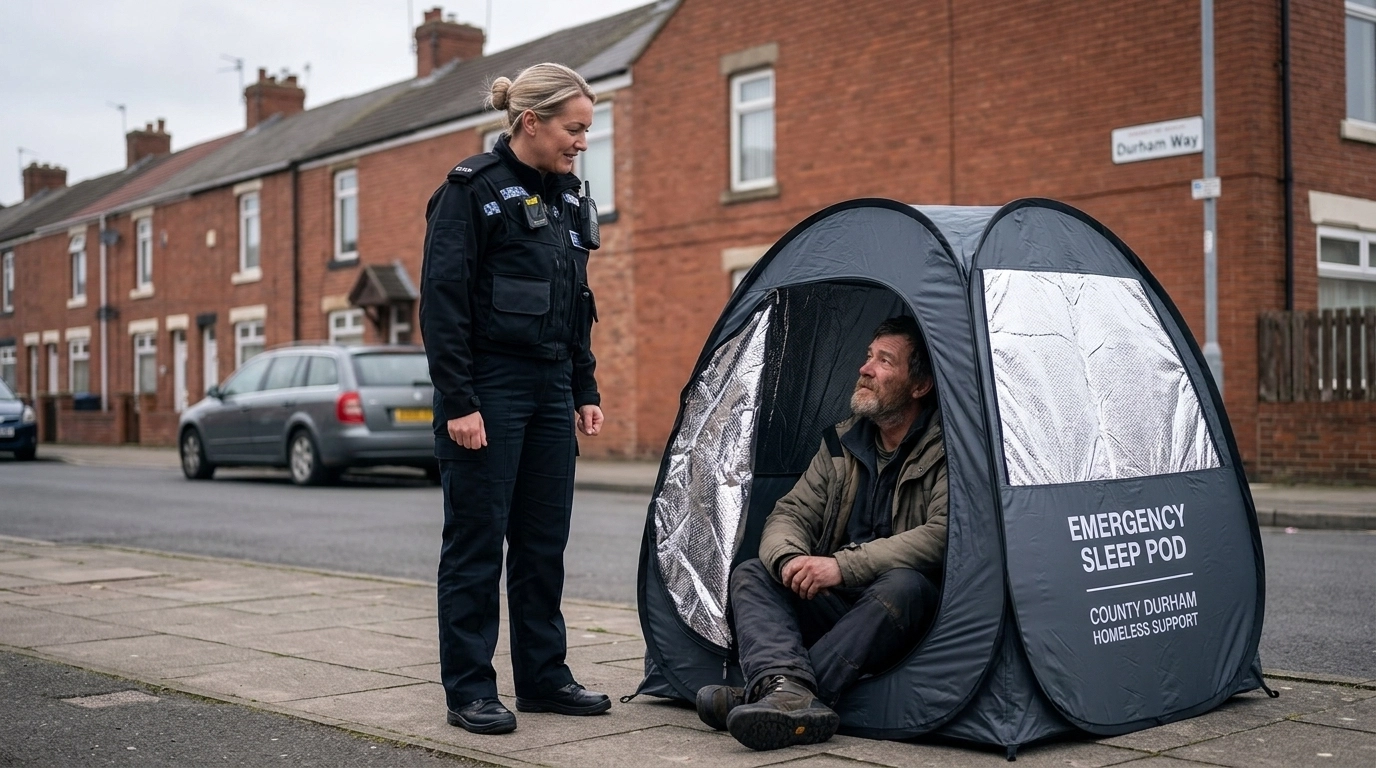
The project is led by Police Community Support Officer Matt Fogin, who saw an opportunity to make a tangible difference in the lives of the most vulnerable members of the community. Working alongside the local charity Cornerstone Supported Housing and Counselling, Durham Constabulary has secured 100 of these specially designed pods. They are lightweight, insulated, and easy to transport in the back of a patrol car. When an officer encounters someone sleeping rough during their neighbourhood rounds, they can now offer an immediate form of protection from the harsh British weather.
It is often the simplest ideas that have the greatest impact. These pods are not intended to be a permanent home, but they serve as a vital safety net during the coldest nights. For someone who has spent days or weeks exposed to the elements, the simple gift of a dry, insulated space can be life-changing. It shows that the local authorities are not just there to move people along, but to actually care for their well-being. This shift in perspective is crucial for fostering better relationships between the police and the homeless community.
One of the most moving aspects of this story is where the pods come from. They are manufactured by a social enterprise where the workforce consists of prisoners. Many of these individuals have experienced homelessness themselves, with roughly 40% having spent time on the streets. This means the people making the pods understand exactly what it feels like to be at rock bottom. They pour their own experiences and empathy into the construction of every unit, knowing that their work will provide comfort to someone in a position they know all too well.
The feedback from the initial pilot in Bishop Auckland has been incredibly positive. Officers have found that the pods act as a conversation starter, allowing them to engage with people who might otherwise be wary of the police. By offering a practical solution to a pressing problem, they are able to break down barriers and start the process of getting people the help they truly need. It is a proactive approach to policing that focuses on compassion and community support rather than just enforcement.
Providing a Warmth and Safety Net
The sleep pods themselves are a feat of practical engineering. Designed to be a short-term alternative to traditional tents, they are made from materials that reflect body heat back to the user, ensuring they stay warm even when temperatures drop below freezing. Because they are lightweight and can be folded down, they do not create the same long-term encampment issues that heavy tents sometimes do. This helps reduce some of the friction that can occur between rough sleepers and local businesses or residents, creating a more harmonious environment for everyone.
The insulation properties are particularly important in the North East of England, where winters can be notoriously brutal. Wet and cold conditions are the primary health risks for those on the street, leading to serious illnesses like pneumonia or trench foot. By providing a dry environment, the pods significantly reduce these risks. Officers can deploy them quickly, meaning that if a sudden cold snap hits, they are ready to protect those who are most at risk.
Beyond the physical warmth, there is a psychological benefit to having a dedicated space. For a few hours, a person can have a sense of privacy and security that is almost impossible to find on a busy street corner. This small sense of autonomy can be the first step in rebuilding a person’s confidence. It sends a message that their life has value and that the community has not forgotten them. The pods represent a temporary sanctuary in an often hostile urban landscape.
The manufacturing process in prisons also adds a layer of social value. It provides inmates with meaningful work and the opportunity to give back to society in a way that resonates with their own life stories. It creates a cycle of empathy that starts behind bars and ends on the streets of Durham. This holistic approach to the problem shows a deep understanding of the interconnected nature of social issues, from the justice system to housing instability.
The Role of Bob the Therapy Dog
In addition to the sleep pods, the Durham police team has another secret weapon in their quest to support the homeless: a therapy dog named Bob. This friendly black Labrador has become a fixture of the outreach patrols, and his presence has proven to be transformative. Many people who have spent a long time on the streets have had negative experiences with authority figures and may be reluctant to talk to a police officer. However, it is much harder to say no to a wagging tail and a friendly nudge from a dog.
Bob acts as a social lubricant, easing the tension in initial encounters. When PCSO Fogin and the outreach workers from Cornerstone approach someone, Bob is usually the first to make contact. His calm and non-judgmental presence helps to de-escalate situations and build an immediate sense of rapport. People who might have walked away from an officer will often stop to pet Bob, which then opens the door for a conversation about their housing situation and health needs.
The impact of a therapy dog goes beyond just "breaking the ice." There have been documented instances where Bob’s intervention has been life-saving. In one notable case, his presence helped prevent a man from taking his own life by providing a moment of connection and comfort during a moment of total crisis. Animals have a unique way of reaching people when words fail, and Bob is a shining example of how unconventional methods can produce extraordinary results in community policing.
The partnership between the police and Bob is a testament to the innovative thinking happening within Durham Constabulary. They are moving away from traditional, rigid methods of engagement and embracing more human-centric approaches. By bringing a dog into the mix, they are acknowledging the importance of emotional support and mental health in the fight against homelessness. Bob isn’t just a pet; he is a fully integrated member of the support team, working alongside human professionals to save lives.
A Stepping Stone to Stability
While the sleep pods and therapy dog visits are vital, everyone involved in the project agrees that they are only the beginning of the journey. The ultimate goal is not just to make street sleeping more comfortable, but to end it entirely for the individuals they meet. This is where the partnership with Cornerstone Supported Housing and Counselling becomes so important. Once a person has been given a pod and a warm welcome from Bob, the real work of finding them a permanent home begins.
Cornerstone workers are experts in navigating the complex web of social services, housing benefits, and mental health support. By working side-by-side with the police, they can provide a seamless transition from the street to supported accommodation. The pod acts as a temporary bridge, keeping the person safe and in contact with the outreach team while a more permanent solution is found. It ensures that no one "falls through the cracks" in the time it takes to process a housing application or find a suitable hostel bed.
The expansion of the scheme from Bishop Auckland to the wider Durham area shows a commitment to tackling homelessness head-on across the entire region. It is a model that other police forces across the UK are watching closely. By combining the logistical power of the police with the specialist knowledge of charities and the innovative products of social enterprises, Durham is creating a template for compassionate community support.
This initiative proves that the police can be a force for positive social change beyond just fighting crime. By addressing the root causes of vulnerability and providing practical, empathetic support, they are helping to create a safer and more inclusive community for everyone. The sleep pods are more than just silver bags; they are symbols of hope and a promise that the people of Durham are looking out for one another, no matter their circumstances. As the project continues to grow, it will undoubtedly provide many more people with the stepping stone they need to get off the streets and back on their feet.