- The true extent of Jeffrey Epstein’s operations within the United Kingdom has long been shrouded in secrecy, but recent revelations have peeled back the layers of a sophisticated trafficking network based in the heart of London. While much of the global focus remained on his private island and New York townhouse, a darker story was unfolding within the affluent streets of Kensington and Chelsea.
- The narrative surrounding Epstein’s British connections is not merely one of high-society parties and royal associations; it is a calculated tale of logistics, property acquisitions, and the systematic exploitation of vulnerable women. These women were brought to the capital under the guise of opportunity, only to find themselves trapped in a web of financial and psychological control.
- Investigations into his property portfolio have identified at least four specific luxury flats located in some of London’s most exclusive postcodes. These residences served as the primary hubs for his activities, providing a veneer of respectability and safety while functioning as high-end holding cells for victims.
- This untold story highlights a massive failure in oversight, where a known sex offender was able to maintain a multi-year operation under the very noses of the Metropolitan Police and the Home Office. The missed opportunities to intervene are as startling as the crimes themselves, raising urgent questions about how such a network could operate so brazenly in one of the world's most heavily monitored cities.
The Kensington Hub and the Mechanics of Control
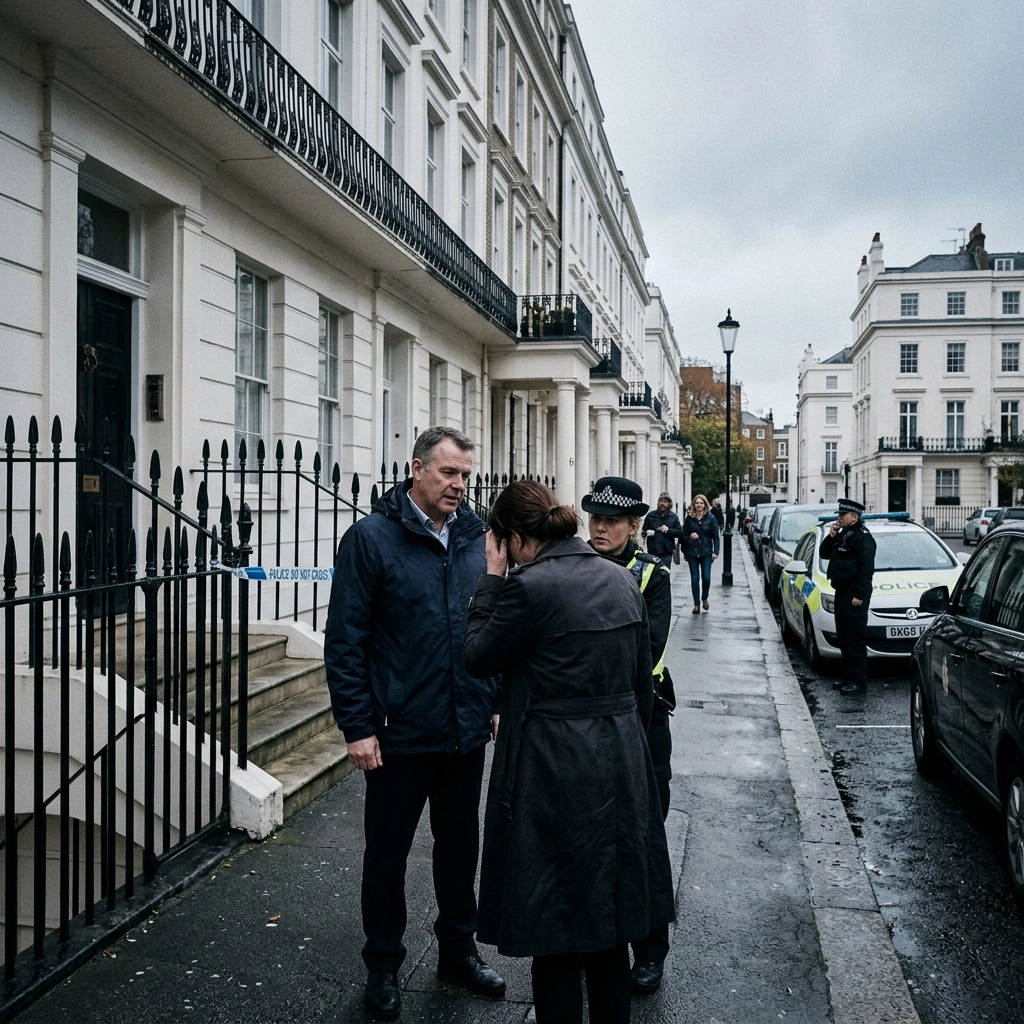
- Epstein’s choice of Kensington and Chelsea was no accident; the area offered the perfect blend of anonymity and prestige. By renting at least four high-end apartments in these boroughs, he established a permanent "footprint" that allowed him to move women in and out of the country with minimal scrutiny.
- At least six women have now been identified as having lived in these flats under Epstein’s direction. Many of these individuals were brought to London from Russia and Eastern Europe, often on student visas that were suspiciously sponsored by Epstein’s own corporate entities. This use of legitimate immigration channels to facilitate exploitation suggests a high level of institutional manipulation.
- Financial dependency was the primary tool used to ensure compliance. Victims were often provided with a monthly allowance of approximately $2,000, delivered via credit cards directly linked to Epstein’s accounts. This allowed him to monitor their spending in real-time and maintain a constant, invisible tether to their daily lives.
- The "gift" of housing was frequently a trap. In several documented cases, Epstein offered the use of a luxury London flat as a gesture of goodwill, only to later stipulate that the rent would be treated as a debt unless the victim performed specific "services" or worked for him for a set period. This manufactured debt was a classic trafficking tactic used to prevent women from leaving.
- Despite the outward appearance of luxury, the living conditions inside these Kensington flats were often far from glamorous. Reports indicate that some properties were overcrowded, with victims forced to sleep on sofas while Epstein or his associates occupied the primary bedrooms. The contrast between the prestigious address and the reality of the victims' lives was a form of psychological warfare designed to keep them off-balance.
- The administrative side of this operation was handled with corporate precision. Records show that the flats were not just places of residence but active sites for his "recruitment" activities, where new victims were vetted and integrated into his wider international network.
The Eurostar Pipeline and International Trafficking
- London served as a critical transit point in Epstein’s global logistics chain. Travel records reveal an extensive movement of women between London and Paris, primarily via the Eurostar. This "European pipeline" allowed Epstein to shift victims between jurisdictions, making it harder for any single law enforcement agency to track the full scope of his activities.
- Data shows that Epstein or his associates purchased at least 53 Eurostar tickets for women between 2011 and 2019. This period is particularly significant because it includes the years after he was already a registered sex offender, yet he faced no travel restrictions that prevented him from transporting young women across international borders.
- Alarmingly, more than 30 of these tickets were issued after 2015: the same year the Metropolitan Police received a formal trafficking complaint involving Epstein. The fact that the operation continued to expand even after the police were alerted points to a catastrophic failure in the UK’s border and criminal intelligence systems.
- Epstein frequently exploited "youth" fares for the women he moved through the Eurostar network. By booking tickets for those under the age of 25, he not only saved money but also established a pattern of movement involving young, often foreign, nationals who were less likely to be questioned by transit authorities.
- The frequency of these trips intensified toward the end of his life. In his final six months alone, records indicate that women were moved through London on ten separate occasions. This suggests that rather than winding down, his London-based operation was as active as ever right up until his arrest in the United States.
- The logistics extended beyond rail travel. Over 120 flights linked to Epstein’s aircraft or his associates have been tracked to UK airfields, including the private terminal at Stansted and various RAF bases. These flights often carried multiple passengers whose identities were shielded from public manifests, further highlighting the ease with which his network bypassed standard security protocols.
Institutional Failure and the Met Police Blind Spot
-
The most damning aspect of Epstein’s London legacy is the sheer number of missed opportunities for intervention by UK law enforcement. In 2015, Virginia Giuffre made a direct allegation of trafficking against Epstein to the Metropolitan Police, yet no full-scale investigation into his UK activities was ever launched at that time.
-
The decision by the Metropolitan Police not to pursue the 2015 complaint effectively gave Epstein a "green light" to continue using London as a safe haven. It allowed his Kensington trafficking hub to remain operational for another four years, during which time dozens more women were moved through the capital.
-
Even the National Crime Agency (NCA) has come under fire for its handling of the case. Reports suggest that the NCA possessed financial intelligence regarding Epstein’s London rent payments as early as 2020, following his death, but the full extent of his trafficking network was only brought to light through independent investigative work rather than state-led action.
-
The lack of a statutory public inquiry into Epstein’s UK activities remains a point of intense controversy. Victims and advocates argue that without a formal, transparent investigation, the British public will never know the full extent of the support Epstein received from influential figures within the UK or how he was able to manipulate the system for so long.
-
Experts suggest that Epstein’s ability to operate in London was bolstered by his connections to the British establishment. These high-level associations likely created a "halo effect" that discouraged lower-level officers or immigration officials from looking too closely at his unusual housing arrangements or the constant flow of young women through his properties.
-
The failure to protect the Kensington victims is a stain on the reputation of the UK’s justice system. It highlights a recurring theme in the Epstein saga: the prioritisation of powerful interests over the safety and rights of vulnerable individuals. Until there is full accountability for the failures of 2015 and beyond, the "untold stories" of his London victims will continue to haunt the capital’s history.
-
The evidence now available paints a picture of a man who viewed London not just as a playground, but as a strategic asset for his trafficking enterprise. The Kensington flats were the engine room of his UK operations, fueled by a lack of police oversight and a sophisticated understanding of how to exploit the gaps in international travel and immigration laws.
-
As more information comes to light, the pressure for a comprehensive review of the Metropolitan Police’s handling of the Epstein file continues to grow. For the victims who were housed in the shadow of Kensington Palace, justice remains an elusive concept, but the exposure of his London footprint is a vital step toward acknowledging the truth of what occurred behind those closed doors.
-
The Kensington victims deserve more than just an acknowledgement of their trauma; they deserve a system that ensures such an operation can never take place again. The lessons of the Epstein years must be learned if the UK is to truly claim it is a leader in the global fight against human trafficking and exploitation.