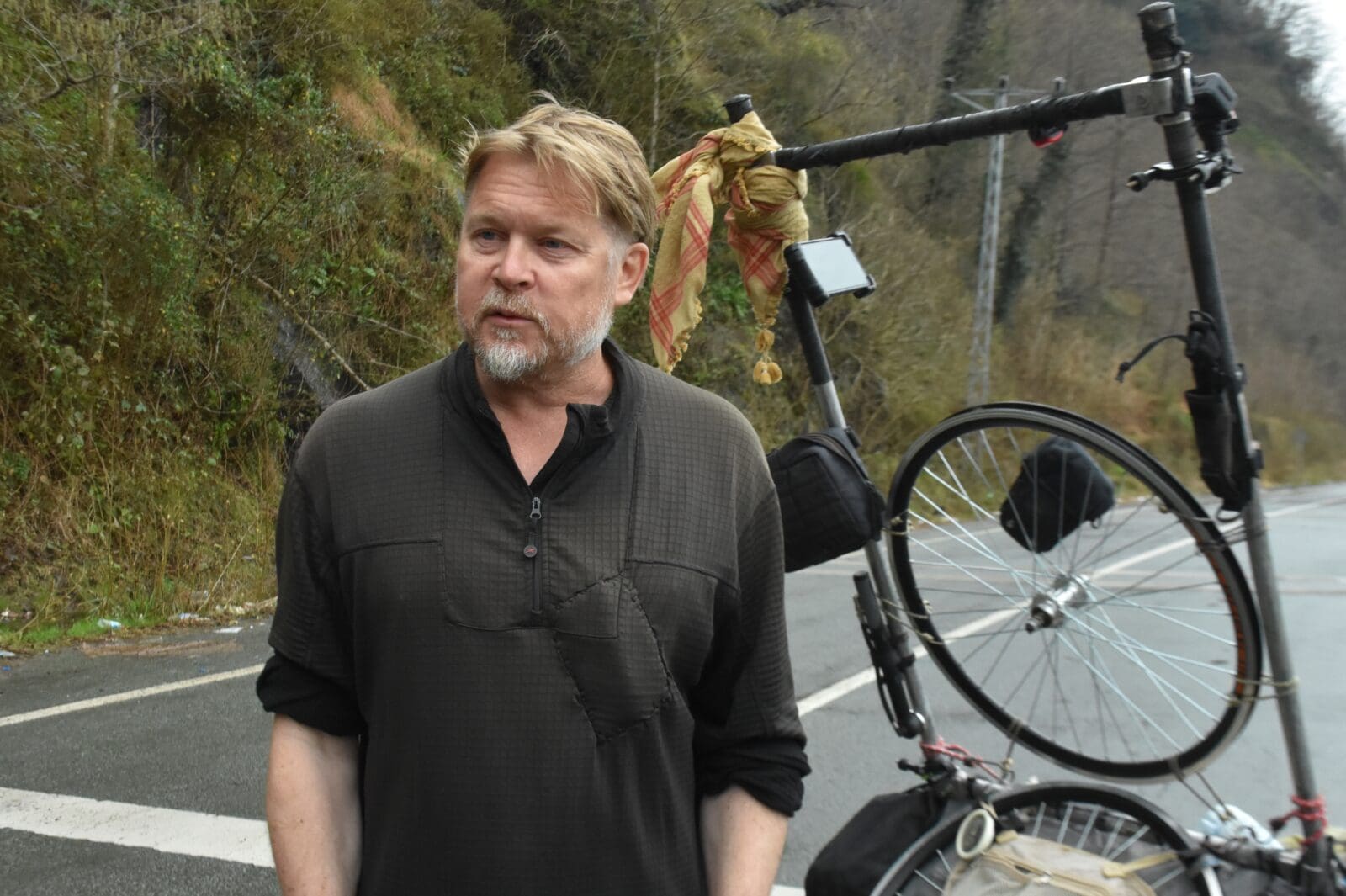
The rhythm of footsteps has defined the life of Karl Bushby for nearly three decades. As the salt air of the English Channel begins to mingle with the scent of a homecoming long delayed, the British explorer is finally closing the gap on a journey that began before the turn of the millennium. After twenty-seven years of navigating the most treacherous terrains on the planet, Bushby is now within striking distance of Hull, the city where his epic odyssey is set to conclude. This is not merely the end of a long walk; it is the culmination of the Goliath Expedition, a feat of human endurance that has seen a man traverse the spine of the Americas, cross the frozen Bering Strait, and navigate the complex geopolitical landscapes of Eurasia, all on foot.
The scale of the achievement is difficult to process in an age of instant travel and digital connectivity. While the world transitioned through the rise of the internet, the global pandemic, and shifting international borders, Bushby remained constant in his movement. His journey began in 1998 at the southern tip of South America, in Punta Arenas, Chile. Since those first steps, he has covered more than 36,000 miles, driven by a singular rule: he must not use any form of transport to advance his position. Every inch of the distance from the Chilean coast to the banks of the Humber has been earned through physical exertion and an iron will that has refused to break, even when the world seemed determined to stop him.
The Long Road from Punta Arenas
The early years of the expedition were a masterclass in survival and adaptation. Walking north through South America, Bushby faced the dense, lawless jungles of the Darien Gap, a stretch of wilderness that often stops even the most well-equipped military units. He navigated the scorching heat of Central American deserts and the high-altitude passes of the Andes, often relying on the kindness of strangers for food and shelter. By the time he reached the United States, the expedition had already gained international attention, but the greatest challenges were still ahead. The crossing from Alaska to Siberia remains one of the most legendary chapters of his trek. In 2006, Bushby and a companion walked across the frozen Bering Strait, a 58-mile journey over shifting pack ice that saw them detained by Russian authorities upon arrival.
The Bering Strait crossing was supposed to be a triumph, but it instead marked the beginning of a decade-long struggle with bureaucracy. The Russian government, wary of an explorer walking across its sensitive eastern frontier, frequently denied him the necessary visas to continue. For years, the Goliath Expedition was stalled, with Bushby forced to spend months waiting in small Siberian outposts or returning to the United States to petition for re-entry. Despite these setbacks, the commitment to "unbroken footsteps" never wavered. He refused to skip sections of the route or fly over the contested borders. Each time he was granted access, he returned to the exact spot where his previous walk had ended, ensuring the integrity of the circumnavigation remained intact. This period of the journey transformed the expedition from a physical challenge into a test of psychological resilience, as the explorer grappled with the reality that his life’s work was at the mercy of international relations.
The trek through Russia eventually gave way to the vast steppes of Central Asia and the diverse landscapes of Eastern Europe. Walking through countries like Kazakhstan and Mongolia, Bushby experienced the profound hospitality of nomadic cultures, often finding that the further he moved from urban centres, the more welcome he was. The physical toll of the journey became more apparent with each passing year. The repetitive strain on his joints, the exposure to extreme temperatures ranging from minus forty degrees to the blistering heat of the desert, and the sheer loneliness of the road would have defeated a lesser individual. Yet, the prospect of returning to Hull kept him moving. The geography of the journey began to shift from the exotic to the familiar as he crossed into Western Europe, the signs and languages slowly transitioning toward those of home.
Navigating the Geopolitical Maze
As the final leg of the journey through Europe progressed, the logistical hurdles became more about the final barrier: the English Channel. For a man who has walked across frozen seas and through war-torn regions, the narrow strip of water separating France from England presented a unique problem for his "no transport" rule. The solution required months of negotiation and planning, reflecting the same tenacity he showed during his years in the Russian wilderness. Throughout his time in Europe, the focus shifted toward the legacy of the expedition. He has become a symbol of what is possible when a human being chooses a path and refuses to deviate from it, regardless of the time it takes or the obstacles in the way.
The human interest story at the heart of the Goliath Expedition is one of transformation. The man who walked into the Chilean wilderness in 1998 is not the same man who is now approaching the Yorkshire coast. He has seen the world at a walking pace, witnessing the effects of climate change, the shift in global politics, and the enduring nature of human kindness across cultures. His journals and the occasional dispatches he sent back to the UK have provided a rare, unfiltered view of the planet’s peripheral regions. The independent nature of his journey has resonated with people back home, who have followed his progress through various media outlets and social platforms, cheering on a local hero as he neared the finish line.
The final few hundred miles have been an emotional countdown. Passing through the villages of France and approaching the ferry ports, the reality of the homecoming has begun to set in. For the people of Hull, the return of Karl Bushby is a moment of significant local pride. Plans are already in motion to welcome him back to the city, with a reception that acknowledges the extraordinary nature of his 27-year absence. The city that he left as a young man is now waiting to receive a veteran of the road, a modern-day explorer who has completed one of the last great adventures on Earth. The psychological shift from being a permanent wanderer to a resident once again will be his final challenge, one that begins as soon as his boots touch British soil.
The Homecoming to Hull
The final steps into Hull will be more than a personal victory; they represent a milestone in the history of global exploration. In an era where every corner of the globe has been mapped by satellites and can be visited via a long-haul flight, Bushby’s journey serves as a reminder of the true scale of our world. To walk the planet is to understand its vastness in a way that no other form of travel can provide. As he prepares to cross the Humber Bridge and enter the city, the gravity of the moment is not lost on the crowds expected to gather. This is a story of a promise kept to himself and to the people who supported him when the expedition seemed like an impossible dream.
The impact of the Goliath Expedition on the local community in Hull and the wider UK cannot be understated. It is a narrative that champions the spirit of independence and the pursuit of a goal that offers no immediate financial reward, but a wealth of experience and character. The stories he brings back: of Siberian winters, South American jungles, and the quiet beauty of the European countryside: will serve as an inspiration for future generations of adventurers. His return marks the end of an era for the British explorer, but the beginning of a new chapter where his experiences can be shared and his achievements can be fully analysed by the global community of geographers and historians.
As the sun sets on the final day of his walk, the silence of the road will finally be replaced by the sounds of the city. The mission that began with a single step in South America reaches its conclusion with a final footfall in East Yorkshire. For Karl Bushby, the world has been his home for twenty-seven years, but the streets of Hull offer something the rest of the planet could not: the end of the road. The Goliath Expedition concludes as it lived: one step at a time, driven by a determination that has outlasted nearly three decades of change. The explorer has finally come home, and the story of his walk will likely be told for as long as people still value the spirit of discovery.
{“url”:”https://nowpwr.com/expeditions-end-explorer-nears-hull-after-27-year-global-trek”,”@type”:”BlogPosting”,”genre”:”Human Interest”,”image”:”https://cdn.marblism.com/9x5c5pHYHfW.webp”,”author”:{“name”:”Penny”,”@type”:”Person”},”editor”:”Penny”,”@context”:”https://schema.org”,”headline”:”Expedition’s End: Explorer Nears Hull After 27-Year Global Trek”,”keywords”:”independent news uk, human interest stories”,”publisher”:{“url”:”https://nowpwr.com”,”name”:”NowPWR”,”@type”:”Organization”},”dateCreated”:”2026-05-23″,”description”:”After 27 years and 36,000 miles, British explorer Karl Bushby nears the end of his epic Goliath Expedition in Hull.”,”datePublished”:”2026-05-23″}