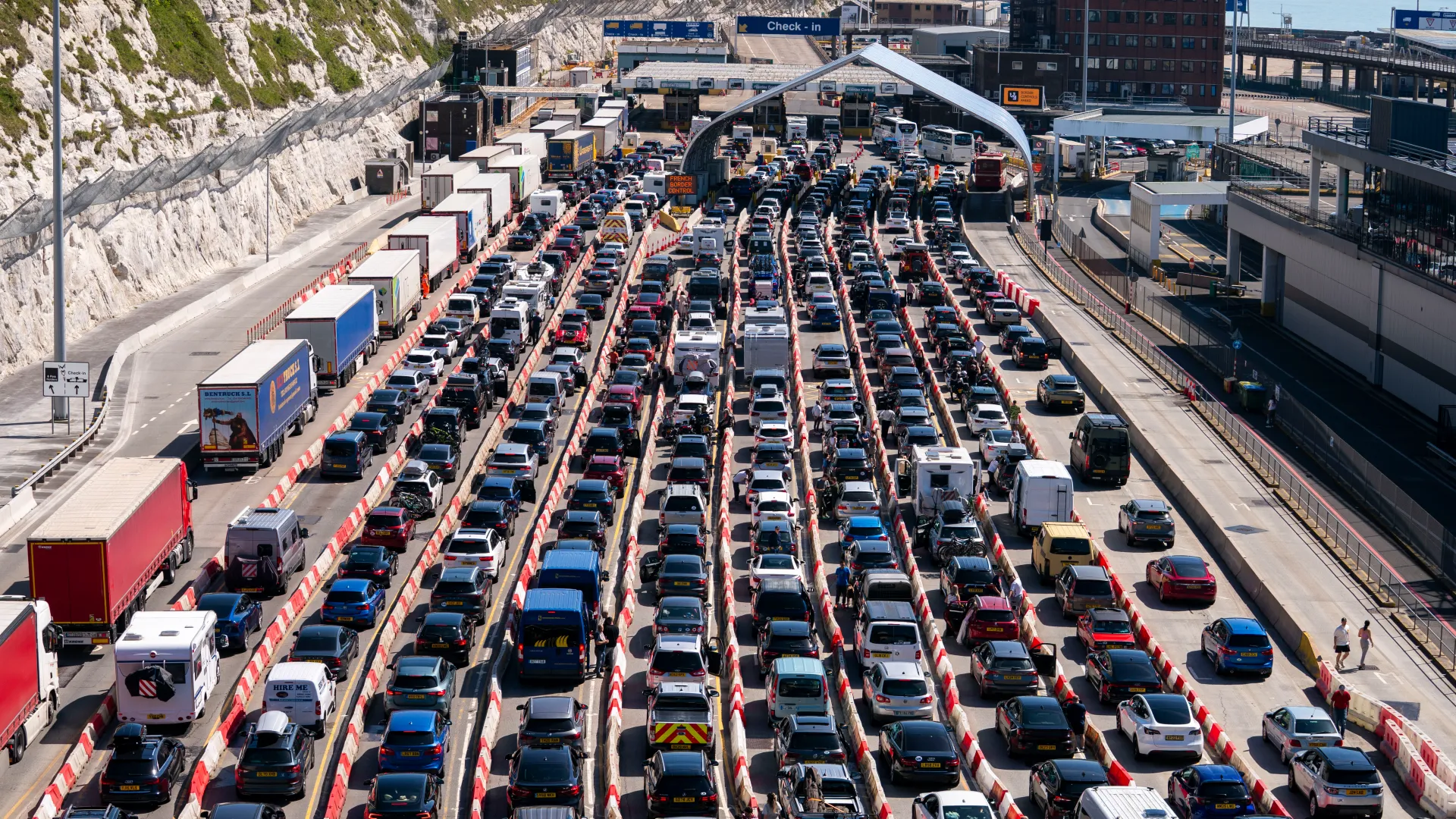
The great British getaway has ground to a stuttering halt as hundreds of thousands of travellers find themselves trapped in a pincer movement of port congestion and railway paralysis. What was supposed to be a weekend of leisure and celebration for the late-May bank holiday has instead transformed into a logistical nightmare, exposing the fragile state of the nation’s transport infrastructure. At the Port of Dover, the scene is one of static frustration, with tailbacks stretching miles into the Kent countryside as enhanced border checks clash with the sheer volume of holidaymakers. On the rails, the situation is no less dire, with a combination of major engineering projects and surging demand forcing passengers into overcrowded carriages or onto the dreaded replacement bus services.
For many, the journey began in the early hours of Saturday, yet by midday, progress for those heading across the Channel remained measured in inches rather than miles. The bottleneck at Dover is not merely a consequence of the bank holiday rush; it is a symptom of a deeper, systemic friction that has become a permanent fixture of international travel from the UK. As families sit in sweltering cars, the reality of post-departure border protocols has hit home with a vengeance. Every passport scan and every document check adds a minute to the wait, and when multiplied by thousands of vehicles, the result is the gridlock currently choking the A20 and M20 corridors. Local residents in Dover have once again found their town effectively cut off, as the overflow of traffic spills into narrow residential streets, leaving the community as stranded as the tourists themselves.
The Dover Bottleneck and the Border Friction Crisis
The crisis at the coast is being driven by a perfect storm of timing and bureaucracy. The late-May bank holiday traditionally marks one of the busiest weekends for ferry operators, but the current delays go beyond the predictable seasonal surge. Since the implementation of stricter border controls, the time required to process a single vehicle has increased significantly. Port authorities have been operating at maximum capacity, yet they are physically unable to move the traffic through the gates faster than the French border police can process the paperwork. This disconnect has created a reservoir of stationary traffic that shows little sign of draining.
Drivers have reported wait times of over six hours just to reach the check-in booths, with the queues starting well before the official port entry points. The introduction of new biometric checks and the necessity for manual stamps have turned a once-fluid process into a series of lengthy administrative hurdles. While the government maintains that additional resources have been deployed to manage the influx, the evidence on the ground suggests otherwise. Portable toilets have been deployed along the motorways, and water is being distributed to those trapped in the heat, a grim reminder that this is no longer a standard travel delay but a civil management operation. The impact is not restricted to holidaymakers; freight traffic, essential for the UK’s supply chains, is also caught in the snarl-up, raising concerns about the knock-on effects for businesses across the country.
A Railway Network Struggling Under the Weight of Neglect
While the roads of Kent are a car park, the nation’s railway network is facing its own existential crisis. Network Rail has chosen this peak travel period to undertake some of its most ambitious engineering works of the year, leading to the closure of several key intercity lines. The logic of scheduling major repairs during a holiday weekend: when demand is highest: continues to baffle the travelling public. For those attempting to reach the coast or visit family in the north, the experience has been one of cancellations, diversions, and extreme overcrowding.
The West Coast Main Line and sections of the East Coast route have seen significant disruption, with some journeys taking double their usual time. Passengers at major London terminals have been met with departure boards flashing red with delays, forcing many to wait for hours on station concourses. The lack of coordination between different transport sectors is glaring; as people are encouraged to get out of their cars and use public transport, they find a rail system that is effectively closed for maintenance. The overcrowding on the few remaining operational services has reached levels that many describe as unsafe, with passengers packed into vestibules and luggage racks. This is not the modern, efficient transport system promised by successive administrations, but a crumbling network held together by sticking plasters and replacement bus services that are themselves caught in the motorway traffic.
The Erosion of the British Getaway and the Infrastructure Deficit
The recurring nature of these travel meltdowns points to a much larger issue: the chronic underinvestment in the UK’s transport capacity and the failure to adapt to a changing regulatory landscape. We are witnessing the erosion of the classic British bank holiday, as the stress of the journey now outweighs the benefits of the destination. For many families, the financial cost of these trips is already high, but the hidden cost in lost time and psychological toll is becoming unbearable. The "getaway" has become an ordeal of endurance, a test of patience that the British public is increasingly tired of failing.
The political response to these scenes has been predictably defensive, with officials pointing to "exceptional circumstances" or "unprecedented demand." However, there is nothing exceptional about a bank holiday, and the demand is entirely predictable. The failure lies in a lack of strategic planning and a refusal to address the physical limitations of our ports and rail lines. As the UK seeks to redefine its place in the world, its primary gateways remain choked and its internal arteries are hardened by neglect. The chaos at Dover and on the rails is more than just a bad weekend for travellers; it is a visible manifestation of a nation struggling to move. Without a radical shift in how we manage our borders and how we maintain our national infrastructure, the sight of gridlocked motorways and abandoned rail platforms will remain the defining image of every British holiday for years to come. The conversation must move beyond temporary traffic management and towards a long-term vision for a country that can actually get where it needs to go. For the thousands currently sitting in their cars or standing on platforms, that vision feels further away than ever.