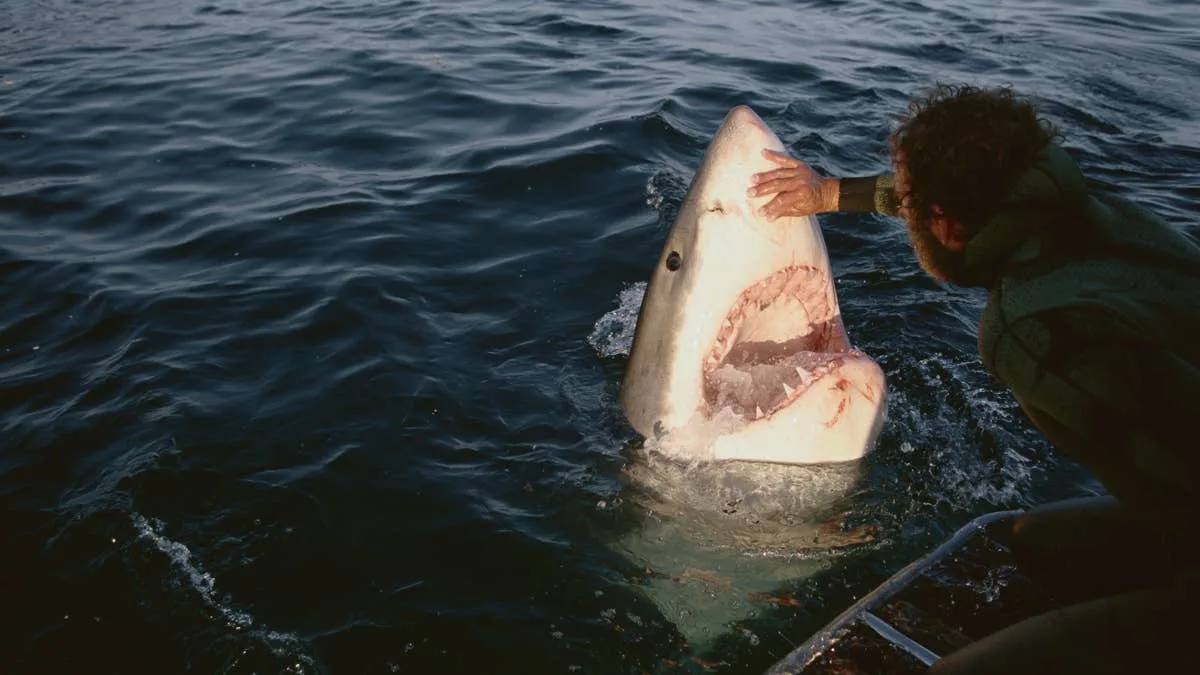
The pristine waters of Western Australia have once again become the site of a profound tragedy, as the state grapples with its second fatal shark encounter of the year. In a sequence of events that has sent shockwaves through the local community and the wider nation, a 38-year-old man lost his life while engaging in a pastime that defines the coastal lifestyle for many in the region. The incident, occurring on a clear morning at a popular recreational spot, serves as a sobering reminder of the inherent risks that remain when humans step into the apex predator’s domain.
At approximately 10:00 am on a bright Sunday, emergency services were alerted to a critical situation at Horseshoe Reef, situated near the iconic Rottnest Island. The island, located roughly 30 kilometres off the coast of Perth, is a jewel of Western Australian tourism, known for its turquoise waters and unique wildlife. However, the serenity of the morning was shattered when a spearfisher was targeted by what witnesses and experts describe as a large great white shark. Despite a rapid and multi-agency rescue operation, the injuries sustained by the man proved insurmountable.
This latest fatality adds to a mounting tally of incidents that have made Western Australia one of the most monitored regions in the world for shark-human interactions. As families and beachgoers reel from the news, the conversation has inevitably turned toward the effectiveness of current safety measures and the unpredictable nature of the marine environment. The loss of life is not just a statistic; it represents a grieving family, a traumatised community of divers, and a renewed debate over how a modern society balances its love for the ocean with the primal dangers that lurk beneath its surface.
The Tragedy at Horseshoe Reef
The victim, identified as an experienced diver and spearfisher, was reportedly in the water with a group of friends when the attack occurred. Horseshoe Reef is well-known among the local diving community for its rich marine life and underwater topography, but it is also located in a stretch of water where large predators are known to transit. On this particular morning, visibility was high, and the conditions were considered ideal for diving. The suddenness of the strike left those on the boat and in the water with little time to react, highlighting the stealth and speed of the great white shark.
Witnesses described a scene of immediate chaos as the man was brought to the surface. Nearby vessels rushed to assist, and a distress call was broadcasted, triggering a high-priority response from the Western Australia Police, the Rottnest Island nursing post, and a dedicated emergency rescue helicopter. Medical personnel were on the scene within minutes of the man being brought back to the shore, performing intensive emergency care in an attempt to stabilise him. However, the nature of the wounds: deep lacerations to the lower legs: led to significant blood loss.
The Western Australia Police later confirmed that the man had succumbed to his injuries at the scene. The shark involved in the incident was estimated by witnesses to be approximately four metres in length, a size consistent with a mature great white. In the aftermath of the attack, the Department of Primary Industries and Regional Development (DPIRD) issued an immediate closure of the beaches surrounding Rottnest Island, urging swimmers and divers to stay out of the water while the threat remained. The incident has left a palpable sense of dread among those who frequent the island, turning a place of leisure into a crime scene of natural tragedy.
A Pattern of Rising Concern
This fatal encounter marks the second such death in Australian waters within the first five months of 2026. For many residents of Perth and the surrounding coastal towns, there is a growing feeling that these incidents are becoming more frequent or, at the very least, more severe. While scientific data suggests that shark populations are not necessarily “booming” in the traditional sense, the patterns of their movement are shifting, often bringing them into closer proximity with human activity.
Western Australia has a complex history with shark attacks. Over the last two decades, the state has recorded some of the highest numbers of fatal encounters globally. This has led to the implementation of various mitigation strategies, including satellite-linked tracking buoys, drone surveillance, and the use of acoustic tags. Yet, as this tragedy demonstrates, no amount of technology can provide a 100 per cent guarantee of safety in an open ocean environment. Spearfishing, in particular, is classified as a high-risk activity due to the vibrations and blood in the water that can attract predatory species from significant distances.
The psychological impact on the community cannot be understated. In Western Australia, the ocean is a way of life. It is the backdrop for weekend sport, family holidays, and a significant portion of the local economy. When a fatality occurs at a location as prominent as Rottnest Island, it forces a re-evaluation of that relationship. There is a tension between the acknowledgement that we are visitors in the ocean and the demand for the government to do more to protect those who use it. The debate often splits between those calling for more aggressive measures, such as drum lines or culling, and those who advocate for education and personal responsibility as the only sustainable paths forward.
Balancing Conservation and Safety
In the wake of this death, the political and social pressure on the Western Australian government to review its shark management strategy is expected to intensify. For years, the state has moved away from lethal drum lines in favour of “smart” drum lines, which aim to catch, tag, and relocate sharks rather than kill them. This approach is designed to satisfy both public safety concerns and environmental conservation goals. However, after a fatality, the efficacy of non-lethal methods is often called into question by those who feel that the protection of human life should take absolute precedence over the preservation of a single animal.
Marine biologists argue that the great white shark is an essential part of the ecosystem, acting as a “custodian” of the reefs by keeping other populations in check. They suggest that environmental factors, such as changing water temperatures and the migration patterns of whales and seals, are major drivers in shark movements. As the humpback whale population increases, so too does the presence of large sharks that follow them along the coast. Understanding these biological cycles is crucial for developing better warning systems, but it offers little comfort to the family of a victim.
The path forward is likely to involve a combination of enhanced surveillance and a push for better personal protection gear for divers. Electric shark deterrents, which are designed to create an uncomfortable field for the animal’s sensory organs, have shown promise in independent testing. Some local advocates are now calling for these devices to be subsidised or made a standard requirement for those engaging in high-risk activities like spearfishing. As the sun sets over Horseshoe Reef, the focus remains on the immediate loss of a life, but the broader questions about how we coexist with the wild elements of our world remain unanswered. The ocean remains a place of immense beauty, but for now, it is also a place of mourning.