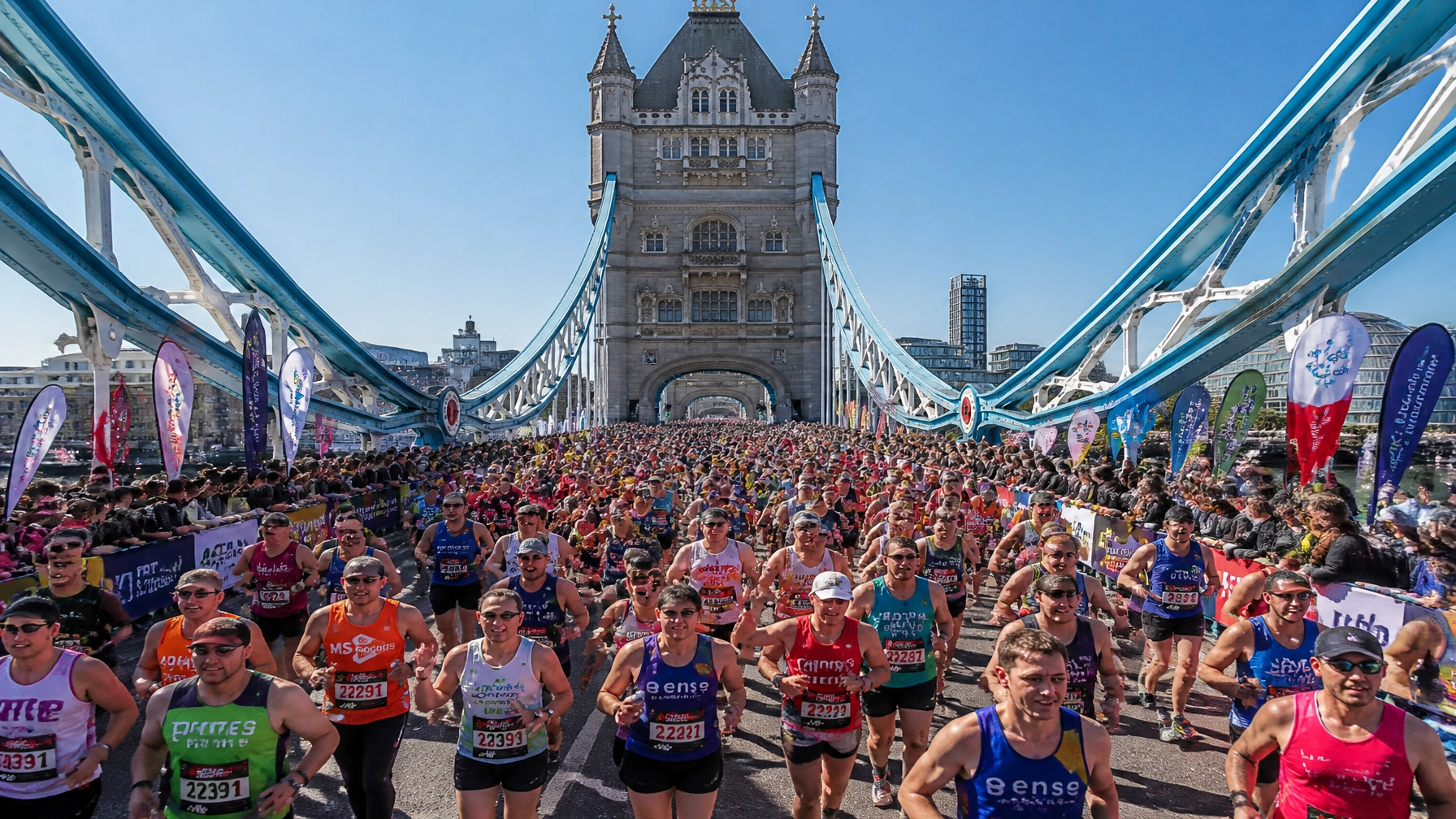
The streets of the capital were transformed into a sea of colour and celebration this weekend as the London Marathon 2026 did more than just host a race; it rewrote the history books. From the professional elite to the fancy-dress fundraisers, every participant played a part in an event that has officially become the most successful in the marathon’s storied history. With clear blue skies and a gentle breeze providing near-perfect conditions, the atmosphere across the 26.2-mile course was nothing short of electric. It was a day where limits were tested, records were decimated, and the collective generosity of the public reached heights never seen before.
As the final participants crossed the finish line on The Mall, organisers confirmed that the event had raised a staggering £87.5 million for various charities. This figure eclipses the previous record of £87.3 million set in 2025, cementing London’s status as the greatest one-day fundraising event on the planet. For the thousands of charities that rely on these donations, this windfall represents a lifeline that will fund medical research, support vulnerable communities, and protect the environment for years to come. The scale of the achievement is difficult to overstate, particularly given the economic challenges of the modern era, yet the British public and international donors have once again demonstrated an unwavering commitment to supporting those in need.
Beyond the financial success, the event saw a record-breaking number of finishers. An incredible 59,830 people completed the course, navigating the route from Blackheath to the heart of the city. This surge in participation reflects the growing popularity of the marathon as a bucket-list achievement for people of all ages and backgrounds. From eighteen-year-olds taking on their first major physical challenge to octogenarians proving that age is just a number, the diversity on display was a testament to the inclusive nature of the event. The sight of nearly 60,000 medals being worn with pride across London’s transport network on Sunday evening was a fitting end to a day of monumental effort.
A New Era for Professional Achievement
The elite races provided a level of drama that left spectators breathless, particularly in the men’s category. Sabastian Sawe of Kenya secured his place in sporting immortality by becoming the first athlete to complete an official marathon in under two hours. Clocking a historic time of 1:59:30, Sawe broke a barrier that many experts believed would remain intact for decades. The precision of his pacing and the sheer power of his final sprint down The Mall will be remembered as one of the greatest feats in athletic history. His victory was not just a win for Kenya but a moment that redefined what is humanly possible, proving that with the right preparation and mental fortitude, no boundary is permanent.
Not to be outdone, the women’s elite race saw Ethiopia’s Tigst Assefa deliver a masterclass in endurance and speed. Crossing the line in 2:15:41, she set a new women-only marathon world record, shaving precious seconds off the previous best. Assefa’s performance was characterised by a relentless rhythm that saw her pull away from a world-class field early in the race. The technical brilliance of her run, combined with the supportive roar of the London crowds, created a perfect storm for record-breaking. These elite performances served as the perfect backdrop for the thousands of amateur runners who followed, inspired by the excellence on display at the front of the pack.
The technological advancements in footwear and training regimes have clearly played a role in these times, but the human element remains the most significant factor. The mental resilience required to maintain such a pace over 26.2 miles is extraordinary. Seeing these athletes push their bodies to the absolute limit reminds us why the London Marathon remains the pinnacle of the World Marathon Majors. The 2026 race will be studied by sports scientists and coaches for years, looking for the secrets behind Sawe’s sub-two-hour triumph and Assefa’s record-breaking consistency.
The Incredible Impact of Collective Giving
While the elite athletes grabbed the headlines for their speed, the heart of the London Marathon has always been its charitable soul. The £87.5 million raised this year is a testament to the thousands of individual stories that make up the race. Every runner had a reason for being there, whether it was in memory of a lost loved one, a desire to support a local hospice, or a commitment to a global cause. The fundraising process starts months before the race, with runners hosting bake sales, organising quizzes, and reaching out to their communities for support. This grassroots effort culminates in the massive total announced this week, proving that small contributions can lead to a gargantuan impact.
The logistics of managing donations for over 750 different charities is a feat in itself. From major national organisations to tiny local community groups, the marathon provides a platform that no other event can match. For many smaller charities, the London Marathon accounts for a significant portion of their annual income. The record-breaking total of 2026 means that these organisations can plan for the future with greater confidence, launching new initiatives and expanding their reach. The ripple effect of this fundraising will be felt in hospitals, community centres, and research labs across the UK and beyond, highlighting the unique power of sport to effect social change.
Organisers have noted that the use of digital giving platforms has made it easier than ever for supporters to donate in real-time. On race day, as spectators watched their friends and family on the official app, thousands of spontaneous donations were made, further boosting the total. The sense of community engagement was at an all-time high, with people across the globe tuning in to track progress and contribute to the causes being championed. It is this spirit of collective action that makes the London Marathon more than just a race; it is a global movement of kindness and generosity that seems to grow stronger with every passing year.
Celebrating the Resilience of the Human Spirit
The sheer scale of the 2026 event brought with it significant logistical challenges, all of which were handled with the efficiency that has become a hallmark of the London Marathon. Over 6,000 volunteers lined the route, providing water, medical assistance, and much-needed encouragement to the runners. These volunteers are the unsung heroes of the day, standing for hours in the sun to ensure that every participant is safe and supported. The coordination between the emergency services, the local councils, and the event organisers ensured that the day passed with minimal disruption, despite the record-breaking number of people on the streets.
The economic impact on the city was also substantial. With 59,830 finishers and hundreds of thousands of spectators, London’s hotels, restaurants, and shops enjoyed a significant boost. The marathon brings a unique energy to the capital, showcasing its iconic landmarks to a global audience and reinforcing its reputation as a world-class host for major sporting events. From the Cutty Sark to Tower Bridge and the final turn past Buckingham Palace, the route is a cinematic tour of the city, and the 2026 broadcast reached millions of homes worldwide, further enhancing London’s international appeal.
As the cleanup operation concludes and the city returns to its normal rhythm, the legacy of the 2026 London Marathon is already being felt. The record-breaking fundraising total, the historic sub-two-hour run, and the unprecedented number of finishers have set a new benchmark for future events. But perhaps the most lasting impact is the sense of hope and unity that the race inspires. In a world that can often feel divided, the sight of nearly 60,000 people running for something bigger than themselves is a powerful reminder of what we can achieve when we move in the same direction. The countdown to 2027 has already begun, and the bar has been set higher than ever before.