The natural world often brings us stories of decline and loss, but every so often, a breakthrough occurs that reminds us why conservation work is so vital. In the heart of Worcestershire, a quiet revolution has been taking place beneath the canopy of Monkwood. This ancient woodland, a place of historical significance and natural beauty, has recently become the stage for one of the most successful wildlife recoveries in recent years. The wood white butterfly, a delicate and once-vanishing resident of our woods, has returned in numbers that have left experts and volunteers alike feeling incredibly optimistic.
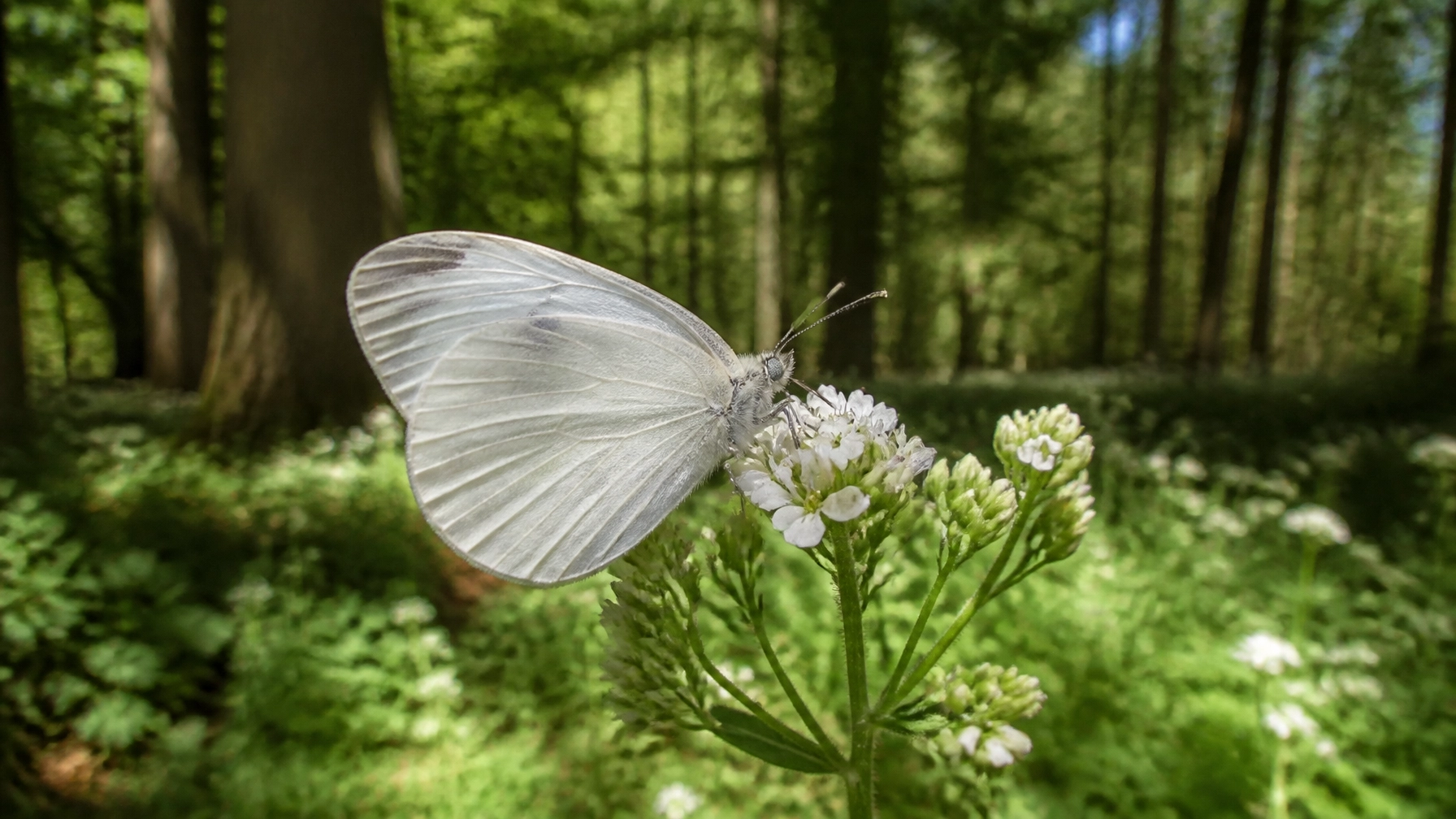
For those who aren't familiar with the wood white, it is quite unlike the more common large or small white butterflies you might see fluttering aggressively around your cabbage patch. The wood white is a dainty, almost ethereal creature. It has a slow, fluttering flight that looks more like a piece of tissue paper caught in a gentle breeze than a purposeful insect on a mission. It is one of the UK’s smallest white butterflies, and its wings are distinctively rounded with subtle grey markings. Yet, despite its fragile appearance, this butterfly is at the centre of a massive effort to restore biodiversity to the British countryside.
The situation for the wood white has been dire for decades. National statistics show a staggering 82 per cent drop in their abundance since the late 1970s. This decline wasn't just a bit of bad luck; it was a direct result of how we have changed our landscape. Traditional woodland management, such as coppicing, fell out of fashion, leading to overgrown, dark woods where sunlight struggled to reach the forest floor. For a butterfly that relies on sunny, sheltered glades and specific wildflowers to survive, this was a disaster. By 2008, the wood white had virtually vanished from Monkwood entirely.
Restoring the Ancient Woodland Habitat
The journey back from the brink began with a fundamental change in how the woodland was managed. Worcestershire Wildlife Trust and Butterfly Conservation recognised that if they wanted the wood white to return, they had to rebuild its home from the ground up. This didn't mean planting more trees; ironically, it meant removing some and creating space. Ancient woodlands like Monkwood need a mosaic of different habitats to thrive, including open rides, which are the wide tracks running through the woods, and sunny glades.
Restoration work involved a process of 'opening up' the wood. By widening the rides and thinning out the dense canopy, conservationists allowed sunlight to spill onto the forest floor for the first time in years. This light is the engine of the woodland ecosystem. It triggers the growth of wildflowers like bird’s-foot trefoil and meadow vetchling, which are the essential food plants for wood white caterpillars. Without these specific plants, the butterflies simply cannot reproduce. The work was arduous and required a deep understanding of the delicate balance between maintaining the ancient character of the wood and making it habitable for modern wildlife.
The funding for this extensive project came from several sources, including the National Lottery Heritage Fund. This support allowed the teams to undertake large-scale structural changes that a small charity might otherwise struggle to afford. It wasn't just about the physical work, though; it was about creating a sustainable environment that could support a population long-term. They weren't just looking for a temporary boost in numbers; they were looking to create a stronghold for the species that could withstand the pressures of a changing climate and shifting landscapes.
The Delicate Return of a Rare Species
Once the habitat was deemed ready, the next phase of the project began: the reintroduction. In 2016 and 2017, a small group of wood white butterflies was carefully released into Monkwood. It was a modest start, with only around 30 individuals being introduced to their new home. At the time, there were no guarantees. Reintroductions are notoriously tricky, as butterflies are highly sensitive to weather conditions, predators, and even the slightest changes in their food supply. The teams watched and waited, hoping that the work they had done on the ground would be enough to support this fragile new colony.
The monitoring process is where the true scale of the success became apparent. Volunteers and staff from the Worcestershire Wildlife Trust spend hundreds of hours every year walking 'transects': fixed routes through the wood where they count every butterfly they see. In the first year after the release, the numbers were encouraging. By 2018, a single visit recorded 133 wood whites, a massive jump from the handful that had been released. It was clear that the butterflies weren't just surviving; they were thriving in the newly sun-drenched rides of Monkwood.
The most recent counts have been even more spectacular. Last year, the population reached record levels, with over 700 individuals recorded during the peak season. This is an extraordinary turnaround for a species that was absent from the site less than twenty years ago. It proves that when the right conditions are met, nature has an incredible capacity for recovery. The wood white is a 'fussy' species; it needs very specific temperatures and very specific plants. The fact that it has boomed in Monkwood is a testament to the precision and dedication of the conservationists who planned the restoration.
A Beacon of Hope for British Biodiversity
The success at Monkwood is not just a win for one specific wood or one specific butterfly. It serves as a vital blueprint for conservation across the United Kingdom. If we can bring back the wood white in Worcestershire, there is no reason why similar projects can't succeed elsewhere. Butterfly Conservation is already using the lessons learned here to inform projects in Shropshire, Staffordshire, and Warwickshire. By creating 'corridors' of suitable habitat, they hope to allow these isolated populations to move and mingle, which is essential for the long-term genetic health of the species.
We often talk about the 'untold stories' of our countryside, and the effort of the volunteers at Monkwood is a perfect example. These are people who head out in all weathers, binoculars in hand, to track the progress of a creature that many people will never even see. Their data provides the evidence needed to secure more funding and to prove that conservation works. It is a slow, methodical process, but the sight of 700 white wings dancing in a sunny clearing is a reward that far outweighs the effort involved. It reminds us that our local spaces are just as important as the great national parks when it comes to protecting the planet.
As we look to the future, the challenge will be to maintain these habitats. Woods like Monkwood aren't static; they are constantly growing and changing. If we stop managing the rides and glades, the canopy will close over again, the wildflowers will disappear, and the wood white will be pushed out once more. However, with the current momentum and the public interest generated by this success, there is every reason to be hopeful. The record numbers at Monkwood aren't just a fluke; they are the result of hard work, scientific understanding, and a genuine passion for the natural world. It is a story of resilience that should inspire anyone worried about the state of our environment.
The return of the wood white is a small but significant victory in the much larger battle for biodiversity. In a world where we are often overwhelmed by negative news, the sight of a delicate butterfly flourishing in an ancient wood is something worth celebrating. It shows that we have the tools and the knowledge to fix the damage we have done to the landscape. All it takes is the will to act, the patience to wait, and a commitment to protecting the quiet, fluttery corners of our country. Monkwood is now a place where the sun shines a little brighter, and the air is a little fuller of life, and that is a success story we can all get behind.