









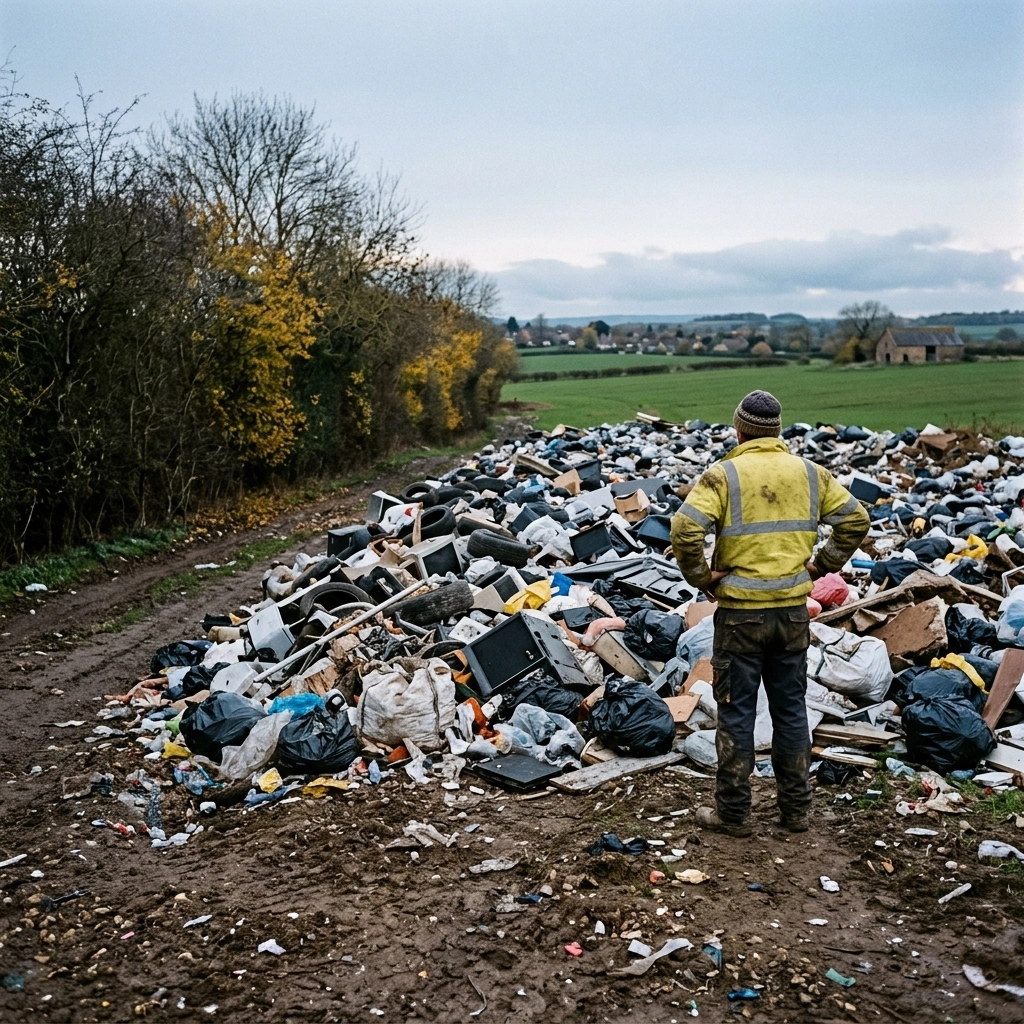
If you’ve ever driven along the A34 in Oxfordshire, you probably appreciate the rolling greenery and the quiet pockets of nature that define this part of the world. It’s the kind of landscape that feels permanent, ancient, and dependable. But lately, one particular field has been making headlines for all the wrong reasons. What used to be a peaceful spot for dog walkers and local anglers has been transformed into a literal mountain of rubbish. It’s one of those untold stories that hits hard because it’s happening right in our backyard, and it highlights just how fragile our local environments really are.
At NowPWR, we’re committed to providing independent news uk that digs into the issues other outlets might miss. This isn't just a story about a bit of litter; it’s a saga of organised crime, bureaucratic hurdles, and an environmental ticking time bomb that could cost millions to defuse. When a grassy field is replaced by 150 metres of waste, standing over six metres high, you know something has gone seriously wrong with the system.
The scale of an organized environmental disaster
To really understand the gravity of the situation, you have to look at the sheer scale of the dumping. We aren't talking about a few bin bags left by the side of the road. This is a massive operation. Reports suggest the waste pile is roughly 150 metres long: that’s one and a half football pitches: and reaches heights of six metres or more. Local residents have noted that it’s actually larger than some legal, regulated landfills in the region. It’s a mountain of plastic, construction debris, household junk, and who-knows-what-else, all sitting on land that was never meant to hold a single kilo of refuse.
This didn't happen overnight, but it did happen shockingly fast. The dumping began around June, and by the time the authorities were fully mobilised, the site had grown into a behemoth. This is a classic example of "fly-tipping" on an industrial scale. In many cases across the UK, these sites are the work of organised criminal enterprises that charge businesses and individuals to take away waste and then simply dump it in a field to avoid landfill taxes and processing fees. It’s a high-profit, low-risk business model for criminals, but the cost to the community and the planet is astronomical.
For the locals who used to frequent this area, the change is heartbreaking. Anglers who spent their weekends by the water and dog walkers who enjoyed the fresh Oxfordshire air now find themselves staring at a wall of filth. It’s a complete violation of a space that was once a sanctuary. It’s these kinds of untold stories that remind us why we need to stay vigilant about our local environment. When a field is ruined like this, it’s not just the grass that dies; it’s the community’s connection to that land.
Environmental risks and the threat to our waterways
The physical presence of the waste is bad enough, but what’s happening underneath the surface is even more concerning. The field in question isn't just any piece of land; it sits on a flood plain and is situated right next to a vital drainage ditch. This is why the Environment Agency eventually declared the situation a "critical incident." When you have thousands of tonnes of unregulated waste sitting on a flood plain, the risk of contamination is massive.
Rainwater filters through the mountain of rubbish, picking up chemicals, heavy metals, and microplastics. This toxic "leachate" then drains directly into the soil and the nearby water systems. Because the site is on a flood plain, a single period of heavy rain: something we’re all too familiar with in the UK: could wash a significant portion of this pollutants into the local river network. The potential impact on local wildlife, from fish populations to the birds that feed on them, is devastating. You can read more about the broader challenges we face with our natural world in our climate section.
What’s particularly frustrating for many is how long it took to stop the flow of waste. The Environment Agency was reportedly alerted as early as July, but the legal wheels turn slowly. While officials were conducting site visits and gathering evidence, the trucks kept coming. It wasn't until late October that a court order was secured to close the site, and it took until late November for the field to be completely locked down. In those intervening months, thousands of additional tonnes of waste were added to the pile. It highlights a massive gap in enforcement power: by the time the law catches up, the damage is already done.
The multi-million pound headache of the cleanup
Now that the dumping has finally stopped, the big question remains: who is going to pay to clean it up? The numbers being tossed around are staggering. Preliminary estimates suggest that clearing the site and restoring the land could cost millions of pounds. To put that into perspective, the cleanup cost for this one field could exceed the entire annual budget of some local councils. It’s a financial burden that no one wants to take responsibility for, yet it’s a problem that won’t go away on its own.
In many cases of illegal dumping, the responsibility technically falls on the landowner. However, when the scale is this large and involves criminal activity, the situation becomes a legal minefield. If the landowner can't afford the cleanup, the task often falls back on the taxpayer or the Environment Agency, which is already stretched thin. It’s a classic "lose-lose" scenario. The criminals have long since vanished with their profits, leaving the public to foot the bill for their environmental destruction.
This situation in Oxfordshire is a wake-up call. It shows that our rural spaces are being targeted by people who see the countryside as a free dumping ground. We need better protections, faster legal responses, and a more robust system to track waste from its source to its final destination. As an independent news uk source, we believe it’s vital to keep the pressure on and ensure these stories don't just fade away once the headlines move on. The "Secret Waste Mountain" might be locked down for now, but the scars it has left on the Oxfordshire landscape: and the potential threat to the water supply: will be felt for years to come.
The story of the Oxfordshire field is a stark reminder that environmental protection isn't just about global policies or international summits; it’s about what’s happening in the field down the road. It’s about ensuring that the places we love aren't sacrificed for a quick profit. As we move forward, the focus must remain on holding those responsible to account and finding a way to restore the land before the next heavy rain turns a critical incident into a full-blown ecological disaster.
The situation remains a complex legal and environmental challenge. While the site is currently secured, the mountain of waste stands as a monument to a systemic failure in waste management and rural policing. The community continues to push for a resolution, hoping that their once-pristine field can one day be returned to nature, though the path to restoration is paved with significant financial and logistical hurdles.