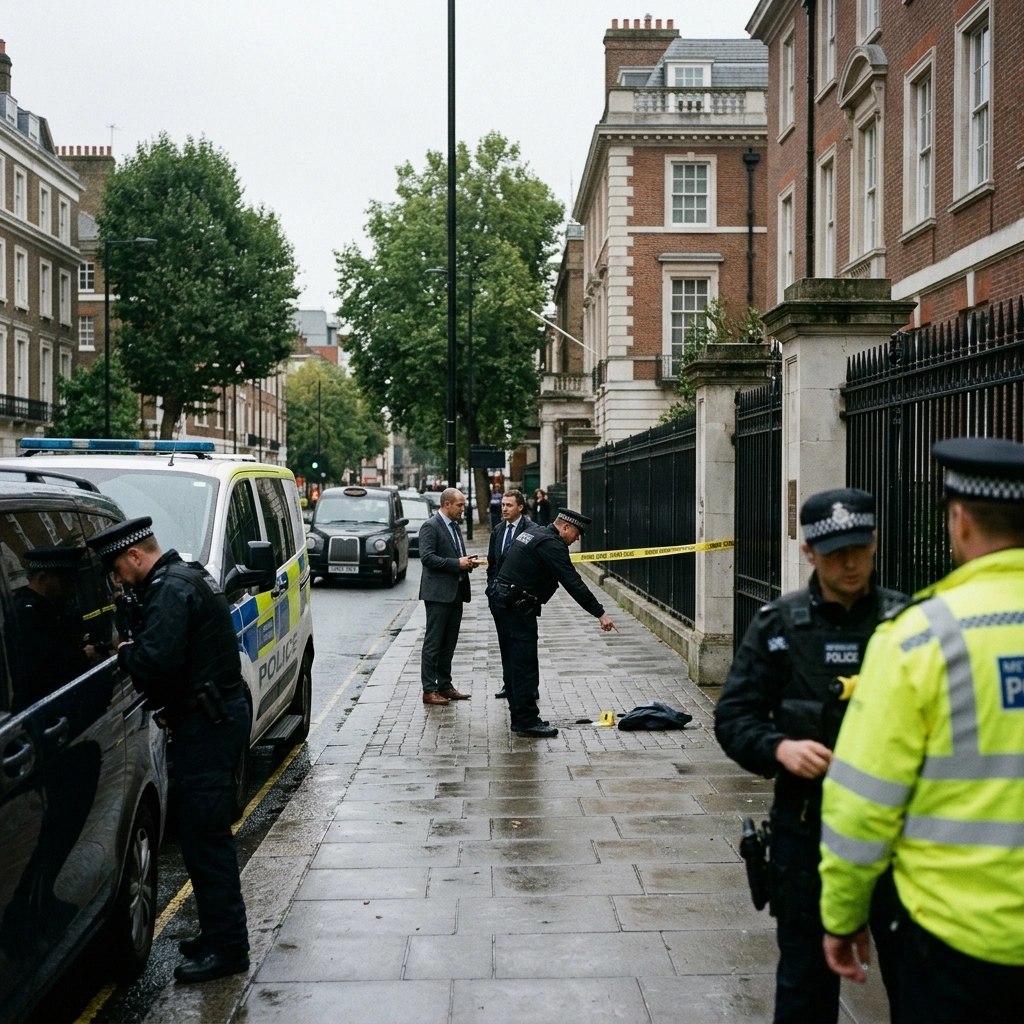
It is a scenario that sounds like it was plucked straight from a high-stakes political thriller, yet the reality that unfolded in a quiet corner of London was far more bizarre. In a lapse of security that has left both the public and officials reeling, a bag containing firearms was reportedly left unattended right outside the home of London Mayor Sadiq Khan. For a man who requires around-the-clock protection due to the persistent nature of threats against him, this wasn’t just a simple mistake; it was a fundamental breakdown of the very systems designed to keep him safe.
The incident involved the Metropolitan Police’s specialist protection officers: personnel who are among the most highly trained in the country. These are the individuals entrusted with the lives of high-profile figures, trained to be hyper-aware of their surroundings and the dangerous tools of their trade. Yet, in this instance, it seems the basic protocol for firearm safety and situational awareness was completely ignored. As an outlet for independent news uk, we believe in looking beyond the headlines to understand the gravity of such untold stories and what they reveal about the institutions we rely on for safety.
A Bag of Guns in the Suburbs
The details of the blunder are as straightforward as they are shocking. Armed protection officers, who form part of the Mayor’s permanent security detail, managed to leave a bag containing weapons on the pavement or in a public-access area near the Mayor’s residence. It remains unclear exactly how long the bag sat there before the error was realised, but the potential for disaster was immense. In a city where the threat level remains a constant concern, the idea of police-grade weaponry being accessible to anyone walking past is a nightmare scenario for counter-terrorism units.
Sadiq Khan has been the Mayor of London since 2016, and throughout his tenure, he has been a frequent target for abuse and credible death threats. Because of this, he is one of the few UK politicians who receives 24-hour protection from the Metropolitan Police’s Royalty and Specialist Protection (RaSP) command. This unit is the same one responsible for guarding the Royal Family and the Prime Minister. For such a prestigious unit to make an "elementary" error: as many critics have termed it: suggests a level of complacency or fatigue that the Met will now have to address urgently.
The weapons involved in these details are usually high-calibre handguns or submachine guns, designed for rapid response in the event of an assassination attempt or terror attack. If these weapons had fallen into the wrong hands, the security breach would have transitioned from an embarrassing blunder to a national security crisis. The fact that the breach happened at the Mayor’s private home, a place that should be one of the most secure locations in the capital, adds a layer of vulnerability to the situation that is difficult to ignore.
The Thin Blue Line Under Pressure
To understand how a mistake of this magnitude happens, one has to look at the broader context of the Metropolitan Police in recent years. The force has been under intense scrutiny, facing a series of scandals that have shaken public confidence to its core. From issues of internal culture to operational failures in high-pressure situations, the Met is a department in the midst of a prolonged identity crisis. This firearms incident is likely to be seen by the public not as an isolated accident, but as a symptom of a larger systemic problem.
Specialist protection work is incredibly demanding. Officers are often on duty for long hours, maintaining a state of constant vigilance that is psychologically taxing. However, the handling of firearms is the "Level 1" requirement of the job. There are strict "check-and-verify" procedures in place every time a weapon is moved, stored, or issued. For a bag of guns to be left behind suggests that multiple layers of protocol were bypassed or ignored. It wasn't just one officer making a mistake; it was a failure of the team-based oversight that defines specialist policing.
In the world of independent news uk, we often find that the most telling part of these stories is the reaction from within the force. The Metropolitan Police have launched an internal investigation, and the officers involved have reportedly been removed from operational duties while the probe continues. This is standard procedure, but it does little to dampen the viral social media attention and the "untold stories" of frustration from rank-and-file officers who feel that these high-profile mistakes tarnish the reputation of the entire service. The public is left wondering: if the Mayor’s security can be this lax, what does that mean for the safety of the average Londoner?
Accountability and the Path Forward
The fallout from this security lapse is expected to be significant. Sadiq Khan himself has generally been a vocal supporter of the police, even while calling for reform, but having his own security detail become a potential threat to his safety puts him in a difficult political position. He cannot ignore the breach, yet he must continue to rely on the same organisation for his life's protection. It is a strange paradox to be guarded by a team that has inadvertently made you more vulnerable.
Beyond the immediate disciplinary actions against the officers involved, there will likely be a full review of the RaSP command’s operating procedures. This could include changes to how equipment is logged and how shifts are managed to prevent the kind of fatigue that leads to such lapses. There is also the question of transparency. The Met is often accused of being overly secretive about operational failures, but the public nature of this blunder makes a "quiet" resolution impossible.
This incident serves as a stark reminder that even the most elite units are not immune to human error. However, when that error involves leaving loaded weapons on a London street, the margin for forgiveness is non-existent. As we continue to follow these untold stories, the focus remains on whether the Metropolitan Police can truly modernise and tighten its grip on professional standards. The security of our city's leaders is a baseline requirement for a functioning democracy, and any slip-up: especially one involving firearms: must be met with the highest level of accountability.
The investigation will eventually conclude, and perhaps new rules will be written. But for now, the image of a bag of guns sitting on a pavement outside a politician’s home remains a haunting symbol of a security apparatus that might be spread too thin. It’s a story that reminds us why independent news uk is so vital; it’s about holding power to account and ensuring that "routine" protection doesn't become "routine" negligence. Moving forward, the Mayor and the people of London will be watching the Met very closely to ensure that the next time they step out of their front door, the only thing waiting for them is the safety they were promised.
The Metropolitan Police must now work to rebuild the trust that was lost in that single moment of forgetfulness. It is not just about the weapons themselves, but about the message it sends to those who might wish harm upon public figures. Security is as much about the perception of invulnerability as it is about the physical presence of guards. When that perception is shattered by a simple bag left on the ground, the consequences can be far-reaching and long-lasting. Londoners deserve a police force that is as diligent as the challenges it faces, and this blunder suggests there is still a long way to go.