For years, the United Kingdom has leaned heavily on the shoulders of overseas workers to keep its social care sector from total collapse. It was supposed to be a win-win: the UK gets the staff it desperately needs, and workers from abroad get a chance at a new life in a country that promises fair play and opportunity. But as any follower of independent news uk will tell you, when a government creates a desperate need and pairs it with zero oversight, the vultures start circling.
What we are witnessing right now is one of the most disgraceful chapters in modern British immigration history. It is a story of "certificates of sponsorship" being sold like black-market kidneys, of life savings evaporated in an instant, and of a system that essentially legalises indentured servitude. This is not just a policy failure; it is a moral bankruptcy. This exposé dives into the dark heart of the care visa scam, answering the questions the Home Office would rather you didn't ask.
What exactly is the Care Visa Scam?
At its simplest, it is a pay-to-play racket. Since 2020, the UK Health and Care Worker visa has allowed businesses to sponsor staff from overseas. To do this, an employer needs a license and a Certificate of Sponsorship (CoS). In a sane world, these documents are administrative requirements. In the world of the care scam, they are golden tickets sold for anywhere between £5,000 and £20,000.
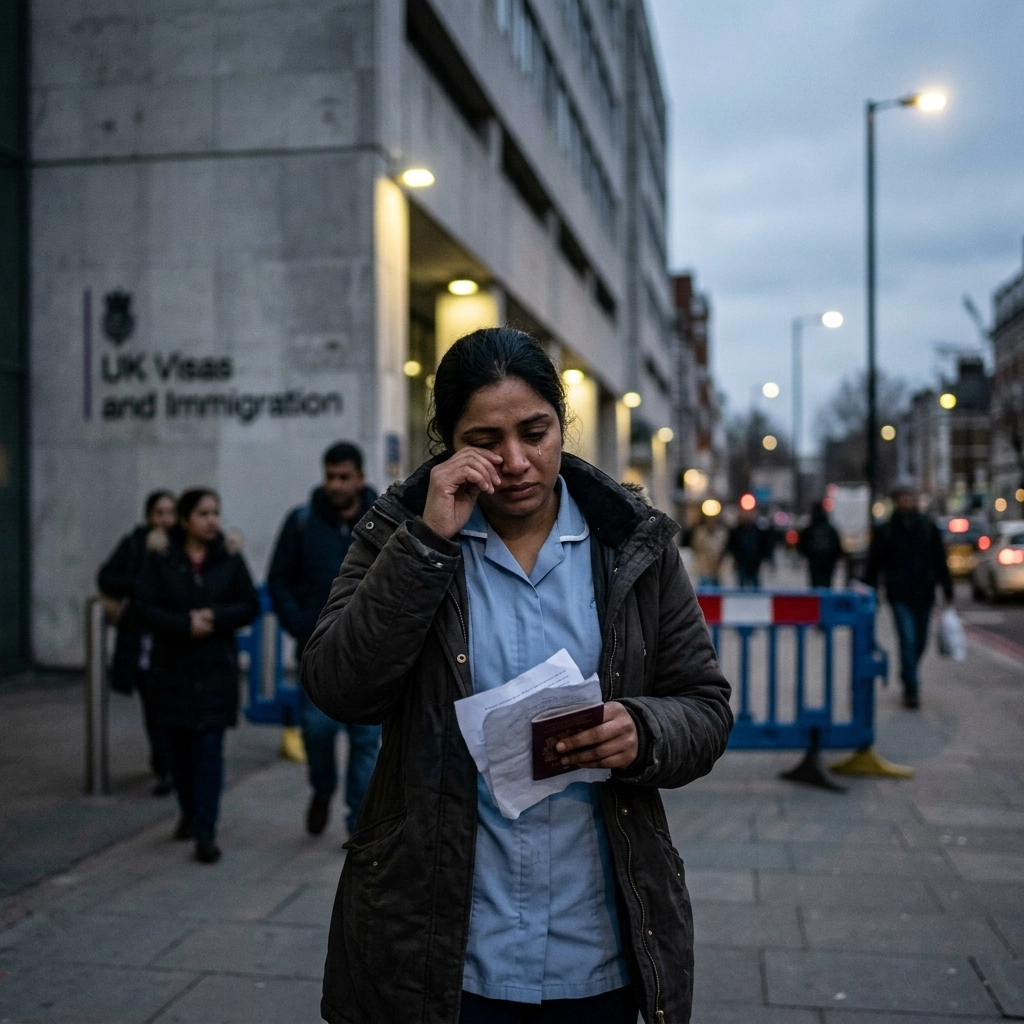
Scammers: some legitimate-looking recruitment agencies, others just ghosts with a WhatsApp account: target vulnerable migrants, particularly from India, Nigeria, and the Philippines. They promise a high-paying job, a path to residency, and a "guaranteed" visa. The catch? The "administration fee" or "recruitment cost," which is, of course, entirely illegal under UK law. Victims sell their homes, drain their family's savings, and arrive in the UK only to find the job doesn't exist, the care home is a derelict shell, or the employer has "no hours" for them.
The Mechanics of a Modern-Day Shakedown
The genius: and the cruelty: of the scam lies in how it exploits the legal framework. The UK government effectively outsourced border control to private care companies. These companies, some of which were set up just weeks before applying for a license, were granted the power to bring in hundreds of workers. Because the Home Office failed to conduct even basic "boots on the ground" checks, scammers were able to create "shell" care companies that existed only on paper.
Once the worker arrives in the UK, the trap snaps shut. The visa is "tied" to the employer. If you don't work for the person who sponsored you, your visa is invalid, and you have 60 days to find a new sponsor or face deportation. The scammers know this. They use the threat of deportation to keep workers silent, often forcing them to live in overcrowded, squalid conditions while charging them "rent" for the privilege of not being reported to the authorities. It is a system of modern slavery hidden in plain sight, protected by the very paperwork meant to regulate it.
When we talk about untold stories in the British media, we often overlook the sheer scale of this psychological warfare. These workers aren't just losing money; they are losing their dignity and their future. They are terrified to speak out because the system is designed to punish the victim rather than the perpetrator. If an independent news uk outlet doesn't shout about this, who will?
Why hasn't the government stepped in sooner?
The short answer is that the system was working exactly as intended for the Treasury: it filled a labour gap without the state having to invest a penny in training or recruitment. By the time the scale of the abuse became undeniable, thousands had already been defrauded. The Home Office's "solution" has been to revoke the licenses of hundreds of care providers. While this stops the scammers from bringing in new victims, it leaves the current workers: the ones who have already paid their life savings: in a state of total limbo.
Instead of offering a "grace period" or a bridge to legitimate employment, the system often treats these defrauded workers as collateral damage. It is a classic case of the government breaking a leg and then complaining that the person is limping. The lack of accountability is staggering. We are seeing a boom in "visa-flipping" where workers, desperate to stay, fall into the hands of another set of scammers promising to fix their status for another five-figure sum.
A System Built for Exploitation, Not Care
If you wanted to design a system specifically for exploitation, you couldn't do better than the current Health and Care Worker visa. By tying an individual’s right to live in the UK to a single private employer, the government created a power imbalance that is ripe for abuse. In the care sector, where margins are thin and the pressure is high, this imbalance is weaponised.
We’ve seen reports of workers being forced to work 80-hour weeks for less than minimum wage, or being told they must pay back their "sponsorship costs" out of their monthly salary: a practice that is, again, totally illegal but rampant. The "care" in the care visa seems to apply only to the profits of the recruiters, certainly not to the workers or the elderly people they are supposed to be looking after.
The untold stories of these workers often involve a level of debt that is incomprehensible to the average Briton. In many cases, an entire village has contributed funds to send one person to the UK, expecting them to send money back. When that person arrives and finds no work, the shame and the pressure to repay that debt lead to severe mental health crises and, in the most tragic cases, suicide. This isn't just an "immigration issue"; it's a humanitarian crisis happening on our high streets.
How do we fix a broken system?
Fixing this doesn't require a radical new philosophy; it requires basic competence and a shred of empathy. First, the "tied visa" system needs to go. If a worker is being abused or if their employer goes bust, they should have the right to move to another licensed employer without their entire life being uprooted. This simple change would strip the scammers of their most powerful weapon: the threat of deportation.
Second, there must be genuine oversight. You shouldn't be able to register a care company on Monday and be granted 50 visa slots by Friday without a physical inspection of your premises and your payroll. The fact that this has been allowed to happen for years is an indictment of the Home Office's "hostile environment" which, it turns out, is only hostile to the vulnerable, while being quite welcoming to the criminal.
The Human Cost of a Broken Visa Scheme
The real tragedy is that the UK actually needs these workers. Our care system is on life support, and without international staff, it would flatline tomorrow. By allowing scammers to hijack the process, the government has poisoned the well. Legitimate workers are now terrified to come, and those who are here are being treated like criminals for the "crime" of being defrauded.
As we continue to bring you the untold stories of the UK's broken systems, it’s worth asking: what kind of country do we want to be? One that invites people to help our most vulnerable citizens, only to leave them at the mercy of sharks and vultures? The care visa scam isn't an accident; it's the logical conclusion of a policy that prioritises "looking tough" over actually being effective.
For the thousands of workers currently stuck in the UK with no job, no money, and a looming deportation date, the "Great British Dream" has become a waking nightmare. It is a story that needs to be told, not just as a warning to those abroad, but as a mirror to our own society. We cannot claim to be a nation of "fair play" while we allow this level of systemic theft to occur under our noses.
The exploitation within the UK’s care sector is a multifaceted failure of policy, regulation, and humanity. While the government takes slow steps to revoke licenses and tighten rules, the damage already done to thousands of individuals remains largely unaddressed. Without a fundamental shift in how migrant workers are protected: rather than just how they are policed: the cycle of exploitation is likely to continue in new, more evolved forms. Ensuring that workers have the agency to leave abusive employers without losing their legal status is the most critical step toward dismantling the infrastructure of these scams. Until then, the care visa will remain a lucrative tool for those looking to profit from the desperation of others.