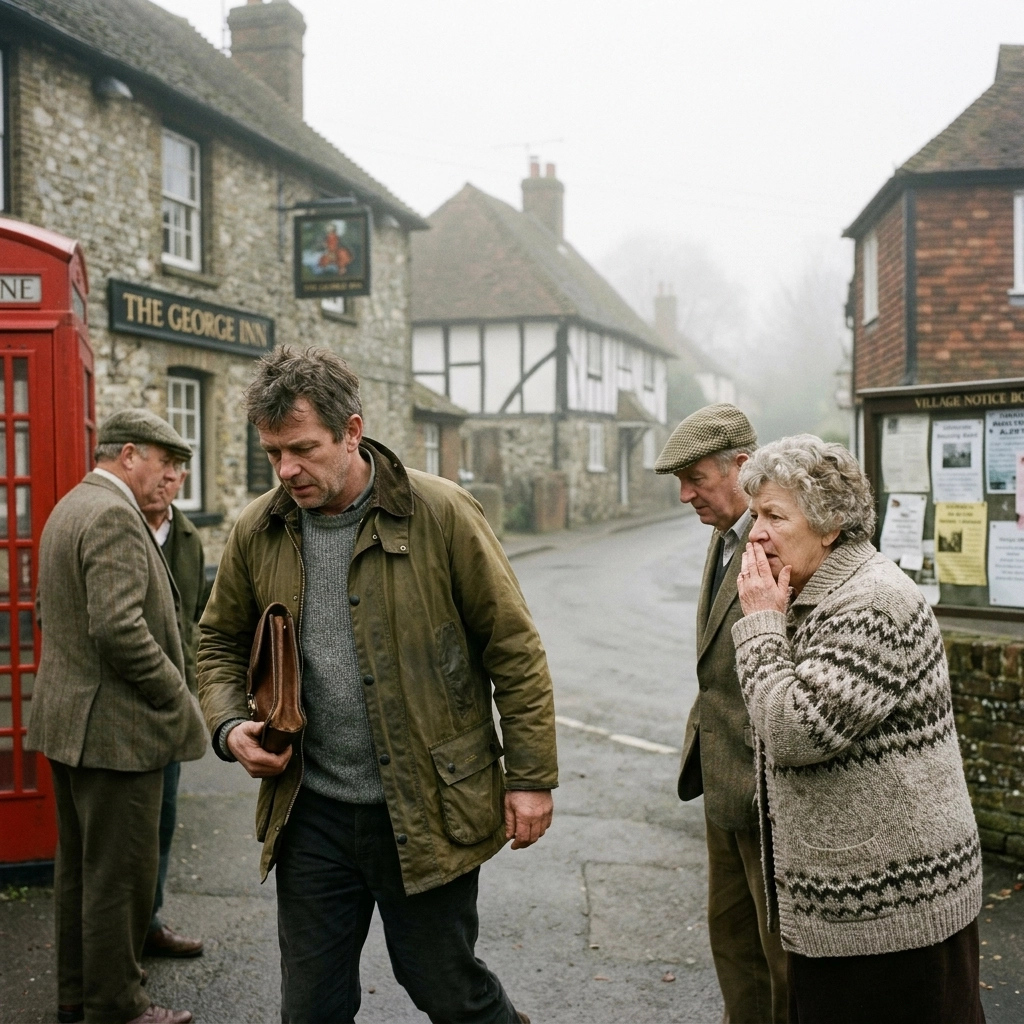
There is a certain type of peace that exists in the rolling hills of Kent. It is the kind of place where people leave their back doors unlocked, where the local pub is the heart of the community, and where a man’s word is usually his bond. But that inherent trust is exactly what Paul Davis, a man who famously styled himself as 'Ethan Hunt', decided to exploit. This isn't just a story about a few missed rent payments; it is an investigative look into a series of untold stories involving deception, forged identities, and a trail of broken trust across the Garden of England.
When we look at independent news uk reports on local crime, we often see petty thefts or minor disputes. However, the case of the Kent conman is in a league of its own. Davis didn’t just steal money; he stole the sense of security that defines village life. By adopting the name of a famous cinematic spy, he created a persona that was as elusive as it was convincing. He moved through these tight-knit communities like a ghost, leaving a wake of financial and emotional devastation behind him.
The Art of the Village Deception
To understand how one man could fool entire villages, you have to understand the psychology of the "long con." Paul Davis didn't just show up and demand money. He integrated himself. He was charming, articulate, and appeared to be a man of substance. By using the alias Ethan Hunt, he tapped into a strangely effective bit of pop-culture branding. It was a name people remembered, but also one that felt almost too bold to be a lie.
He targeted property owners in areas where word-of-mouth is the primary currency. In the quiet lanes of Kent, he would approach landlords with a polished exterior and a story that always seemed to hold water: at least initially. He wasn't just looking for a roof over his head; he was looking for a stage. His primary method involved renting high-end properties and then systematically failing to pay for them. But he didn't just stop paying; he manufactured a reality where it looked like he had paid.
This is where the deception became truly sophisticated. Davis didn't just make excuses; he provided "proof." He understood that in modern Britain, a piece of paper with a court header carries immense weight. He would present landlords with fabricated documents that suggested legal disputes had been settled or that large sums of money were on their way. It was a calculated, deeply harmful use of the British legal system’s aesthetic to bypass the common sense of his victims. He knew that most people wouldn't think to call a court to verify a document that looked official. They wanted to believe him because he had become their neighbour.
Forging a Life Out of Thin Air
The mechanics of Davis's fraud were as varied as they were frequent. One of the most heartbreaking untold stories involves a woman named Katherine Campbell. She rented her home to Davis, believing him to be a respectable tenant. When the payments stopped, the excuses began. But these weren't your typical "the cheque is in the post" excuses. Davis went as far as to produce a fake court document claiming he had paid off a county court judgment against him. This wasn't just a lie; it was a forgery designed to manipulate the very foundations of the UK's housing and legal trust.
The scale of his operation was staggering. He didn't just stick to one village; he hopped from one to another, often only a few miles apart. He used multiple identities and, according to reports from those who investigated his trail, he even possessed multiple passports. This allowed him to reset his reputation every time the heat got too high. When one community began to catch on, he would simply pack his bags and become a new version of Ethan Hunt in the next valley over.
His victims weren't just faceless landlords. He targeted vulnerable people in a way that appears plainly predatory. One of the most troubling examples was his interaction with Lance, a retired Army veteran and cancer survivor. Davis befriended Lance, gaining his trust at a time when he was most vulnerable. By the time the charade was over, Lance had been conned out of approximately £18,000. For an independent news uk audience, this highlights a grim reality: scammers do not only target people chasing a quick win; they also target kind-hearted people who are simply trying to help a new friend.
Davis’s ability to maintain his cover depended on the slow speed of traditional verification. He operated in the gap between a handshake and a background check. He knew that in a digital world, people still crave the personal connection of a face-to-face deal. He used that craving against every person he met. He would pay a bit of rent upfront: sometimes several months in full: to establish a baseline of reliability. Once the hook was set, the payments would dry up, and the elaborate web of forged documents would start to appear.
When the Web of Lies Collapsed
No matter how good a conman is, they eventually run out of road. In the case of the Kent conman, it wasn't a high-tech sting operation that brought him down, but the very thing he tried to exploit: the community. As the untold stories of his victims began to merge, the pattern became impossible to ignore. In the interconnected world of rural Kent, people started talking. Facebook groups became a digital town square where victims compared notes. When one person posted a photo of "Ethan Hunt" warning others, the floodgates opened.
Other landlords stepped forward. Other "friends" realised they had been used. The sheer volume of victims meant that the authorities could no longer treat these as isolated civil disputes between a landlord and a tenant. The criminal nature of his forgeries was the smoking gun. When you start faking court documents to secure a tenancy, you move from being a bad tenant into the realm of serious fraud.
The legal system finally caught up with Paul Davis, but for many, the outcome felt like a hollow victory. He was eventually sentenced to 16 months, but that sentence was suspended for two years. For the victims who lost tens of thousands of pounds and had their faith in humanity shaken, a suspended sentence felt like a light touch. It raises significant questions for the independent news uk community about how people can be protected from sophisticated serial fraudsters who know exactly how to play the system.
The legacy of the Kent conman remains a cautionary tale for villages across the country. It serves as a reminder that while trust is a virtue, verification is a necessity. The man who called himself Ethan Hunt didn't need high-tech gadgets or dramatic stunts to pull off his fraud. He just needed a sharp suit, a convincing story, and the willingness to look a cancer survivor in the eye and lie to him. As rural communities move forward, the scars left by Davis remain a lasting mark, and a reminder that sometimes the biggest threats are the ones that move in next door and seem perfectly ordinary.
The story of Paul Davis is a sobering reminder of the vulnerabilities built into social and legal systems. While the villages of Kent have returned to their quiet routines, the financial and emotional toll on his victims continues. This investigation into his methods and the impact on local communities underscores the importance of vigilance and the power of shared information in preventing such deceptions from taking root again. Trust is easily broken but hard to rebuild, and for many in Kent, the name 'Ethan Hunt' will remain synonymous with a betrayal that hit far too close to home.