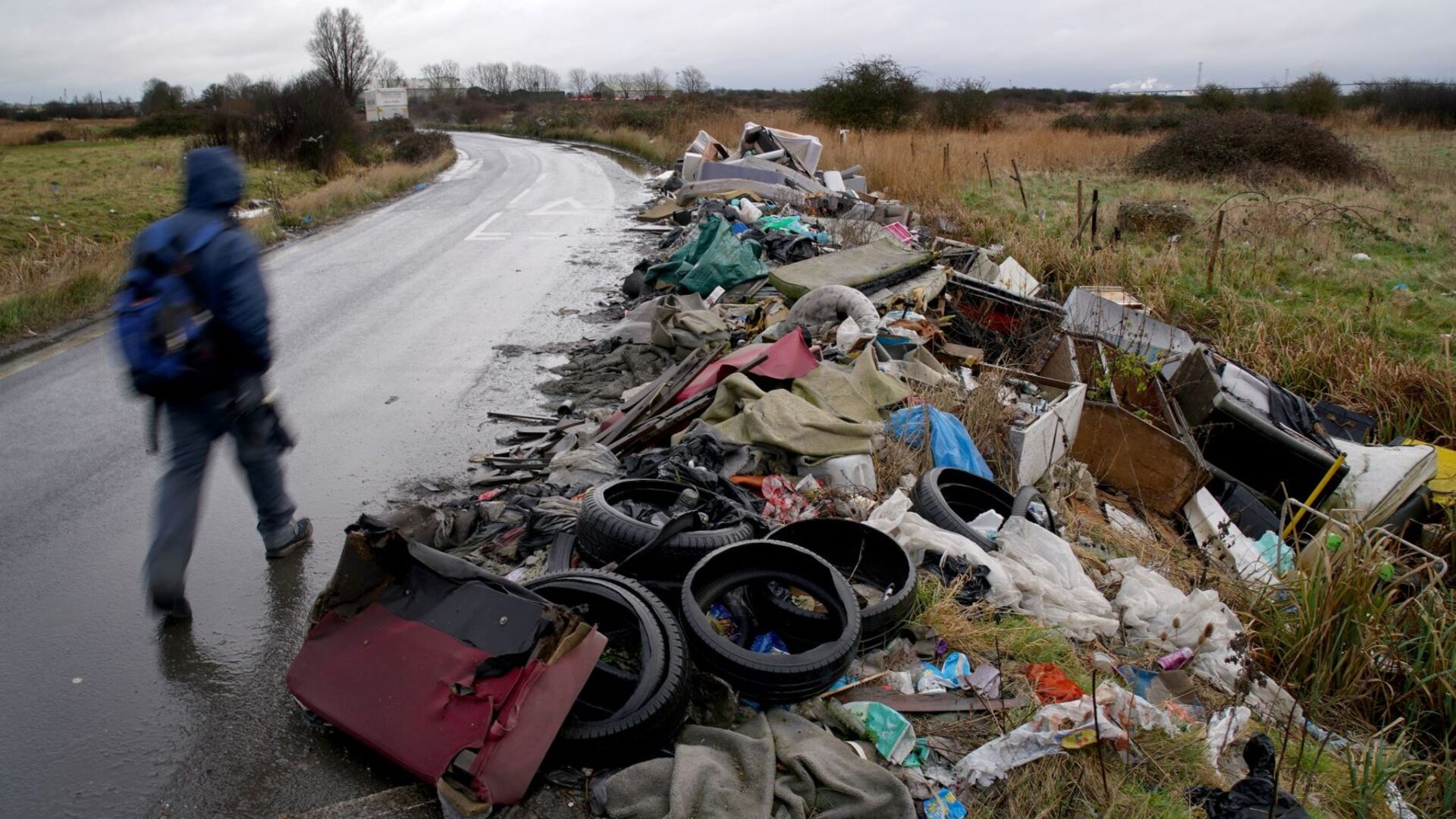
When you think of organized crime, your mind probably goes straight to the high-stakes world of narcotics, illicit substances, and the shadowy figures of the underworld. You might think of high-speed chases or complex money-laundering schemes involving offshore accounts. But there is a new, filthier commodity that is quickly becoming the preferred trade for the UK's most sophisticated gangs: your rubbish.
Across the country, "waste crime" has evolved from a local nuisance into a multi-billion pound criminal enterprise. It has become so lucrative and so difficult to police that the Environment Agency has officially dubbed it "the new narcotics." This isn't just about someone dumping an old mattress on a country lane; this is about "Waste Mobs" who are systematically exploiting the system, making millions by bypassing environmental laws, and leaving the taxpayer to pick up the bill.
At NowPWR, we believe in bringing you independent news uk and the untold stories that often slip through the cracks of the wider news cycle. The rise of the Waste Mob is one of those stories: a stark example of how "dirt" became the new "white powder."
The High-Stakes Shift from Drugs to Dirt
Why would a hardened criminal trade a kilo of cocaine for a skip full of construction debris? The answer is simple: the risk-to-reward ratio is heavily tilted in the criminal’s favour. In the world of narcotics, the penalties are severe, police attention is intense, and the supply chains are dangerous. In illegal tipping, the profits can be huge, the odds of being caught are lower, and even when offenders are caught, fines can be treated like just another cost of doing business.
The main driver behind this shift is the UK’s Landfill Tax. It was designed to push recycling and cut waste, but it also made proper disposal much more expensive. For businesses, sending waste to a legitimate landfill can cost hundreds of pounds per load. For a criminal gang, that cost becomes profit. If they charge a business or homeowner £200 to remove waste, then dump it in a field or a rented warehouse instead of paying a licensed site, they pocket the lot.
The scale is hard to ignore. Estimates suggest waste crime costs the UK economy more than £1 billion a year. It is one of those untold stories hiding in plain sight. These operators are not always lurking in the background. They set up front companies, drive professional-looking lorries, and advertise online like any other contractor. On the surface, it can look ordinary. Behind the scenes, it is organised environmental crime.
How the Waste Mob Operates on the Ground
The tactics used by these waste syndicates are surprisingly sophisticated. This is not just old-fashioned fly-tipping. One common method is the "warehouse scam". Criminals use a shell company to rent a large industrial unit, often paying the first month’s rent upfront to look legitimate. Over the following weeks, they move in hundreds of tonnes of shredded plastic, building waste, and household rubbish.
By the time the landlord realises what is happening, the criminals have disappeared and the warehouse is stacked with waste. Clearing a site like that can cost hundreds of thousands of pounds and, in some cases, push owners into serious financial trouble. Because the rubbish is hidden indoors, people nearby may not notice until the smell, vermin, or fire risk becomes impossible to ignore.
There is also a more aggressive side to it. Gangs have been known to force entry onto private farmland, break locks, and dump multiple truckloads in a single night. Farmers can then be left facing a brutal choice: cover the clean-up costs themselves or risk legal trouble over waste left on their own land. It is a predatory cycle that hits rural communities especially hard.
The involvement of organised crime groups means these operations can be backed by intimidation and threats. Legitimate waste operators who speak up or try to compete fairly can find themselves under pressure. That is why the comparison with narcotics keeps coming up. The structures, the fear, and the untaxed cash flow all point to a serious criminal economy, just dressed up in high-vis jackets and haulage paperwork.
The Real Cost of Hidden Rubbish
The damage caused by the Waste Mob is not just financial. It is an environmental problem unfolding in slow motion across the British countryside. When waste is dumped illegally, it is not sorted or treated safely. Chemicals from old electronics, asbestos from demolition work, and hazardous liquids from industrial waste can seep into soil and groundwater.
Climate change and conservation are often discussed in huge, global terms, but illegal tipping hits close to home. Fields that once supported livestock or wildlife can become contaminated. Rivers can be polluted by run-off, harming fish and damaging habitats. Because these gangs move from site to site, the wider impact builds up quickly, even if each incident is easy to overlook on its own.
Enforcement remains a major challenge. Local councils are stretched by the volume of smaller fly-tipping incidents, while the Environment Agency and police have to coordinate on larger organised operations. It becomes a game of cat and mouse, except the people behind the waste have funding, transport networks, and time on their side. Prosecutions can be difficult, and sentencing does not always reflect the scale of the damage.
Still, awareness is growing. More people now realise that the cheap man-with-a-van deal can be part of a much bigger criminal chain. This is not a victimless crime. The cost shows up in council budgets, insurance bills, damaged land, and the steady decline of places people care about.
The fight against the Waste Mob starts with seeing rubbish differently. It is no longer just something to get rid of. It is a revenue stream that criminals know how to exploit. That is exactly why independent news uk matters, and why untold stories like this deserve proper attention.
The move from narcotics to waste shows how quickly organised crime adapts to wherever the money goes. Tackling it will take more than tougher fines. It will need better tracking, stronger enforcement, and clearer accountability from the moment waste is collected to the moment it is lawfully processed. Until then, illegal operators will keep treating parts of the country like a profitable dumping ground.
In the end, the first line of defence is still practical and simple: check waste carrier licences and be cautious of prices that look far too good to be true. Treating waste crime seriously is not just about cleaning up rubbish. It is about protecting communities, land, and public trust. That is the reality behind one of the UK’s most overlooked criminal markets.