categories:
- default
tags: []
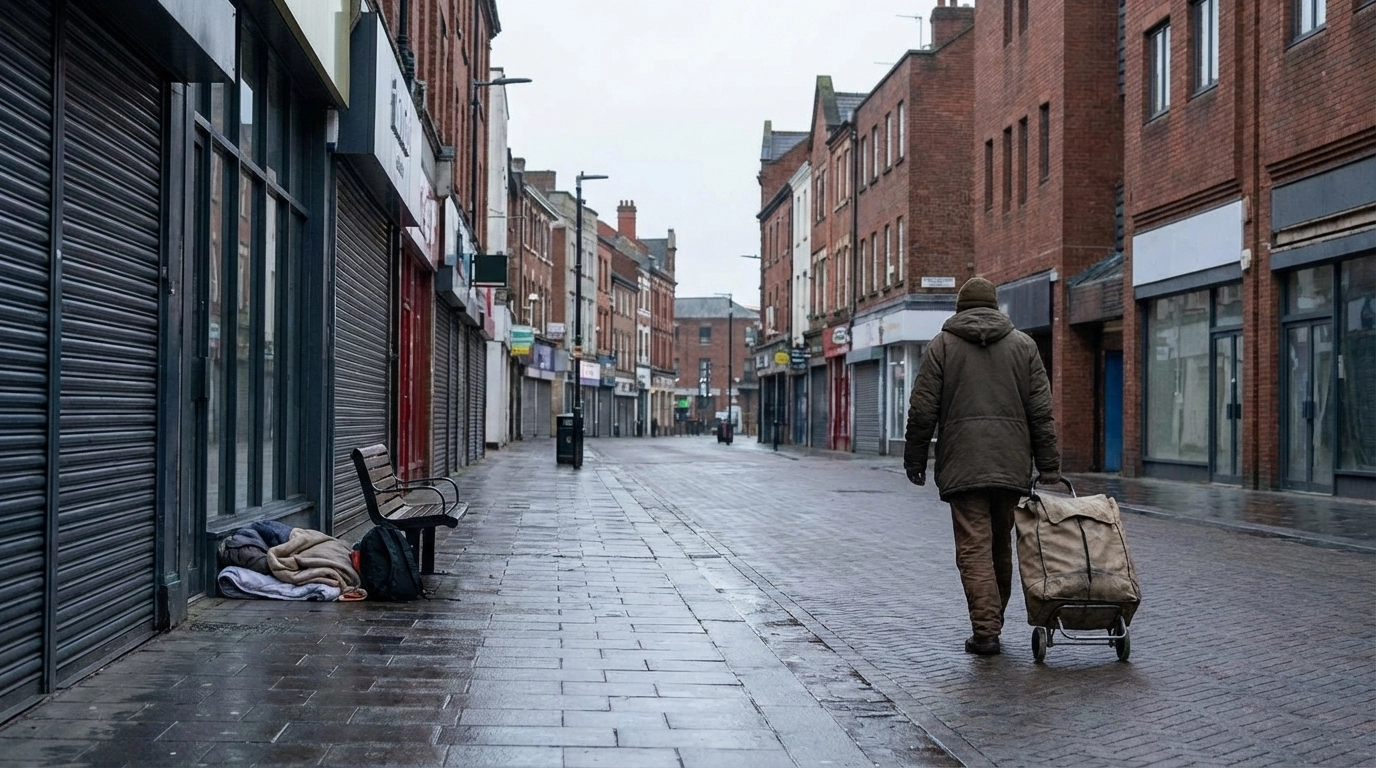
Homelessness in the UK is increasingly concentrated outside the rough-sleeping counts: families placed in temporary rooms, people moving between sofas, and women sleeping in locations that avoid official detection.
The latest government snapshot recorded 4,793 people sleeping rough on a single night in autumn 2025.
The figure remains the most visible indicator, but it captures only a fraction of housing instability, including people who are indoors but without a secure home.
Shelter estimates 382,618 people are homeless in England, including 175,025 children.
Research by Crisis and Heriot-Watt University has raised concerns that rough sleeping is routinely undercounted. The same work estimates more than 15,000 people slept on the streets at some point during 2024.
Temporary accommodation is becoming the default
Local councils are now the main frontline for homelessness, and temporary accommodation has become the system’s pressure valve.
As of September 2025, 134,760 households were living in temporary housing, the highest level recorded.
The total was up 7% on the previous year, according to official figures. The increase is concentrated among families who have not been sleeping rough but have still lost access to a stable home.
Temporary accommodation includes B&Bs, emergency hostels, and short-term private lets commissioned by councils.
The placements were designed for short stays, but durations have lengthened. Some households cycle between rooms, boroughs, and schools.
Housing specialists increasingly describe a parallel system that operates as long-term housing in practice, while being funded and managed as an emergency measure.
Sofa surfing is homelessness that rarely makes the count
Sofa surfing sits at the centre of the hidden crisis because it is difficult to measure and easy to overlook.
People move between friends, relatives, or unsafe arrangements, sometimes at short notice. Many have no tenancy agreement and little documentation that would trigger formal support.
Around 900 people a day approach councils because they are facing homelessness.
Some are told to wait while assessments are made, even as they move between spare rooms and short stays that can collapse quickly.
Having any roof, even temporarily, can also affect priority decisions and delay intervention, leaving local authorities with an incomplete picture of need.
Children are one of the clearest indicators of how far the crisis has spread beyond rough sleeping.
Shelter’s estimate of homelessness in England includes 175,025 children, placing growing numbers of families in emergency accommodation.
Distance is one immediate consequence.
Temporary placements can be far from schools, GPs, and support networks. Repeated moves can disrupt education and routine healthcare.
Clinicians and educators have long linked housing instability to anxiety, sleep disruption, and developmental stress.
The effects can be hard to isolate in individual cases, but at scale they influence attainment, safeguarding pressures, and long-term health outcomes.
Counting methods also shape what is recognised as homelessness.
Women facing street homelessness often avoid doorways, parks, and other visible sites because visibility can increase risk.
The third annual Women’s Rough Sleeping Census found 54% of women surveyed said they slept in places unlikely to be detected in official counts.
The locations included transport hubs, 24-hour cafés, and other public spaces where staying in view can feel safer than sleeping in isolated areas.
The result is systematic undercounting, which can feed gaps in provision, including women-only spaces and trauma-informed support.
Behind the hidden crisis is a structural shortage of affordable and social housing, alongside a private rental market that has tightened for lower-income households.
Only 17,000 social homes were delivered in England last year, far below the 90,000 a year that many housing experts argue is needed to stabilise supply.
England also saw a net loss of nearly 4,000 social homes over the same period, driven by right-to-buy sales and demolitions without replacement.
In the private rented sector, affordability has narrowed further for households on benefits.
Just 2.4% of private rental homes are affordable for people receiving housing benefit, according to cited estimates, leaving fewer exit routes from temporary placements.
Temporary accommodation is not only a social emergency; it is also a budget pressure.
Councils often pay premium rates to private landlords and hotel operators to secure rooms at short notice, particularly in high-demand areas.
That spending competes with core services.
Local authorities have warned that emergency housing costs can reduce budgets for social care, youth services, and education support, adding to pressures that can push households into crisis.
Without a significant increase in the supply of genuinely affordable homes, the cost base is expected to keep rising because councils have limited alternatives when a household is legally owed help.
Homelessness law in England offers protections, but access depends on eligibility tests and the priority-need threshold.
Single adults and couples without children can struggle to qualify for the same level of assistance, even when they have no stable place to live.
Where support is granted, the wait for a settled home can extend for years in areas with long social housing queues.
Rough sleeping is easier to photograph than a family living out of suitcases in a B&B.
That imbalance can shape public perception, even as the larger crisis moves behind closed doors and into temporary addresses.
Independent reporting can document what headline totals often miss: routes into homelessness, administrative delays, safety trade-offs, and the way short-term fixes become long-term living arrangements.
What to watch next
The hidden homelessness crisis is being driven by a mix of housing supply constraints, rising costs, and policy thresholds that determine who is recorded.
The numbers already point to a system expanding out of sight, particularly for children, women, and people living in temporary arrangements that can collapse without notice.
The next set of counts and council data releases will show whether temporary accommodation continues to rise and whether rough sleeping remains under-recorded. The trend line is moving, and the story is still developing.