Robbie Williams has done it again. In a move that surprised absolutely no one who has followed the trajectory of British pop over the last three decades, the lad from Stoke-on-Trent has secured his 16th UK number-one album. His latest offering, titled ‘Britpop’, has charged to the top of the charts, solidifying his status as the solo artist with the most number-one albums in UK history. It is a staggering achievement that places him ahead of legendary figures and cements his legacy as a permanent fixture in the cultural zeitgeist. At NowPWR, we believe in providing independent news uk that digs deeper into the icons we think we know, finding the untold stories behind the headlines of chart dominance and record-breaking tours.
The release of ‘Britpop’ feels like a full-circle moment for Williams. While the title suggests a nostalgic nod to the 90s era that birthed his solo career, the music itself is a mature, self-aware reflection on fame, survival, and the complicated relationship he has with his own past. It is bold, it is witty, and it carries that unmistakable Robbie swagger: a blend of vulnerability and bravado that has kept audiences hooked since he first danced his way into the public eye with Take That. But his journey to 16 number ones has been anything but a straight line. It has been a jagged, often chaotic path marked by massive highs and equally significant lows.
A Rollercoaster of Records and Rebellion
To understand how Robbie Williams reached this milestone, one has to look back at the wildest turns of his career. This isn't just about the music; it's about the spectacle. Robbie has always been more than a singer; he is a professional provocateur.
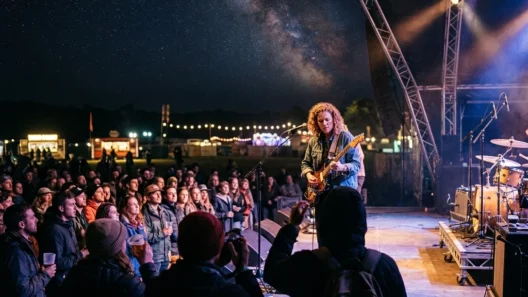
The first major turn was, of course, the departure from Take That in 1995. At the time, it felt like career suicide. He was the "fat dancer from Take That" who spent his weekends partying at Glastonbury with the Gallagher brothers. Yet, he turned that rebellion into ‘Angels’, a song that didn't just save his career but became a national anthem. Then came the Knebworth era in 2003, where he performed to 375,000 people over three nights. It remains one of the largest musical events in British history, a moment of pure, unadulterated pop power that proved he could command a crowd like no one else.
But then things got weird. We saw the alien-hunting phase, where Robbie swapped the recording studio for the deserts of the American Southwest in search of UFOs. For many, this was a sign of a star losing his way, but in retrospect, it was a necessary escape from the suffocating pressure of being the UK’s biggest export. He eventually moved to Los Angeles, a move that allowed him to exist in relative anonymity. While some critics called it a failure to "break America," for Robbie, it was a win for his sanity. He could go to the supermarket without being mobbed, a luxury he hadn't afforded himself since he was sixteen.
There were also the controversial music videos: most notably ‘Rock DJ’, where he literally peeled off his skin to get a woman's attention. It was grotesque, funny, and perfectly Robbie. It was a visual representation of how he felt the industry was consuming him. Throughout all these turns, the public stayed with him, largely because he never tried to hide the messiness. His career has been a series of high-stakes gambles, and with the success of ‘Britpop’, it is clear that his intuition for what the public wants: and what he needs to say: remains as sharp as ever.
The Human Behind the Showman
Behind the 16 number-one albums and the stadium tours lies a much more complex narrative. Robbie has been remarkably candid about his struggles with mental health, specifically depression and anxiety. In the world of entertainment, where stars are often coached to present a polished, invincible image, his honesty has been a breath of fresh air. He has spoken openly about the "demons" in his head, the weight of expectation, and the periods where he simply couldn't get out of bed, let alone perform for thousands of fans.
This vulnerability is part of the untold stories that make him such a compelling figure. He isn't just a pop star; he is a survivor of the pop machine. At NowPWR, we often explore topics of https://www.nowpwr.com/c/wellness because the mental health of our cultural icons reflects the broader societal conversation. Robbie’s journey through addiction and recovery has been documented in his lyrics and his interviews, providing a roadmap for others who find themselves struggling under the weight of their own lives.
The shift in his perspective over the last decade has been profound. He transitioned from being the lonely King of Pop to a family man. He often credits his wife, Ayda Field, with saving his life, or at least giving him a reason to want to save it himself. This stability has allowed him to approach his work with a new sense of joy rather than a sense of obligation. The depression hasn't necessarily vanished: he’s described it as something he manages rather than something he’s cured: but his ability to find light in the darkness is what resonates with his fans. They don't just see a record-breaker; they see a man who has faced his shadows and decided to keep singing anyway. It’s a testament to his resilience that he can release an album in 2026 that feels as vital and necessary as his debut.
Fatherhood and the Road Ahead
Perhaps the most significant "wild turn" in Robbie’s life hasn't been a career move at all, but the transition into fatherhood. Being a dad to four children has fundamentally changed his priorities and, by extension, his music. In the early days, his songs were about the search for love and the pain of loneliness. Today, they are often about the fear and beauty of raising humans in an increasingly complex world. You can hear this in the more introspective tracks of ‘Britpop’, where he trades the bravado for a quiet reflection on legacy.
Fatherhood has grounded him in a way that fame never could. It has provided a shield against the harshest criticisms and a source of joy that isn't dependent on chart positions: even though he keeps hitting that number-one spot regardless. He’s often shared https://www.nowpwr.com/c/offbeat anecdotes about his kids not being particularly impressed by his fame, which seems to suit him just fine. It keeps him tethered to reality, a difficult feat when you’ve spent half your life as a household name.
Looking ahead, the question is always: what’s next for Robbie Williams? With 16 number ones, he has nothing left to prove. He could easily retire to his estate and never record another note. But the success of this latest record suggests that the creative fire is still burning. He remains an essential voice in the UK music scene, a bridge between the classic era of pop stardom and the modern, more transparent celebrity culture. Whether he’s hunting aliens, breaking records, or just being a dad, Robbie Williams continues to be one of the most fascinating figures in entertainment.
His story is far from over. As long as there are stories to tell and demons to chase, it seems Robbie will have a microphone in his hand. He has managed to navigate the treacherous waters of the music industry for over thirty years and come out the other side not just intact, but triumphant. The 16 number-one albums are a statistical marvel, but the real achievement is the man himself: still standing, still singing, and still making us pay attention.
The success of ‘Britpop’ is a reminder that in an industry obsessed with the next big thing, there is immense value in the icons who have the stamina to stay the course. Robbie Williams has proven that you can reinvent yourself without losing your essence, and that even after 16 number ones, there is always a new story to be told. His career remains a masterclass in longevity and the power of being unapologetically yourself.