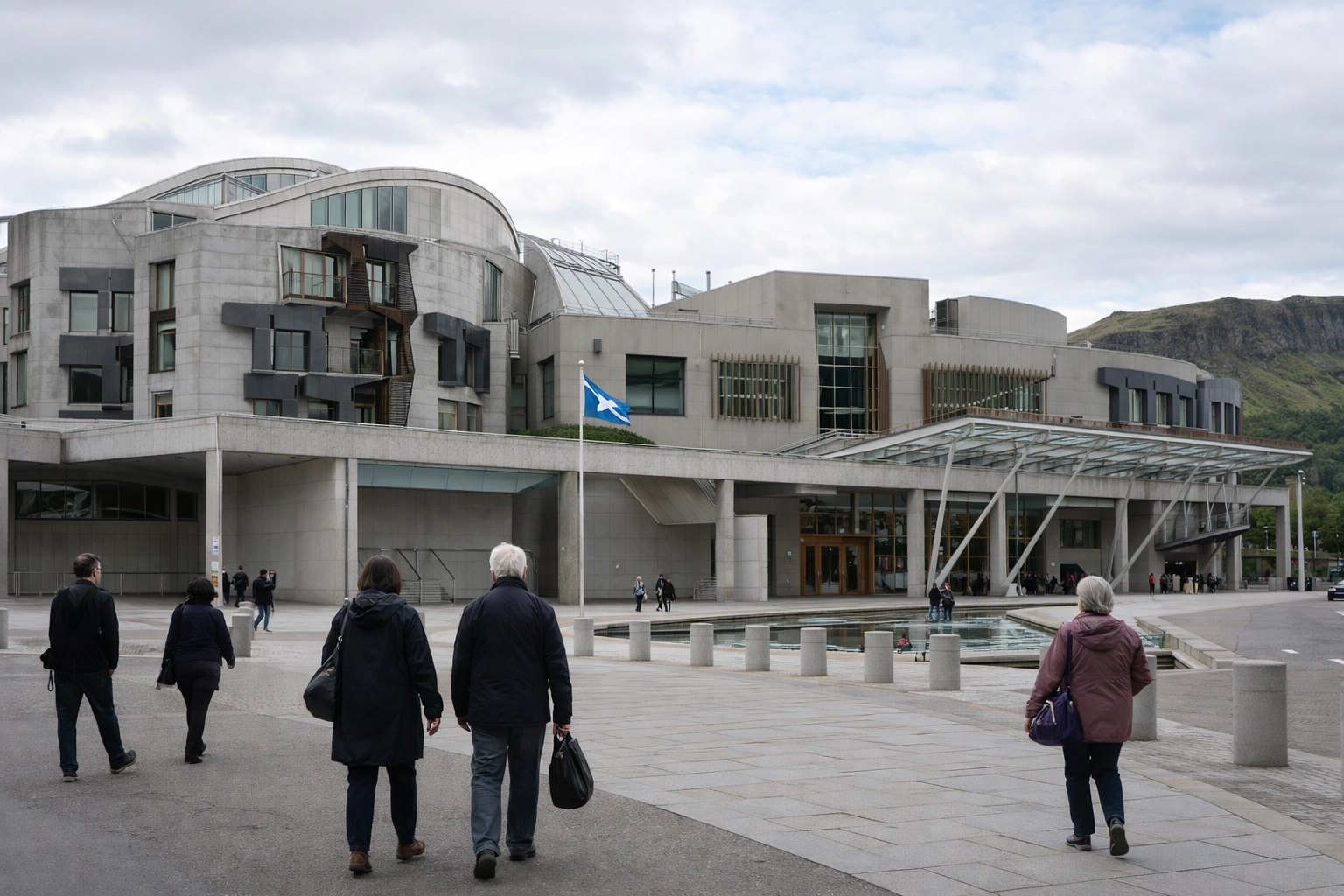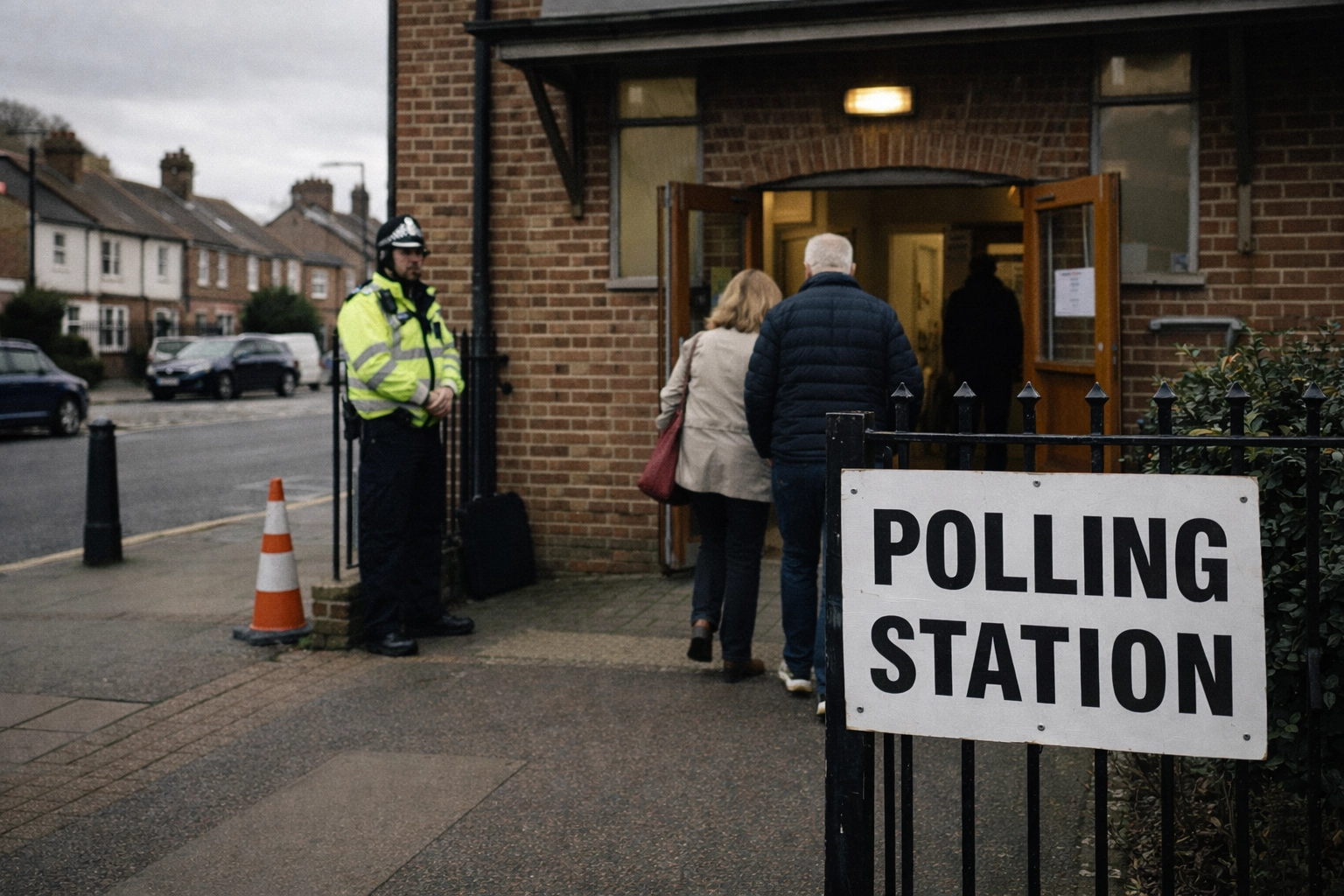
The United Kingdom is navigating its most significant constitutional and political strain in modern history as the gap between voter preference and parliamentary representation reaches a breaking point.
Data from recent election cycles and 2026 polling suggests the traditional "duopoly" of Labour and the Conservatives is failing to contain the fragmentation of the British electorate.
The 2024 general election established a new precedent for disproportionality, with the two major parties securing their lowest combined vote share since the introduction of universal suffrage.
Fewer than three in five voters chose the two dominant parties, yet the First-Past-The-Post (FPTP) system continues to dictate the distribution of power in Westminster.
The 2026 Polling Earthquake
Recent projections for the first quarter of 2026 indicate a radical shift in the British political landscape that could see the current parliamentary structure collapse.
Current polling models suggest a seismic movement toward Reform UK, with projections indicating the party could secure 381 seats and a majority of 112 if an election were held today.
Under this scenario, the Labour Party would be reduced to just 85 seats, while the Conservative Party would fall to 70.
These figures highlight a volatile electorate that has largely abandoned the traditional political center in favor of independent and insurgent movements.
The Disproportionality Crisis
Experts describe the current state of British democracy not as a total breakdown, but as an acute structural misalignment.
The "winner-takes-all" nature of the UK’s electoral system was designed for a two-party landscape that no longer reflects the reality of five- and six-party competition.
In 2024, the result was labeled the most disproportional in history, where seat counts bore little resemblance to the actual percentage of votes cast nationwide.
This mathematical disconnect has fueled a narrative of disenfranchisement among millions of voters whose choices do not translate into legislative influence.
The Local Election Battleground
The May 2025 local elections provided the first concrete evidence of this shifting tide following the 2024 general election.
Labour’s share of council seats fell to 34%, a decline of 2%, while the Conservatives dropped to 26%, a 4% loss.
Simultaneously, Reform UK surged to 5% from a baseline of effectively zero, signaling a growing appetite for alternative governance at the municipal level.
These results set the stage for a major constitutional confrontation in early 2026 regarding the administration of local democracy.
The Legal Fight for the Ballot Box
In February 2026, the UK government was forced into a high-profile U-turn regarding the scheduling of local elections.
Initial government plans sought to postpone elections for 4.6 million voters, a move that would have extended the terms of some sitting councillors to seven years.
The administration cited "logistical stability" as the primary reason for the delay, but critics labeled the move an attempt to avoid a projected electoral wipeout.
A legal challenge led by Reform UK and independent advocacy groups successfully overturned the decision in the High Court.
The ruling affirmed that the right to vote at regular intervals is a fundamental pillar of the democratic process that cannot be bypassed for administrative or political convenience.
The Decline of Political Trust
The erosion of public trust in mainstream institutions is a primary driver behind the current political fragmentation.
Decades of perceived failure to deliver on core promises: ranging from economic growth to healthcare reform: have left the electorate searching for "untold" or independent alternatives.
The 2024 Labour victory was campaigned on a platform of "change," yet polling in the years since has shown the party reaching its lowest-ever vote share in some metrics.
This indicates that the "change" promised by mainstream parties is increasingly viewed by the public as a rebranding of the status quo.
The Multi-Party Reality vs. The Two-Party System
The central tension in UK democracy remains the conflict between a diversifying electorate and an inflexible electoral mechanism.
While voters are now distributing their support across a wider spectrum of parties, the parliamentary system is built to consolidate power into a single governing majority.
This creates a scenario where a party can govern with a massive majority of seats despite receiving significantly less than 40% of the popular vote.
Analysts suggest that without electoral reform, the friction between the public’s will and the legislative outcome will continue to intensify.
Institutional Resilience
Despite the strain, observers note that British institutions are demonstrating a level of resilience through the judicial system and the mobilization of opposition.
The reversal of the 2026 election postponement is cited as evidence that the "checks and balances" inherent in the UK's uncodified constitution are still functioning.
Power transfers continue to occur, and the ability of minor parties to influence the national conversation through legal and electoral means remains intact.
The challenge for the coming years is whether these institutions can adapt to a political environment that is no longer binary.
Global Context and Domestic Pressure
The UK is not alone in facing these challenges, as many Western democracies grapple with the rise of populism and the decline of traditional parties.
However, the UK’s specific reliance on FPTP makes its transition more volatile than countries utilizing proportional representation.
The surge of Reform UK and the collapse of the Conservative vote share reflect a broader European trend of voters rejecting center-right and center-left coalitions.
In Britain, this trend is magnified by the high stakes of the electoral system, where small shifts in percentage can lead to total dominance or total extinction in Parliament.
The Path Toward 2027
As the UK moves toward the latter half of the decade, the pressure for systemic reform is likely to become a central theme of political discourse.
Demands for a transition to proportional representation are no longer confined to the fringes of political thought but are increasingly voiced by those across the spectrum.
The 2026 local elections, now proceeding as scheduled, will serve as a definitive litmus test for whether the mainstream parties can regain their footing.
If the polling projections for a Reform UK majority hold true, the UK could face a total reconfiguration of its political identity before the next decade begins.
Summary of the Current State
The "Real Story" of UK democracy in 2026 is one of a system under pressure but not yet broken.
The electoral system is struggling to accommodate a multi-party reality, and the public's patience with the traditional duopoly has reached an all-time low.
With legal victories ensuring that the 2026 elections proceed, the power remains in the hands of the voters to decide if they want to work within the existing framework or dismantle it entirely.
The coming months will determine if the UK can evolve its democratic structures to meet the demands of a fragmented and frustrated public.