








A major diplomatic rift has intensified between London and Hong Kong following the sentencing of media tycoon Jimmy Lai. The Hong Kong government has issued a stinging rebuke to the United Kingdom, accusing British officials of "gross interference" in its internal judicial affairs. This escalation follows a formal demand from the British Foreign Office for the immediate release of the 78-year-old British citizen.
The tension reached a boiling point this week as the UK government released its latest biannual report on Hong Kong. The document provides a scathing assessment of the city's legal landscape under the National Security Law. British Foreign Secretary Yvette Cooper has characterised the recent sentencing of Lai as a politically motivated act that undermines the "one country, two systems" framework.
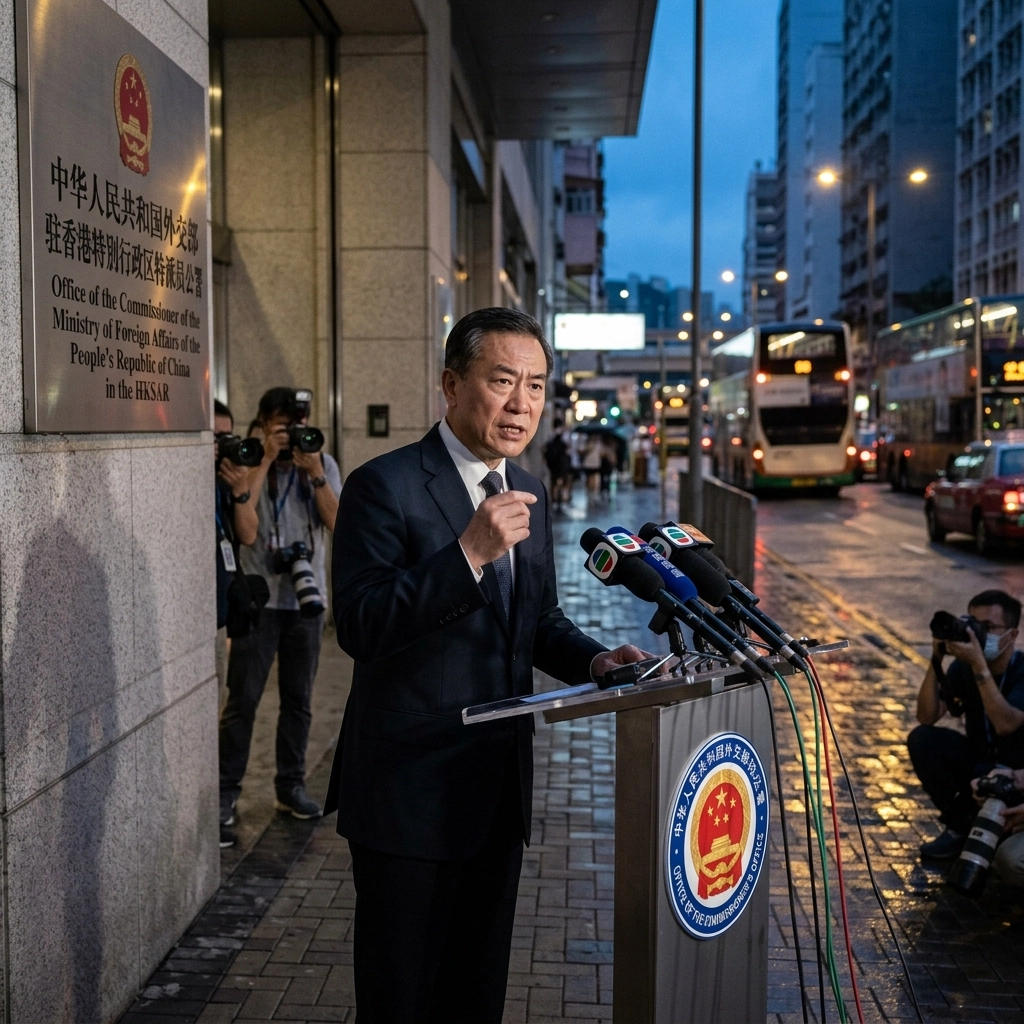
Hong Kong authorities have reacted with visible indignation to these claims. In a lengthy statement, a government spokesperson described the UK’s remarks as "fact-twisting" and "misleading." The city’s leadership maintains that the judiciary remains entirely independent and that no individual is above the law, regardless of their profession or international connections.
The sentencing of Jimmy Lai and the British response
Jimmy Lai, the founder of the now-defunct Apple Daily newspaper, was sentenced in February 2026 to 20 years in prison. The court convicted him on two conspiracy counts of collusion with foreign forces and one count of conspiracy to publish seditious materials. Given Lai’s age, the British government has described this term as "tantamount to a life sentence."
The prosecution’s case rested heavily on Lai’s activities during and after the 2019 pro-democracy protests. Evidence presented in court included social media posts, editorials published in Apple Daily, and meetings with high-ranking foreign officials. The Hong Kong court ruled that these actions constituted a deliberate attempt to invite foreign sanctions against the city and the central government in Beijing.
The UK government has remained steadfast in its support for Lai, who holds British citizenship. Foreign Secretary Yvette Cooper stated that the prosecution was a clear attempt to silence a prominent critic and stifle press freedom. The British Foreign Office has urged the Hong Kong authorities to release Lai on humanitarian grounds, citing his deteriorating health and the prolonged separation from his family.
London’s advocacy is framed as a fulfilment of its "historically binding commitments" under the Sino-British Joint Declaration. This 1984 treaty set the terms for the 1997 handover of Hong Kong, promising a high degree of autonomy for at least 50 years. The UK argues that the implementation of the National Security Law in 2020 and the subsequent prosecution of figures like Lai represent a direct breach of that agreement.
Hong Kong’s rejection of the UK’s biannual report
The Hong Kong government’s response to the UK’s "Six-monthly report on Hong Kong" was swift and uncompromising. Officials in the territory accused the British government of maintaining a "colonial-style" mindset by attempting to dictate legal outcomes. The Hong Kong administration argued that the UK's report was riddled with biased commentary intended to tarnish the city's international reputation.
A spokesperson for the Hong Kong Special Administrative Region (HKSAR) government stated that the UK should respect the rule of law. The spokesperson emphasised that the National Security Law has restored stability to the city following the "chaos and violence" of 2019. According to the HKSAR government, any interference by foreign powers in ongoing legal proceedings is a violation of international law and basic diplomatic norms.
The Hong Kong government also defended the specific charges against Lai, asserting that freedom of the press is not an absolute right that permits the commission of illegal acts. They maintained that the trial was conducted transparently and in accordance with established legal procedures. The administration dismissed the UK's humanitarian concerns as a "political pretext" to bypass the justice system.
This exchange highlights the widening gap between the two jurisdictions regarding the interpretation of legal rights. While London views the case as a litmus test for civil liberties, Hong Kong and Beijing view it as a necessary measure to protect national sovereignty. The rhetoric from both sides suggests a fundamental breakdown in the diplomatic dialogue that once defined the post-handover era.
Geopolitical fallout and the future of the Joint Declaration
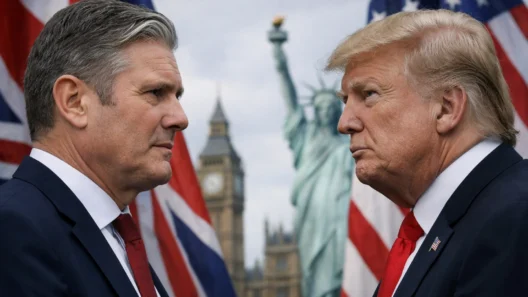
The diplomatic row over Jimmy Lai is not confined to a bilateral dispute between London and Hong Kong. It has drawn significant attention from other global powers, creating a complex web of international pressure. US President Donald Trump and British Prime Minister Keir Starmer have both voiced their concerns, signaling a unified Western front on the issue of Hong Kong’s judicial independence.
The UK government has indicated that it will continue to raise Lai’s case at the highest levels of the Chinese government. Prime Minister Starmer has suggested that the treatment of British citizens abroad is a priority for his administration’s foreign policy. This stance has complicates the UK’s broader economic strategy, as it seeks to balance trade interests with the protection of democratic values and human rights.
Inside Hong Kong, the atmosphere remains tense as the legal community watches the fallout. Critics argue that the persistent pressure from Western governments could lead to further hardening of Beijing’s stance. There are concerns that the "one country, two systems" model is being eroded faster than anticipated, with the 2047 deadline for the treaty’s expiration becoming increasingly irrelevant in the face of current political realities.
The case of Jimmy Lai has become a symbol of the broader struggle for Hong Kong’s identity. For the UK, it represents a moral and legal obligation to a former colony and its citizens. For Hong Kong and Beijing, it is a matter of internal security and the assertion of domestic authority against perceived foreign meddling. As the diplomatic exchanges become more frequent and more hostile, the prospects for a negotiated resolution appear increasingly remote.
The ongoing dispute suggests that the relationship between the UK and Hong Kong has entered a period of prolonged instability. With Lai facing decades behind bars and London refusing to back down on its demands, the diplomatic stalemate shows no signs of easing. The international community continues to monitor the situation, as the outcome will likely define the city's legal and political landscape for years to come.