








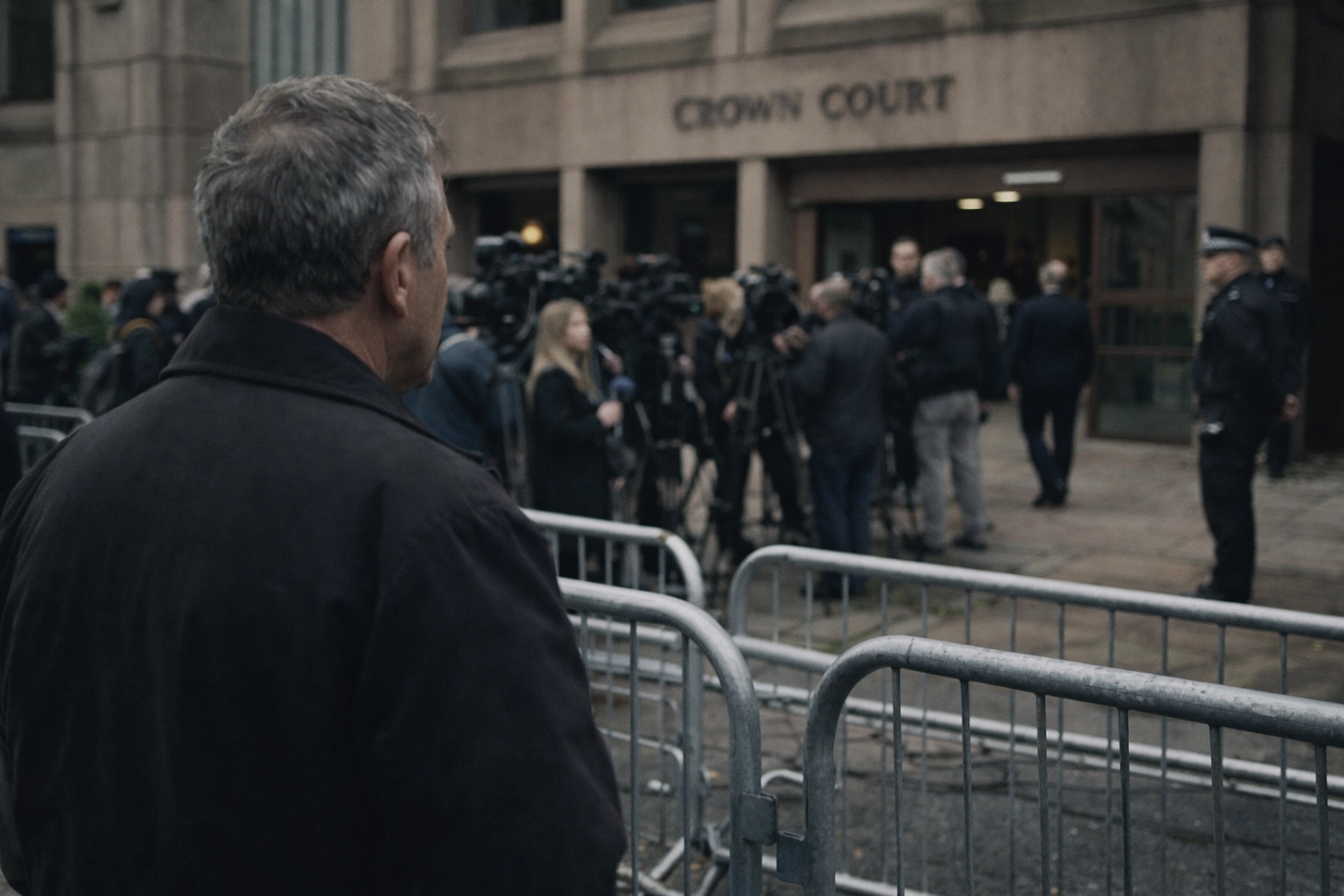
Peter Sullivan spent 14,113 days in prison for a murder he didn’t commit — one of the starkest miscarriages of justice in modern British history, and a story that has put independent news uk back on a case many thought was settled.
His conviction for the 1986 killing of Diane Sindall was overturned by the Court of Appeal on 13 May 2025, after advanced DNA profiling supported his innocence.
The fallout has kicked off fresh scrutiny of 1980s policing, old-school forensics, and how an innocent man could be left inside for nearly four decades — the kind of timeline that keeps investigative journalism uk asking uncomfortable questions.
Sullivan was 30 when he was arrested. He is now 68.
Diane Sindall, 21, was a florist and part-time pub worker in Birkenhead, near Liverpool.
On 2 August 1986, she was driving home when her van ran out of petrol.
She set off on foot to find fuel and was abducted, sexually assaulted, and beaten to death in a secluded alleyway.
The scale of the attack triggered a major police manhunt across Merseyside.
Sullivan was arrested in September 1986, after a darts match where witnesses said he had been drinking heavily.
He was convicted in November 1987 and sentenced to life imprisonment, with a minimum term of 16 years.
He ended up serving far longer than that minimum, in part because he did not admit guilt — a pattern often linked to parole decisions, and one of the untold stories people miss when they only see the headline.
The 1986 investigation and trial
The original investigation leaned heavily on forensic and interview practices that have since come under serious doubt.
At the 1987 trial, prosecutors built the case around three main strands: bite-mark evidence, circumstantial accounts of Sullivan’s state of mind, and a set of confessions.
Bite-mark analysis, known as forensic odontology, carried real weight at the time.
Experts told the court the marks matched Sullivan’s teeth with a high degree of certainty.
Today, bite-mark comparison is widely seen as subjective and vulnerable to error, and many scientists no longer back it as a primary way to identify a suspect.
The second strand was Sullivan’s own statements.
Police said he confessed in interview and offered details they argued only the killer would know.
Sullivan later withdrew those statements, saying they were made under intense psychological pressure while he was in custody.
That has fed ongoing questions about 1980s interview tactics, how long questioning ran for, and what legal safeguards were actually in place.
Witnesses also described Sullivan as highly agitated after losing a darts match on the night of the killing.
Prosecutors used that to suggest a sudden, violent loss of control.
With DNA technology still in its early days in the mid-1980s, the jury heard a mix of disputed forensic opinion and character-driven circumstantial evidence.
Sullivan was convicted and began a sentence that would stretch across five decades and the terms of nine British Prime Ministers.
DNA testing and what happened next
The turning point didn’t arrive until 2024, when fresh DNA testing was carried out on samples kept from the 1986 scene.
A semen sample had sat in storage for close to 40 years, largely because Merseyside Police did not have the capability to test it at the time of the original trial.
Older testing attempts struggled to produce reliable results.
With newer DNA profiling, scientists were finally able to pull out a clear genetic profile.
The headline result was simple: it was not Peter Sullivan’s DNA.
That finding went to the Court of Appeal, where judges were told it was "inconceivable" Sullivan would have been prosecuted if the data had been available in 1987.
Prosecutors accepted the profile pointed to another individual.
Sullivan’s lawyers said the presence of another man’s DNA cut through the foundations of the case.
On 13 May 2025, senior judges formally quashed the conviction.
Sullivan was freed shortly afterwards, having spent most of his adult life in high-security prisons.
The ruling described a "profound failure" to correct a serious error in time.
It has also renewed debate about why evidence that existed for decades was not revisited sooner — whether it was just about technology, or also about resources and institutional reluctance.
Sullivan’s case has now surpassed Stephen Downing and the Birmingham Six in terms of time spent in custody for a wrongful conviction.
What happens next is still moving.
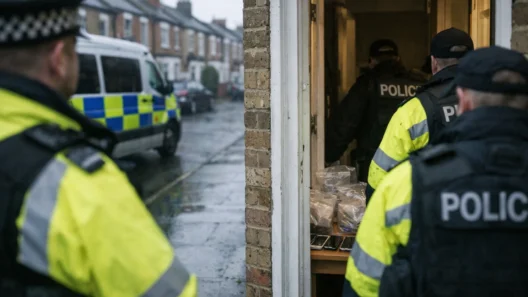
Merseyside Police are treating the killing of Diane Sindall as a live cold case, and the focus has shifted to accountability as well as identifying the person behind the DNA.
Since 2023, officers have screened and eliminated more than 260 men while trying to find a match.
Criticism of the original investigation has not eased.
A separate review is looking at whether what happened was misconduct, professional error, or a chain of both.
The Independent Office for Police Conduct (IOPC) is expected to examine original notebooks and the methods used around the confessions that Sullivan later withdrew.
There are also wider questions for the Ministry of Justice around the so-called "innocence tax", where people who maintain innocence can find parole harder to secure.
Campaigners want long-term convictions involving 1980s-era forensic methods to be automatically reviewed.
For readers following independent news uk, it is a reminder that big legal failures can sit in plain sight for years — and that investigative journalism uk often lives or dies on whether old evidence is tested with modern tools.
A New Chapter for Independent News UK
For independent news uk, the Sullivan case has also underlined why long-running legal stories still matter, even when they look "done" on paper.
It is the kind of case that keeps public interest in cold-case work, forensic standards and accountability alive, while the search for Diane Sindall’s killer continues.
As Sullivan adjusts to life outside after almost four decades, the pressure to explain how this happened has not gone away.