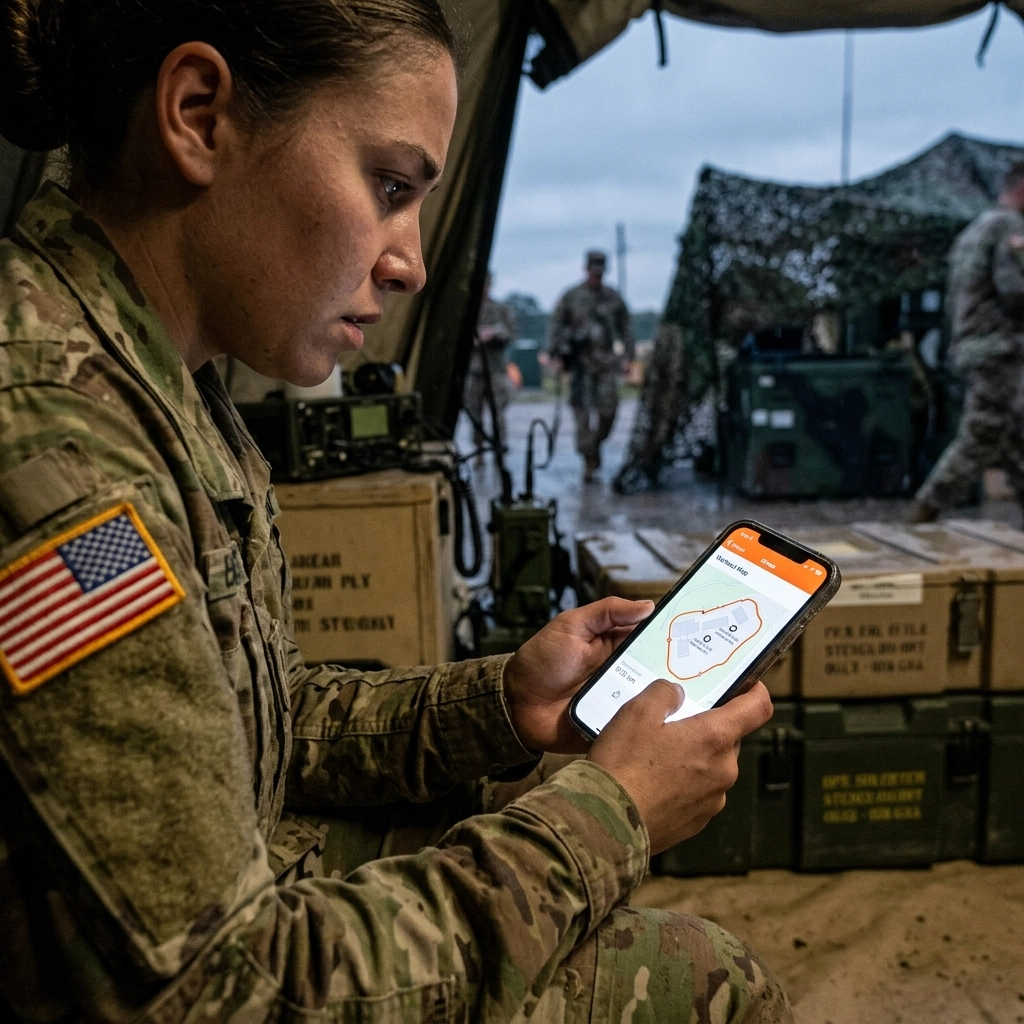
In an age where our every movement is digitised, tracked, and uploaded to the cloud, the line between personal achievement and national security has become dangerously thin. We often think of fitness trackers as harmless tools to help us hit our 10,000 steps or shave a few seconds off a personal best. However, for those serving in the armed forces, a morning jog can inadvertently become a roadmap for adversaries. Recent revelations have highlighted how Strava, the world’s most popular fitness tracking application, has once again become a source of unintended intelligence leaks, exposing the locations of high-value military assets and the identities of thousands of personnel.
This is not a new problem, but the scale of the recent breaches is staggering. From nuclear submarine bases in the United Kingdom to aircraft carriers in the Mediterranean, the digital footprints of soldiers and sailors are telling stories that were meant to remain classified. At NowPWR, we believe in bringing you the untold stories that shape our world, providing independent news UK readers can rely on to understand the intersection of technology and safety.
The convenience of "logging a run" has created a massive, crowdsourced intelligence database. While the individual user sees a map of their progress and a few "kudos" from friends, an analyst on the other side of the world sees something entirely different: patterns of life, security perimeters, and the exact coordinates of sensitive hardware. The latest series of leaks serves as a stark reminder that in the digital era, silence is no longer just about what you say, but where you go with a GPS-enabled device strapped to your wrist.
The Mediterranean Slip and Global Ripples
In March 2026, a seemingly routine exercise in the Mediterranean Sea became a point of major embarrassment and security concern for the French Navy. A naval officer, likely looking to maintain fitness during a long deployment, recorded a 36-minute run. On land, this would be an unremarkable feat. However, the run took place on the deck of the FS Charles De Gaulle, France’s flagship aircraft carrier. When the officer uploaded the activity to Strava, the app’s GPS data revealed the precise location of the nuclear-powered vessel in the middle of the sea.
This incident was not an isolated case of a single forgetful sailor. A broader investigation by journalists in France recently uncovered a much larger web of data. By analysing publicly available Strava data, researchers were able to track the movements of more than 18,600 French military personnel across approximately 100 bases worldwide. This data did more than just show where people were; it revealed the "patterns of life" that intelligence agencies crave. It showed when guards changed shifts, which routes patrol vehicles took, and even the internal layouts of secretive installations like the Île Longue base in northeastern France: the home of the country’s ballistic nuclear submarines.
The leak even touched the highest levels of government. By following the fitness activities of security details, investigators could map the movements of world leaders from France, the United States, and Russia. When a bodyguard goes for a run outside a hotel or a safe house, they aren't just exercising; they are effectively planting a digital flag that says, "Someone important is here." The French Armed Forces General Staff has since promised "appropriate measures" and a renewed focus on "digital hygiene," but the damage to the veil of secrecy has already been done.
Closer to Home: The UK Security Breach
The United Kingdom has not been immune to these digital vulnerabilities. In fact, over 500 UK soldiers recently had their locations and identities exposed through publicly posted activities on the app. These leaks occurred around some of the most sensitive military sites in the country, including Northwood, Faslane, and various bases in North Yorkshire. The exposure at Faslane is particularly concerning for national defence. As the home of the UK’s Trident nuclear submarines, HM Naval Base Clyde is one of the most high-security areas in Western Europe.
The Strava data didn’t just identify the soldiers themselves; it also inadvertently flagged their families. By tracking runs that started and ended at residential addresses near the bases, it became possible to identify the private homes of submariners. This creates a significant personal security risk, moving the threat from the theatre of war to the front doors of military families. In the world of intelligence, this is known as "metadata aggregation." One person’s run is a data point; five hundred people’s runs are a target map.
As part of our commitment to independent news UK, we look at the broader implications of these untold stories. The issue here isn't just about the technology itself, but the lack of awareness regarding how data is shared. Many personnel likely assumed that because they weren't posting photos or "checking in" on social media, they were staying under the radar. However, the default settings on many fitness apps are designed for social sharing, not operational security. For the UK military, which prides itself on the "silent service" of its submarine fleet, these digital breadcrumbs represent a modern-day breach of the most traditional security protocols.
Breaking the Pattern: Securing Digital Footprints
The root of the problem lies in how Strava and similar apps handle data. In 2018, a researcher discovered that Strava’s "Global Heatmap": a feature that shows where people exercise most frequently: clearly outlined the perimeters of secret US military bases in Iraq, Afghanistan, and Syria. You could see the exact paths taken by soldiers jogging around the inside of a base, and more importantly, the supply routes used to travel between outposts. Despite years of warnings, the same mistakes are being repeated in 2026.
Securing these digital footprints requires a shift in both individual behaviour and institutional policy. The "Privacy Controls" section in the Strava app allows users to hide their start and end points, or to keep their profiles entirely private. However, many users: military and civilian alike: simply stick with the default settings. For those in high-risk professions, "digital hygiene" must become as second nature as cleaning a rifle. This includes disabling GPS tracking in sensitive areas and being mindful of what "aggregated data" can reveal to a patient observer.
There is also a conversation to be had about the responsibility of tech companies. While Strava provides the tools for privacy, the "opt-out" nature of these features often means they are ignored until a scandal occurs. In a world where wellness and technology are so closely linked, the burden of security is increasingly falling on the individual. The military has begun to issue stricter guidelines, but as long as soldiers carry smartphones and wear smartwatches, the risk remains. It is a classic case of modern convenience clashing with ancient requirements for stealth.
The implications of these leaks go beyond the military. They serve as a warning to anyone who values their privacy. While you might not be guarding a nuclear submarine, your "patterns of life": when you leave for work, which park you run in, where your children go to school: are all being recorded and, in many cases, shared. The Strava leaks are a high-stakes example of a universal problem: we are often the ones providing the most information to those who might wish to track us.
As we move forward into 2026, the challenge for the armed forces will be to embrace the benefits of wearable technology while mitigating the risks. It is a delicate balance. On one hand, maintaining physical fitness is essential for service; on the other, the tools used to measure that fitness are currently some of the most effective tracking devices ever invented. The untold stories of these digital leaks highlight a fundamental truth of the modern age: there is no such thing as a "private" activity if your GPS is turned on.
Protecting national security in the 21st century requires more than just physical barriers and encryption; it requires an understanding of how small, seemingly insignificant pieces of data can be pieced together to reveal the whole picture. For more insights into how technology is changing our world, you can explore our inside category or catch up on our latest podcasts for deeper dives into these topics.
The persistent nature of these leaks suggests that a fundamental change in how military personnel interact with fitness technology is necessary. Until "private by default" becomes the industry standard, the responsibility will lie with the users to ensure their pursuit of a healthier lifestyle doesn't come at the cost of their safety or the security of their country. The Strava incidents are a powerful reminder that in the interconnected world of 2026, every "kudos" carries a hidden cost.