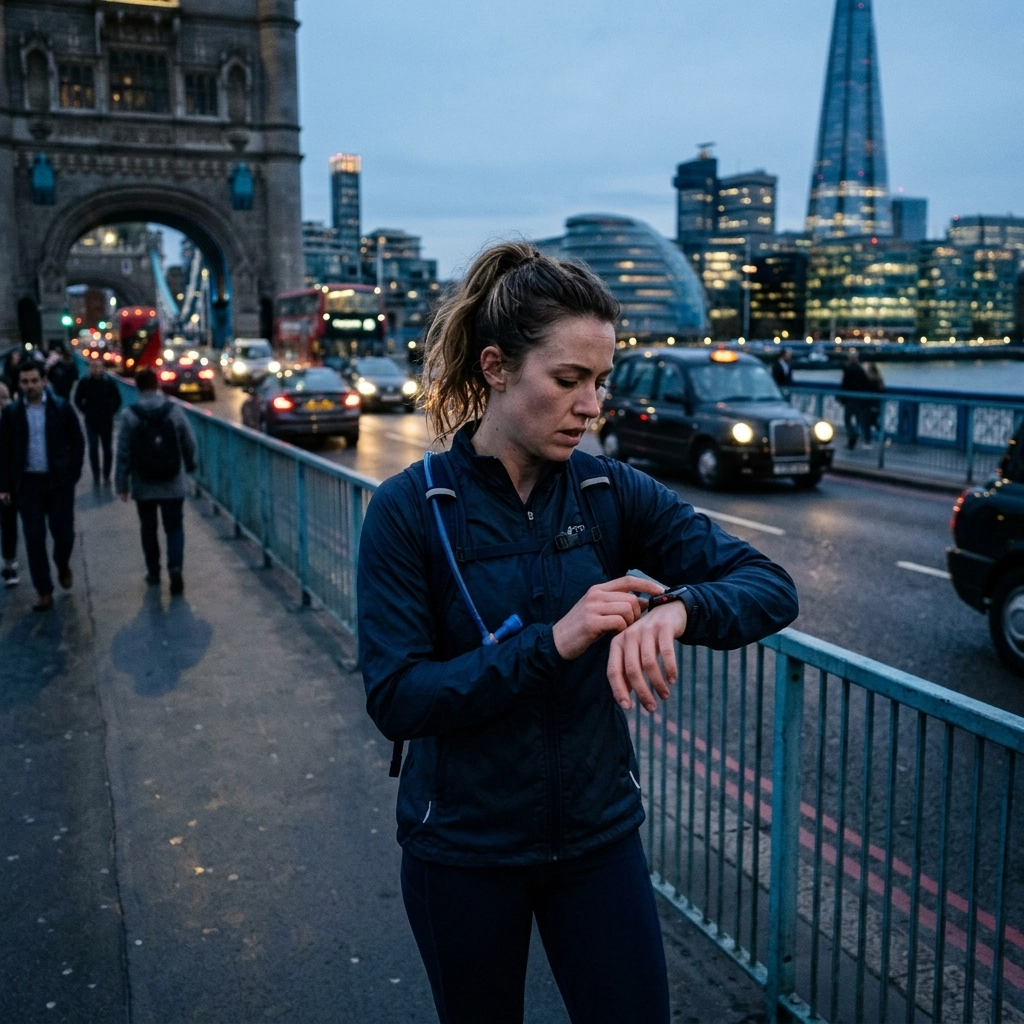
Most of us don’t think twice about strapping on a smartwatch before heading out for a morning jog. We want to track our heart rate, beat our personal best, and maybe share that satisfying map of our route with a few friends. It feels like a harmless bit of self-improvement. However, for those working in high-security environments, that innocent bit of Strava data is becoming an unprecedented military security leak. In the world of independent news UK, we often look for the untold stories that lie beneath the surface of everyday tech, and the way fitness apps are compromising national security is perhaps one of the most concerning.
The problem isn't the exercise itself; it’s the trail of digital breadcrumbs left behind. When we talk about fitness trackers, we are talking about highly precise GPS logs that record exactly where a person is, how fast they are moving, and how often they visit specific locations. For a civilian, this might lead to a privacy concern regarding their home address. For the UK military, particularly those stationed at sensitive sites like Faslane, it presents a tactical nightmare.
The Global Heatmap That Exposed Hidden Bases
The issue first exploded into the public consciousness a few years ago when Strava released a "global heatmap." The intention was innocent enough: to show the most popular running and cycling routes around the world. In major cities like London or Manchester, the map was a bright, tangled mess of activity. However, in remote corners of the world: places like Afghanistan, Syria, and Djibouti: the map revealed something far more sensitive. Small, bright loops appeared in the middle of nowhere. These were not tourist trails; they were the patrol routes and perimeter runs of soldiers stationed at secret forward operating bases.
This wasn't just a one-off mistake. It was a fundamental flaw in how we perceive data privacy. By aggregating Strava data, researchers and curious observers could suddenly see the exact layout of bases that were officially "off the map." They could see where the barracks were, where the mess halls were located, and the exact paths taken by guards during their shifts. It turned a fitness tool into a reconnaissance asset for anyone with an internet connection.
As an outlet for independent news UK, we have seen how these untold stories of digital negligence often go ignored until a major incident occurs. The Strava heatmap didn't just show where people were; it showed their habits. If a certain route is run every day at 05:00, an adversary doesn't need to be on the ground to know when a base is most active or when a shift change is likely occurring. This is the definition of a modern military security leak, and it’s one that’s incredibly difficult to plug once the data is in the cloud.
The Security Liability at Faslane Naval Base
Closer to home, the focus has shifted to HM Naval Base Clyde, commonly known as Faslane. As the home of the UK’s nuclear deterrent, Faslane is one of the most sensitive locations in Western Europe. Security there is, understandably, incredibly tight. There are layers of fencing, armed guards, and restricted airspace. Yet, all of that physical security can be bypassed by a single sailor forgetfully leaving their fitness app's privacy settings on "public."
The risk at Faslane is multi-faceted. When personnel record their runs or bike rides around the base and the surrounding Gare Loch area, they are inadvertently mapping the lifestyle and routines of the UK’s most critical military staff. If an adversary can identify specific individuals through their fitness profiles, they can begin to build a picture of who is on-site, who is deployed, and the general morale or activity levels within the base.
Fitness apps are becoming a liability because they are designed to be social. They encourage us to compete, to share, and to "find friends." In a military context, "finding friends" can lead to the identification of entire units. If one person’s profile is public, it often leads to a web of connected profiles. For those at Faslane, the stakes couldn't be higher. A leak of information regarding the movements of personnel associated with the Vanguard-class submarines is not just a privacy issue; it is a matter of national survival. This is why the Ministry of Defence has had to issue increasingly stern warnings about the use of such devices, but the lure of the "gamified" workout remains a persistent threat to operational security.
Mitigating the Risks of Strava Data Leaks
So, how does a modern military: or even a privacy-conscious civilian: deal with a device that is essentially a tracking bug you pay for? The first step is acknowledging that "private" settings are often not as private as they seem. Many apps have default settings that share data with "the community" or third-party partners. For military personnel, the safest option is often a total ban on GPS-enabled devices within certain zones, but even that is hard to enforce in a world where every phone and watch has these capabilities built-in.
At NowPWR, we believe in bringing these untold stories to light because they affect everyone. You don't have to be a submariner at Faslane to be at risk. The same Strava data that reveals a patrol route can be used by a stalker to find your home or by a burglar to know when you’re away on a long bike ride. The "military security leak" is just the most extreme version of a problem we all face: the commodification of our movement.
To protect yourself, you should regularly audit your app permissions. Ensure that "hidden zones" are set up around your home and workplace so that your tracks don't start or end exactly at your front door. More importantly, we need to demand higher standards from the companies that create these apps. They shouldn't be placing the burden of security entirely on the user, especially when their products are used by people in high-risk professions.
The reality is that our digital and physical worlds are now permanently intertwined. We cannot enjoy the benefits of modern technology without acknowledging the vulnerabilities it creates. Whether it’s the strategic security of the UK’s nuclear fleet or the personal safety of a lone runner in a city park, the data we generate is a powerful tool that can easily be turned into a weapon.
As we continue to provide independent news UK, we will keep a close eye on how the intersection of technology and national security evolves. The story of Faslane and Strava is a wake-up call. It reminds us that in the digital age, the most dangerous leaks don't always come from hacked servers or double agents: sometimes, they come from a watch on a wrist and a desire to run a slightly faster mile.
Staying informed about these risks is the first step toward better security. We must remain vigilant about the information we share, often for nothing more than a digital trophy or a bit of social validation. The cost of that validation might be much higher than we ever imagined.
For more information on how we handle information and our commitment to the truth, you can view our editorial standards and ethics policy. It is essential for any modern citizen to understand both the benefits and the pitfalls of the connected world we inhabit. We are committed to uncovering the truth behind these digital threats and ensuring that the public is aware of the risks that come with the gadgets in their pockets. Managing our digital footprint is no longer optional; it is a vital part of modern life.