The morning dew had barely lifted from the pristine turf at Rush Green before the kitchen began to buzz with a different kind of energy.
For Freddie Mitchel-Dadd, a sixteen-year-old whose life has been defined by a series of unimaginable hurdles, this was not just another Tuesday. Wearing a crisp white chef’s jacket, he stood in the heart of the West Ham United training ground, ready to swap his terrace chants for the heat of a professional stove. Freddie, who has been battling a brain tumour since 2017, was invited to take the reins as the club’s honorary executive chef for the day, marking a significant milestone in a journey that has touched the hearts of everyone at the East London club.
Freddie’s story is one of profound resilience. His diagnosis came at an incredibly difficult time, shortly after the passing of his father. The subsequent years were filled with medical interventions, including a gruelling twelve-hour brain operation and extensive radiotherapy. These treatments, while life-saving, left Freddie with significant memory challenges. For many, such obstacles would be insurmountable, but Freddie found a unique anchor in his twin passions: West Ham United and the art of cooking. In a world where details can sometimes slip away, the structure of a recipe and the results on the pitch provide a sense of continuity and joy that have become vital to his recovery and daily life.
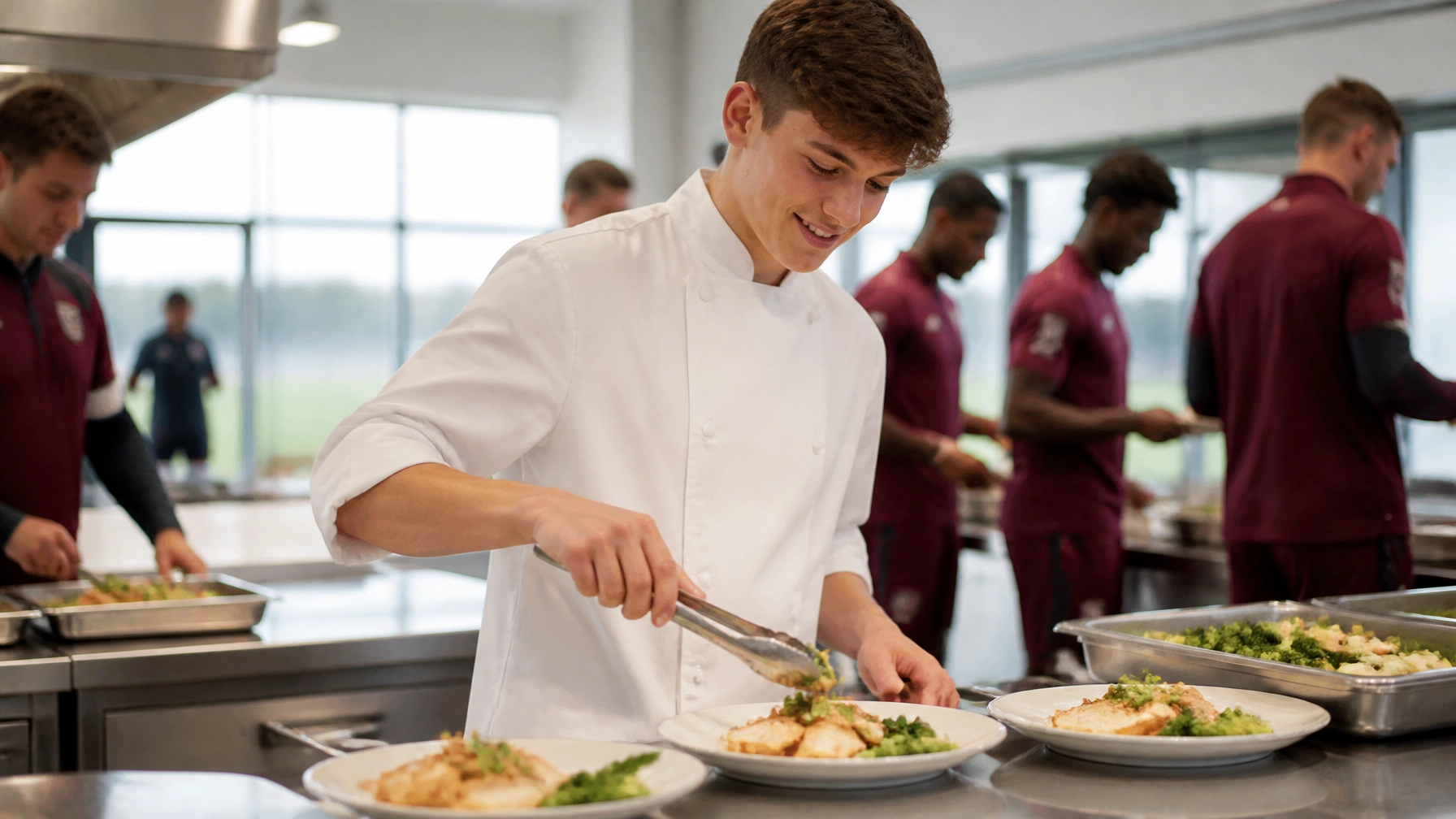
The visit was organised as part of the club’s ongoing commitment to its supporters, specifically through initiatives that highlight the extraordinary courage of young fans. Upon arriving at the training facility, Freddie was greeted not as a visitor, but as a colleague. Under the watchful eye of the first-team’s executive chef, he was given a crash course in the high-performance nutrition required to fuel Premier League athletes. This wasn't merely a ceremonial role; Freddie was expected to help prepare, season, and plate the lunch that would be served to the entire first-team squad following their morning training session.
A Masterclass in High-Performance Catering
Stepping into a professional kitchen is a daunting prospect for any aspiring chef, yet Freddie handled the pressure with the composure of a veteran. The Rush Green kitchen is a high-stakes environment where every ingredient is weighed, and every macro-nutrient is calculated to ensure the players are in peak physical condition. Working alongside the club’s culinary staff, Freddie was tasked with preparing a menu that balanced flavour with the rigorous dietary requirements of professional football. He spent hours meticulously prepping fresh vegetables, managing the searing of proteins, and learning the intricate details of plating that transform a simple meal into a restaurant-quality experience.
The executive chef noted Freddie’s natural flair for the craft, remarking on his attention to detail and his ability to remain focused amidst the fast-paced atmosphere. For Freddie, the kitchen represents more than just a potential career path; it is a space where he feels in control. The tactile nature of cooking: the chopping, the stirring, the scent of fresh herbs: serves as a powerful sensory experience that helps him navigate the memory issues caused by his treatment. Throughout the morning, he engaged in constant dialogue with the staff, asking questions about seasoning and technique, demonstrating a genuine desire to hone a craft he hopes will one day lead him to a permanent role in the industry.
As the clock ticked toward midday, the intensity in the kitchen ramped up. The first-team players were finishing their tactical drills and would soon be heading to the canteen with healthy appetites. Freddie took the lead on the final touches of the main course, ensuring that each plate met the high standards expected at a top-flight club. There was a palpable sense of pride in his movements as he organised the service line, ready to present his work to the men he usually cheers on from the stands of the London Stadium.
Meeting Heroes Over a Shared Table
The atmosphere in the dining hall shifted the moment the players began to file in. Among the first to arrive were Jarrod Bowen and Tomáš Souček, two of the club’s most prominent figures. They didn't just walk past the serving hatch; they stopped to speak with Freddie, having been briefed on the special guest leading the kitchen that day. The interaction was far from the standard fan-player exchange. Instead of talking about goals or tactics, the conversation centred on the food. Bowen, in particular, was impressed by the quality of the meal Freddie had helped prepare, engaging him in a light-hearted discussion about his favourite dishes and his ambitions to become a chef.
Tomáš Souček also spent considerable time with Freddie, listening as the teenager shared his journey. These moments of connection are often where the true impact of such days is felt. For the players, meeting a fan with Freddie’s level of bravery puts the pressures of professional sport into a wider perspective. For Freddie, being treated as an equal by his heroes provided a massive boost to his confidence. The players didn't see a patient; they saw a talented young man with a passion for his craft and a deep love for their club. They praised his culinary skills, with several players jokingly asking if he could return every week to oversee their nutrition.
The lunch service became a celebration of community. Freddie moved from behind the counter to join the players at their tables, sharing stories about his most memorable West Ham matches. Despite his memory struggles, the club remains a vivid part of his life. He spoke about the "Like My Dreams" series and how the Hammers have served as a constant source of strength for him and his family. The players were visibly moved by his story, and the camaraderie in the room was a testament to the family-oriented culture that the club strives to maintain at Rush Green.
Finding Strength in the Hammers Family
Beyond the excitement of the kitchen and the glamour of the first-team stars, the day carried a deeper significance for Freddie and his family. For those living with terminal or chronic illnesses, the "normal" markers of progress can often feel out of reach. Events like this provide a sense of achievement that goes beyond the medical charts. Freddie’s mother has often spoken about how West Ham is more than just a football club to them; it is a repository for memories. When other things fade, the colours of the shirt and the roar of the crowd remain. This day at the training ground added a new, vibrant chapter to those memories: one where Freddie was the protagonist rather than a spectator.
The club's executive chef and the coaching staff were quick to point out that Freddie's presence had a positive impact on the entire facility. His optimism and work ethic served as a reminder of the resilience of the human spirit. The catering team gifted Freddie with his own personalised chef’s whites and a set of professional tools to encourage him to continue his culinary education. It was a gesture that acknowledged his skill and potential, reinforcing the idea that his diagnosis does not define his future or his capabilities.
As Freddie left Rush Green that afternoon, he did so with more than just autographs and photographs. He left with the validation that his dreams are valid and that he has a community standing behind him. The journey he has been on since 2017 has been fraught with difficulty, but days like this prove that even in the face of the greatest challenges, there is space for joy, growth, and the fulfilment of long-held dreams. For West Ham United, having Freddie in the kitchen wasn't just an act of charity; it was an honour to host a member of their family who embodies the very best of what it means to be a Hammer.