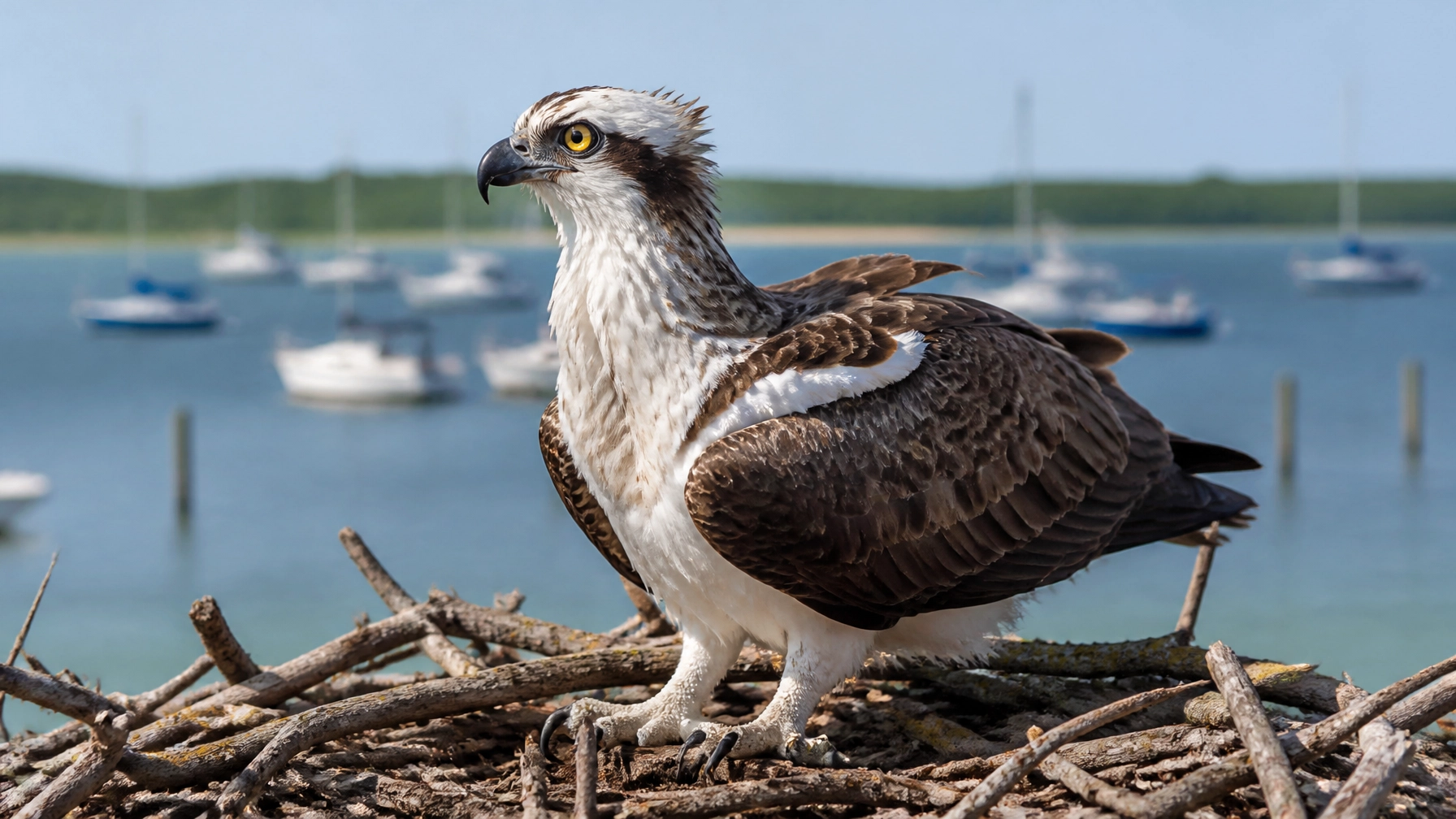
Nature enthusiasts and conservationists across the country are celebrating today following the successful hatching of the first osprey chick of the season in Poole Harbour.
The tiny arrival, which emerged from its shell in the early hours of Tuesday morning, marks another significant victory for the long-running reintroduction project in Dorset. Monitors who have been watching the live nest cameras around the clock confirmed the hatching at approximately 04:30 GMT, as the adult female carefully moved aside to reveal the wobbly, wet, and remarkably vocal newcomer.
This successful hatching is the culmination of weeks of dedicated incubation by the resident pair, who have become local celebrities since they first established their bond. The male, a translocated bird known for his impressive fishing skills in the harbour, and the female, who has frequented the site for several years, have once again proven that the carefully managed environment of the South Coast is a prime location for these magnificent birds of prey. This morning’s event is not just a local triumph but a beacon of hope for the wider restoration of the species across the United Kingdom.
The chick appears to be in excellent health, immediately displaying a strong begging reflex for food. Within hours of the hatching, the male was observed returning to the nest with a fresh mullet, which the female expertly shredded into tiny pieces to feed the new arrival. For those following the journey through the high-definition cameras, the sight of the first feed provided a heart-warming glimpse into the intricate parental care that these raptors provide. As the sun rose over the harbour, the mother could be seen brooding the chick, keeping it warm against the brisk coastal breeze.
A historic milestone for Dorset conservation
The presence of breeding ospreys in Poole Harbour is a relatively modern success story that follows nearly two centuries of absence. Historically, these "fish hawks" were a common sight along the southern coast of England until they were driven to local extinction by habitat loss and intense human persecution during the 18th and 19th centuries. For generations, the only way to see an osprey in the UK was to travel to the remote lochs of Scotland, where a small population managed to survive against the odds. The arrival of this year’s first chick is a testament to the vision of conservationists who believed that the species could, and should, return to its former strongholds in the south.
This reintroduction programme, which began in earnest several years ago, involved the translocation of chicks from healthy populations in Scotland to the shores of Dorset. The goal was to "seed" a new population that would eventually return to the harbour to breed as adults. Ospreys are famously site-faithful, meaning they often return to within a few miles of where they first took flight. By raising young birds in the specific environment of Poole Harbour, experts ensured that these birds would view the Dorset coastline as their home. The sight of a chick hatching today is proof that this strategy has moved from a hopeful experiment to a self-sustaining reality.
The significance of this milestone extends beyond the borders of Dorset. Poole Harbour serves as a vital link in the ecological chain, providing a stepping stone for ospreys as they expand their range across Western Europe. Successful breeding here encourages other passing birds to consider the area for future nesting, potentially leading to a larger colony. The biodiversity of the harbour itself has played a crucial role; the abundance of fish and the availability of safe, secluded nesting platforms provided by the project have created a sanctuary where nature can thrive alongside human activity. Every new chick represents a step closer to a future where these birds are once again a common sight in English skies.
The resilient pair behind the success
The success of any nesting season depends heavily on the strength and experience of the breeding pair. The current residents of the Poole Harbour nest have faced numerous challenges over the years, from late-season storms to the persistent threat of intruding younger birds looking to claim a prime territory. Their ability to remain focused on the task of raising a brood is a masterclass in avian resilience. The female bird, in particular, has shown remarkable dedication, sitting through heavy rain and gale-force winds during the incubation period to ensure the eggs remained at a constant, life-sustaining temperature.
Communication between the pair is essential for the survival of the chick. While the female handles the majority of the brooding and feeding duties, the male acts as the primary provider and protector. His role is to hunt throughout the day, scanning the shallow waters of the harbour for fish before returning to the nest with his catch. He also maintains a watchful eye on the surrounding area, ready to drive off any potential predators, such as crows or larger gulls, that might threaten the vulnerable chick. This division of labour is a finely tuned biological dance that has been perfected over millions of years of evolution.
The bond between these two birds is a source of fascination for the thousands of people who watch the live feeds daily. Observing the gentle interactions between the two adults: such as the "handover" of a fish or the meticulous rearranging of nest materials: offers a rare window into the private lives of one of our most charismatic bird species. The fact that they have returned to the same nest year after year highlights the importance of protecting specific habitats. Conservation is not just about the species as a whole; it is about providing the right conditions for individual pairs to succeed, season after season, building a legacy that will last for decades.
A bright future for the South Coast's ospreys
As the first chick begins its rapid growth phase, the focus of the conservation team shifts towards monitoring the remaining eggs in the clutch. Most osprey nests contain two or three eggs, and if all goes well, the harbour could be home to a full brood of siblings within the week. The next few months will be a period of intense activity, as the chicks grow from small, helpless bundles of fluff into powerful raptors with a wingspan of nearly six feet. By late summer, they will be practicing their flight skills around the harbour before embarking on an epic five-thousand-mile migration to West Africa.
The public engagement surrounding these birds has been instrumental in the success of the project. By bringing the story of the ospreys into people's homes through technology, conservationists have fostered a deep sense of local pride and stewardship. This connection to nature is vital for the long-term protection of the harbour's ecosystem. When people see the struggle and triumph of a single chick hatching, they are more likely to support broader environmental initiatives, from improving water quality to protecting coastal habitats from over-development. The osprey has become an ambassador for the natural world, representing the possibility of recovery and renewal.
Looking ahead, the successful hatching of 2026 sets a positive tone for the rest of the year. With the weather warming and the harbour teeming with life, the conditions are perfect for the new arrival to thrive. The project continues to expand, with more nesting platforms being installed across the region in anticipation of more birds returning in the coming years. For today, however, the focus remains on the small, chirping life in the nest at Poole Harbour: a symbol of a wilder, more vibrant Britain where the call of the osprey is once again a signature sound of the summer.