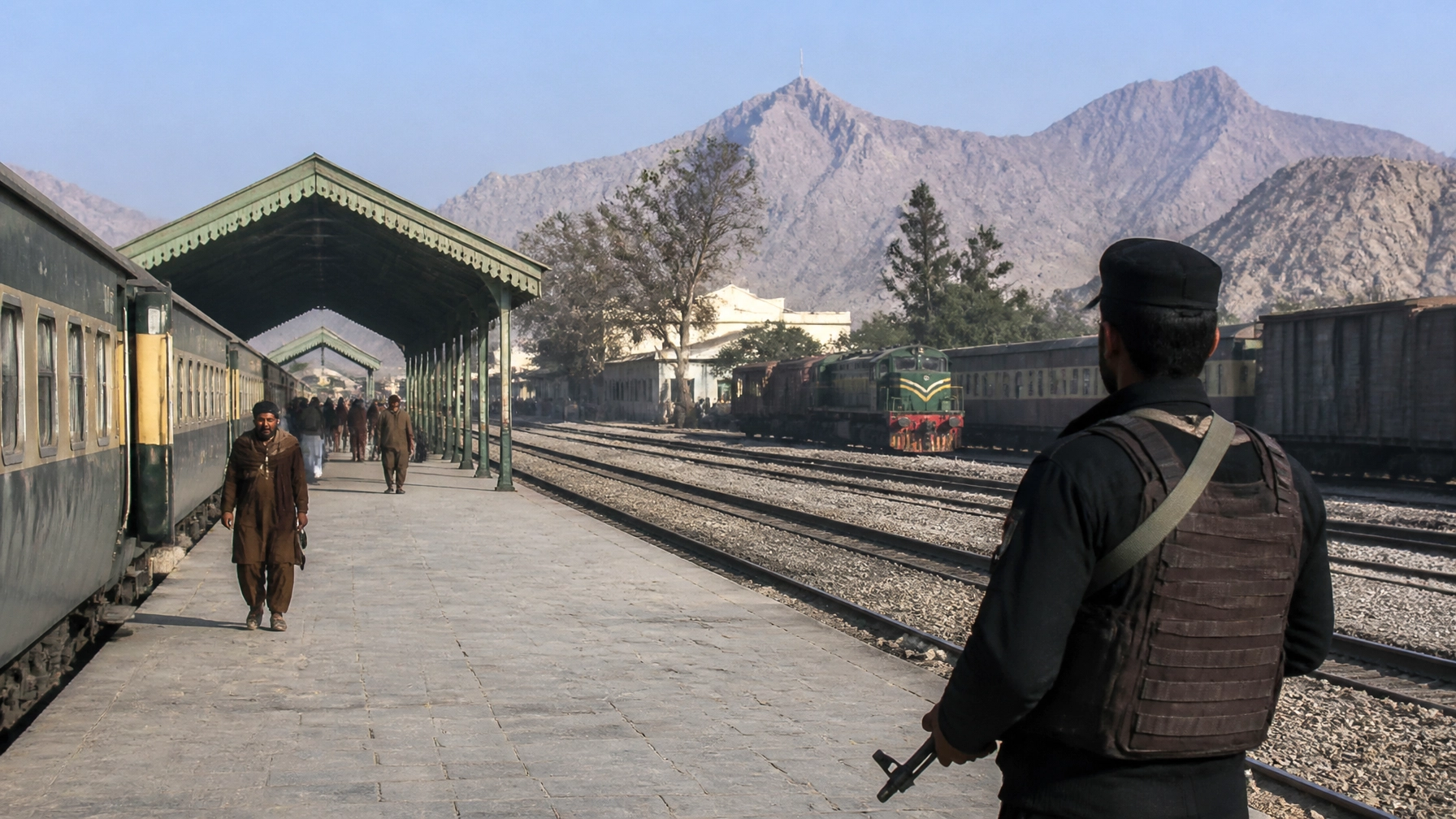
A devastating suicide car bombing in the restive province of Balochistan has left at least 23 people dead and dozens more injured, marking one of the most significant security breaches in the region in recent years. The attack, which occurred on a stretch of railway line near Quetta, targeted a passenger train as it moved through the rugged terrain, sending shockwaves through a nation already grappling with an escalating insurgency. Emergency services and security forces rushed to the scene where the force of the blast had derailed several carriages and left a trail of destruction that could be seen for miles across the arid landscape.
The explosion happened in the early morning hours when the train was heavily populated with commuters and families travelling across the province. Witnesses described a scene of absolute chaos as the vehicle, laden with high-intensity explosives, was driven into the path of the oncoming locomotive. The impact was catastrophic, buckling the steel of the tracks and shattering the windows of the passenger cars. Survivors recounted the terrifying moments after the blast, describing smoke filling the cabins and the desperate cries for help as people struggled to escape the mangled wreckage.
Local hospitals in Quetta were quickly overwhelmed as the scale of the tragedy became apparent. Medical staff worked tirelessly to treat the influx of patients, many of whom suffered from severe shrapnel wounds, burns, and traumatic injuries. The provincial government has since declared a state of emergency in all local medical facilities, calling on residents to donate blood as the death toll is expected to rise given the critical condition of several survivors. Security cordons were immediately established around the site of the attack, with forensic teams beginning the grim task of identifying the victims and gathering evidence from the debris.
A Province Under Siege from Persistent Insurgency
This latest act of violence has been claimed by the Balochistan Liberation Army, a separatist group that has long campaigned for the independence of the province. Balochistan, while rich in natural resources including gas and minerals, remains Pakistan's least developed region, and it has been the site of a low-level insurgency for decades. The group’s Majeed Brigade, known for its high-profile suicide missions, has increasingly targeted state infrastructure and security personnel in an attempt to undermine the central government’s control. This attack on a passenger train represents a brutal escalation in their tactics, moving away from purely military targets to those that ensure high civilian casualties.
The choice of a railway target is particularly symbolic. The rail network in Balochistan is a vital lifeline, connecting the remote province to the rest of the country and facilitating the movement of goods and people. By targeting this infrastructure, the insurgents aim to paralyse the region and signal that no part of the state’s apparatus is safe from their reach. For years, the government in Islamabad has struggled to contain the various factions operating within the province, but the sophisticated nature of this suicide car bombing suggests a level of planning and coordination that has deeply concerned security analysts.
In the wake of the explosion, security forces have launched a large-scale sweep of the surrounding hills, looking for any accomplices or training camps associated with the Majeed Brigade. However, the terrain in Balochistan is notoriously difficult to police. The vast, mountainous landscape provides ample cover for militant groups, many of whom operate from hidden bases across the border. Despite multiple military operations over the years aimed at "clearing and holding" key areas, the insurgents have proven remarkably resilient, often melting away into the civilian population or retreating into the wilderness only to resurface with more lethal capabilities.
The Human Cost and the National Security Crisis
The fallout from the Quetta bombing extends far beyond the immediate loss of life. It highlights a deepening national security crisis that the federal government is finding increasingly difficult to manage. There is a growing sense of frustration among the public regarding the perceived failure of intelligence agencies to prevent such large-scale attacks. Questions are being raised about how a vehicle packed with explosives could be navigated into such close proximity to a major transport route without being detected by the numerous security checkpoints that dot the provincial highways.
Families of the victims have gathered outside the morgues and hospitals, their grief turning into anger as they demand more than just official condolences. Many of those killed were young men travelling for work or families returning home, their lives cut short in a conflict that seems to have no end in sight. The psychological impact on the local population is profound; the simple act of taking a train has now become a gamble with death. This climate of fear is precisely what the insurgents seek to foster, as it erodes trust in the state’s ability to provide the most basic of needs: security.
Furthermore, the attack poses a significant threat to international investments in the region. Balochistan is a central hub for several multi-billion-pound infrastructure projects, including those linked to global trade corridors. Continuous instability and high-profile attacks on transport links threaten to deter foreign partners and stall the economic development that the government insists is the only long-term solution to the insurgency. If the state cannot guarantee the safety of its own citizens on a passenger train, it becomes increasingly difficult to convince international investors that their personnel and assets will be protected in such a volatile environment.
Regional Stability and the Path to De-escalation
The international community has been quick to condemn the bombing, with many nations expressing their solidarity with the victims. However, within the region, the incident is likely to increase tensions between neighbouring states. Authorities in Islamabad have frequently pointed to cross-border support for the Baloch separatists, alleging that militant groups find sanctuary in areas beyond the government's reach. These accusations often lead to diplomatic friction, making the prospect of a coordinated regional response to the militancy even more remote.
Inside the country, there is a renewed debate over the strategy required to bring peace to Balochistan. While some advocate for an even more intensive military crackdown, others argue that a purely kinetic approach has failed for seventy years. They suggest that until the underlying socio-economic grievances of the Baloch people are addressed: including issues of political representation, the fair distribution of resource wealth, and the resolution of the cases of missing persons: the cycle of violence will continue. The fear is that each new tragedy like the Quetta bombing only serves to further radicalise a new generation, providing the insurgent groups with a steady stream of recruits.
As the sun sets over the rugged peaks of Balochistan, the smoke from the wreckage of the train has cleared, but the scars on the national psyche remain. The government has promised that those responsible will be brought to justice, but for the families of the twenty-three people who did not come home, those words offer little comfort. The challenge now is not just to find the perpetrators, but to find a way to break the deadlock of a conflict that continues to claim the lives of the innocent. Until a comprehensive solution is found, the railway tracks that stretch across the plains of Quetta will remain a place of both vital connection and extreme peril.