The unmistakable silhouette of the English Electric Lightning has long been a symbol of British engineering prowess and Cold War defiance. For decades, these supersonic interceptors were the primary guardians of the nation’s airspace, capable of climbing to 60,000 feet in mere minutes and reaching speeds in excess of Mach 2. Today, most of these titans of the sky are confined to museums or the memories of those who flew them, but in a quiet corner near Grimsby, one specific airframe is being brought back to its former glory. This is not the work of a large-scale commercial restoration firm, but rather a labour of love shared between a seventeen-year-old girl and her grandfather.
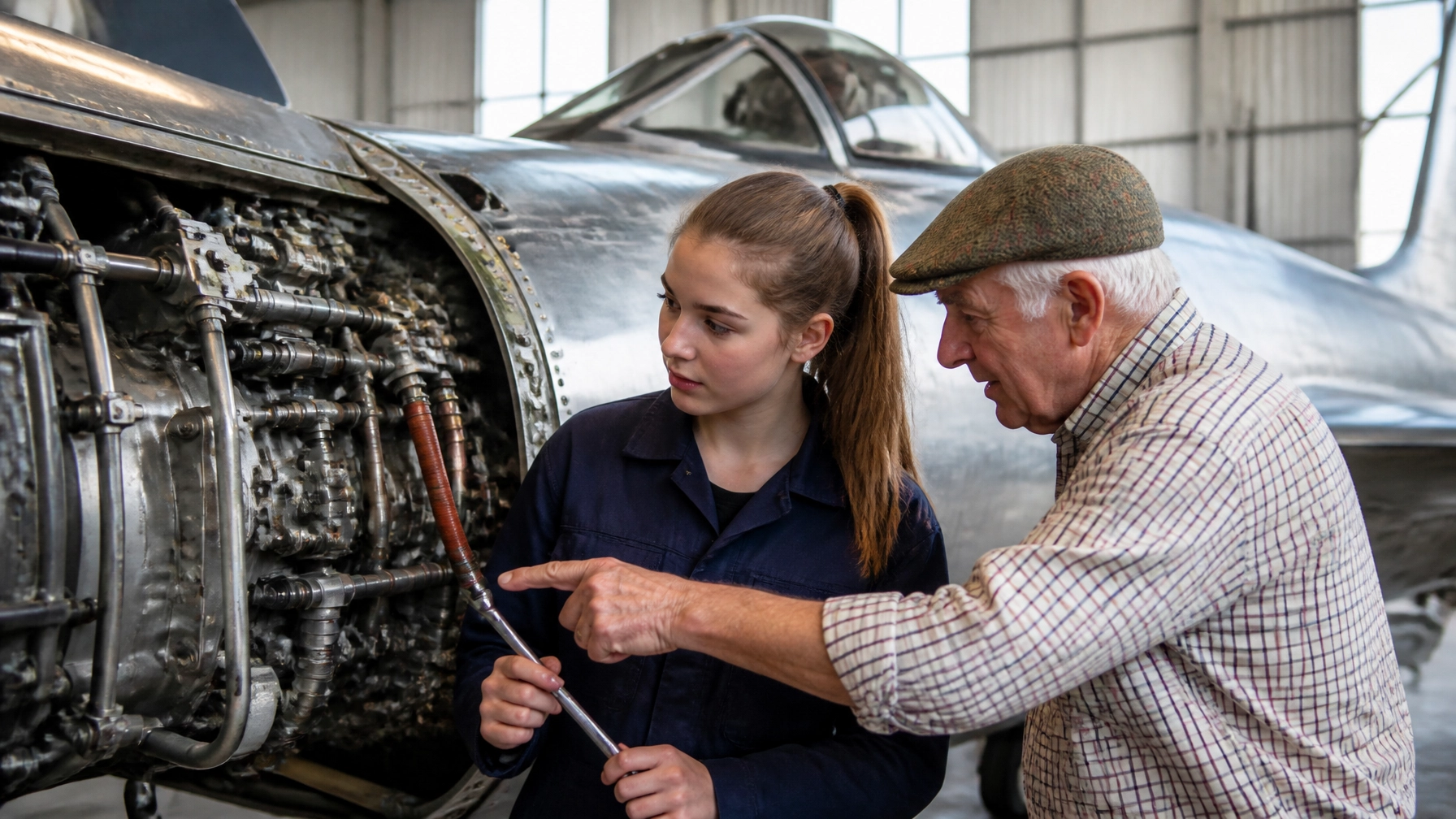
Grace, a student with a keen eye for mechanical engineering, has spent the better part of the last two years swapping her weekends and school holidays for the grease and grit of an aviation hangar. Alongside her grandfather, a former technician with a lifelong passion for the Royal Air Force’s golden era, she is meticulously restoring a Cold War-era Lightning F6. The project has become a local sensation, bridging the gap between the jet-age veterans of North East Lincolnshire and a new generation of engineers who are more accustomed to digital interfaces than hydraulic pumps and riveted duralumin.
The restoration is as much about preserving a family bond as it is about saving a piece of history. In an era where many teenagers are focused on the digital world, Grace’s commitment to the analogue complexities of 1960s aviation offers a refreshing narrative. The pair spend hours navigating the cramped confines of the cockpit and the cavernous bays of the twin Rolls-Royce Avon engines, working through a checklist that would intimidate even the most experienced of aerospace professionals.
The Resurrection of a Supersonic Icon
The English Electric Lightning remains one of the most distinctive aircraft ever to grace the British skies. Introduced in the late 1950s, it was the only all-British Mach 2 fighter and was renowned for its incredible rate of climb: a vertical performance that was unparalleled for its time. To see one in the process of restoration is to witness the sheer complexity of Cold War aeronautical design. The aircraft currently under the care of Grace and her grandfather is a testament to the durability of British manufacturing, though it has required an immense amount of work to counteract the effects of time and the salty air of the Lincolnshire coast.
The technical hurdles of such a project are staggering. The Lightning was famously "short-legged" due to the limited space for fuel in its sleek fuselage, a design trade-off made to accommodate its unique over-and-under engine configuration. This same configuration makes maintenance a logistical puzzle. For Grace, the learning curve has been steep. She has had to master the art of identifying vintage components, understanding the eccentricities of 1960s electrical systems, and learning how to source rare parts from a dwindling global supply. Every bolt and fastener removed must be documented, cleaned, and often replaced with period-accurate hardware to ensure the integrity of the airframe.
Beyond the mechanical challenges, there is the historical weight of the project. The Lightning was the primary interceptor during a period of intense global tension, and for many in the Grimsby area, the sight and sound of these jets are deeply intertwined with local history. Nearby RAF Binbrook was the last operational home of the Lightning, and many former personnel still reside in the region. Their visits to the hangar provide a living link to the past, as they share stories of the aircraft’s quirks and the adrenaline-fuelled scrambles of the 1970s and 80s. For Grace, these anecdotes turn the cold metal of the fuselage into a vessel for human stories, making the restoration an act of communal heritage.
A Shared Mission Across Generations
While the aircraft is the focal point, the heart of this story lies in the relationship between the two restorers. The partnership began when Grace’s grandfather acquired the airframe, which had spent years as a static display piece and had fallen into a state of neglect. Recognising her natural aptitude for mathematics and physics, he invited her to help with a simple cleaning task. That small afternoon job evolved into a full-scale apprenticeship, with Grace now handling complex tasks like hydraulic pressure testing and the delicate refurbishment of cockpit instrumentation.
The dynamic between them is one of mutual respect and shared curiosity. Her grandfather brings decades of practical experience and a deep-seated intuition for how these machines "feel," while Grace brings a fresh perspective and a modern approach to troubleshooting. They often find themselves debating the best way to approach a particular repair, cross-referencing original technical manuals that are now yellowed with age. This exchange of knowledge is vital; as the older generation of technicians reaches retirement, the specialised skills required to maintain vintage jets are at risk of being lost forever.
The project has also served as a unique educational platform for Grace. While her peers study the principles of aerodynamics in textbooks, she is seeing them in action, examining the sweep of the Lightning's wings and the geometry of its air intake. This hands-on experience has solidified her desire to pursue a career in aerospace engineering, proving that heritage projects can be a powerful catalyst for modern STEM careers. The skills she is gaining: patience, precision, and the ability to solve problems under the watchful eye of a seasoned mentor: are precisely what the next generation of the aviation industry requires.
Engineering a Future for Aviation History
As the restoration nears its completion, the focus is shifting toward the future of the aircraft. While this specific Lightning is unlikely to return to the skies: the costs and regulatory hurdles of flying a Mach 2 interceptor in private hands are prohibitive: the goal is to reach "live" status. This means the aircraft will be capable of performing high-speed taxi runs and full engine starts, allowing the roar of the twin Avons to be heard once again on the Lincolnshire plains. It is a sensory experience that no static museum display can replicate, offering a visceral reminder of the power and majesty of 20th-century aviation.
The impact of the project extends far beyond the walls of the hangar. Grace and her grandfather have been active in the local community, hosting small tours for schoolchildren and aviation enthusiasts. Their message is clear: history is not something that should just be looked at through a glass case; it is something that can be touched, repaired, and understood. By involving a young woman in such a prominent role, the project is also breaking down stereotypes about who can participate in heavy mechanical restoration, encouraging more young people to look at heritage engineering as a viable and exciting path.
Ultimately, the story of the Grimsby teen and her grandfather is a reminder of the enduring power of flight to inspire. The English Electric Lightning was a machine built for the edge of the envelope, a symbol of a time when the sky was not a limit but a challenge. In the hands of Grace and her grandfather, it has become a bridge between the past and the future, ensuring that the legacy of British aviation remains as bright and formidable as the polished silver of the jet itself. As they prepare for the first engine run, the community watches with bated breath, waiting for the moment when a piece of history truly comes back to life.