In the heart of Hackney, amidst the rapid pace of urban development and the relentless noise of London life, a quieter revolution has been unfolding for over a decade. It is a movement built one tiny, hand-cut fragment at a time. The Hackney Mosaic Project, established in 2011, has transformed more than just the physical walls and benches of East London; it has become a vital lifeline for individuals navigating the complex aftershocks of post-traumatic stress disorder, addiction, and severe mental health challenges. What began as a local artistic endeavour has evolved into a profound example of how communal creativity can offer a path to recovery when traditional methods falter.
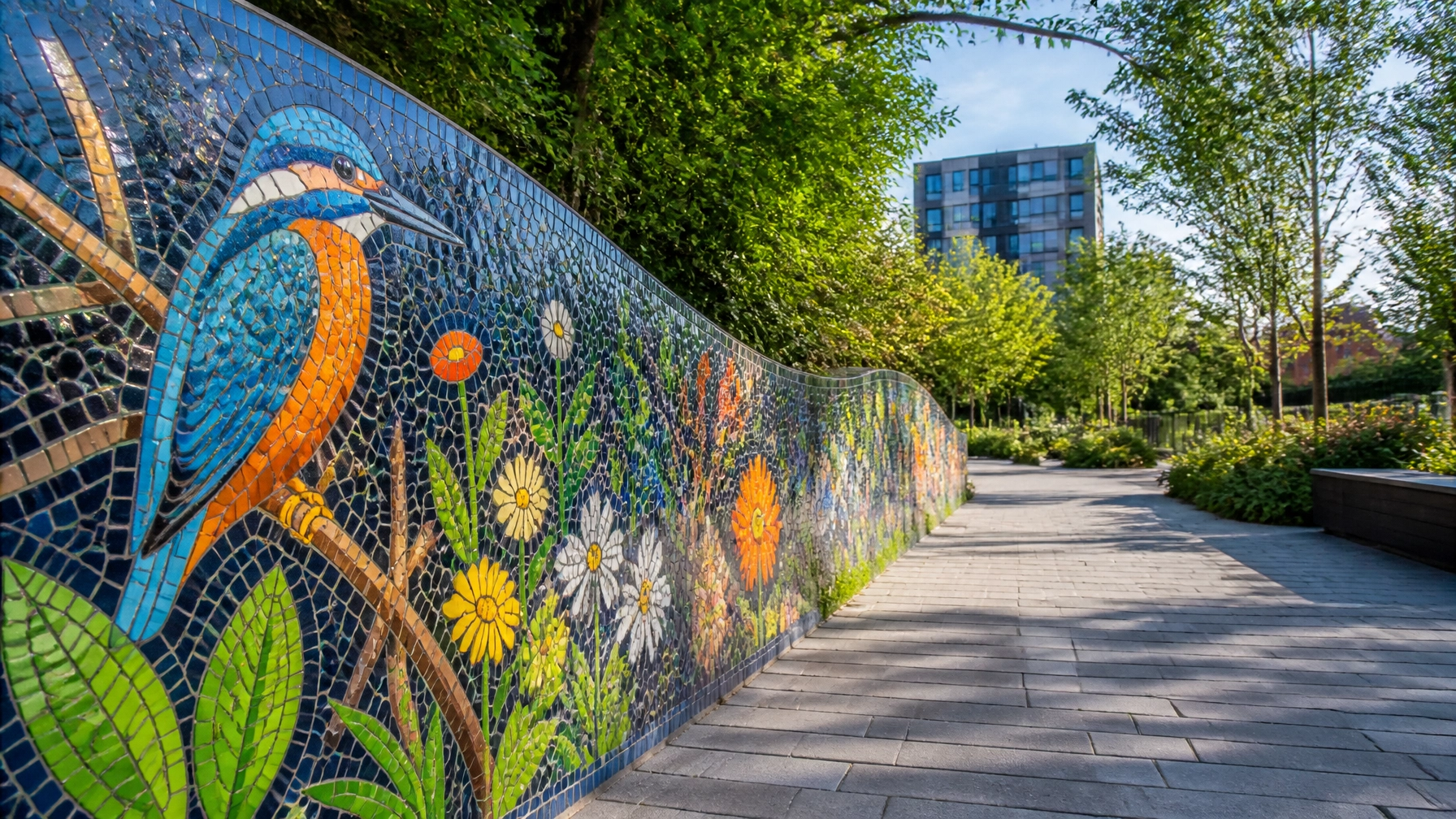
The project was the brainchild of Tessa Hunkin, a former architect and professional mosaic artist who sought to combine her technical expertise with a desire to foster community. After being approached to work with a mental health recovery group, Hunkin recognised a unique synergy between the laborious, slow-burn nature of mosaic-making and the needs of those struggling with chaotic internal lives. The result is a series of breathtaking public artworks that now punctuate the landscape of Hackney and Islington, from the sprawling, Roman-inspired designs in Shepherdess Walk to the intricate floral displays at the River Place Health Centre.
To the casual passer-by, these mosaics are a splash of much-needed colour in a concrete environment. To those who make them, however, they represent hundreds of hours of focused concentration and a sanctuary from the intrusive thoughts that often accompany trauma. The project operates on a simple but powerful premise: that the act of creating something permanent, beautiful, and shared can help rebuild a sense of self that has been shattered by life’s hardships.
The therapeutic rhythm of the tile
The primary benefit of mosaic-making lies in its repetitive and tactile nature. For someone living with PTSD, the world can often feel like a place of constant threat, where the brain is locked in a state of hyper-vigilance. Engaging in a task that requires meticulous focus: such as selecting the perfect shade of blue glass or precisely nipping a ceramic tile to fit a specific curve: forces the mind into a state of 'flow'. Hunkin often describes this process as giving participants a "holiday from their head." It is a rare moment of peace where the internal noise of trauma is replaced by the external requirements of the craft.
Unlike many modern activities that demand instant results, mosaic-making is inherently slow. A single square metre of a complex design can take weeks or even months to complete. This slow pace is part of the therapy. It teaches patience and persistence, qualities that are often eroded during the cycle of addiction or depression. There is no way to rush a mosaic; every piece must be handled, considered, and placed with intent. This physical engagement with materials: the cool touch of the stone, the sharp snap of the nippers, the gritty texture of the grout: grounds the individual in the present moment.
Furthermore, the structure of the work provides a sense of order. In the workshop, participants follow a 'cartoon': a full-scale drawing of the final design. This provides a clear roadmap in a life that might otherwise feel directionless. Seeing a large-scale project slowly fill with colour provides a tangible sense of progress. For many volunteers, who may have spent years feeling as though they were failing at life, the visible, undeniable success of a finished mosaic serves as a powerful counter-narrative to their internalised shame.
From isolation to public celebration
Mental health struggles, particularly PTSD and addiction, are notoriously isolating. The stigma associated with these conditions often drives individuals away from social interaction, leading to a downward spiral of loneliness and further decline. The Hackney Mosaic Project disrupts this isolation by creating a shared space where people from all walks of life work side-by-side. In the workshop, the label of 'patient' or 'addict' is replaced by that of 'maker'.
The communal aspect of the project is perhaps its most significant achievement. Because the mosaics are too large for one person to complete alone, they necessitate collaboration. Participants must discuss the placement of tiles, share tools, and work together toward a common goal. This fosters a sense of belonging and mutual support that is often missing from clinical settings. It is a place where social barriers are dissolved; a person in recovery from long-term homelessness might find themselves working alongside a retired professional, both focused on the same patch of tiles.
This social cohesion extends beyond the workshop and into the community at large. When a mosaic is finished and installed in a public park or a health centre, it is celebrated with an unveiling ceremony. For the makers, this is a moment of immense pride. They are no longer the 'other' or the 'invisible' members of society; they are the creators of a landmark that their neighbours admire. This shift from being a consumer of services to a contributor to the public good is a crucial step in the journey of recovery. It restores a sense of citizenship and agency, proving that they have something valuable to offer the world.
A lasting legacy on the London landscape
The impact of the Hackney Mosaic Project is etched into the very fabric of East London. The Shepherdess Walk mosaics, for instance, are a masterclass in the medium, featuring a vibrant array of animals, figures, and patterns that draw inspiration from the Great Pavement at Woodchester and other Roman traditions. These works do more than decorate; they tell stories of local history and nature, grounding the art in the specific identity of the neighbourhood. By bringing high-quality art out of the galleries and into the parks, the project democratises beauty, making it accessible to everyone, regardless of their background.
Sustainability and permanence are central to the project's philosophy. Mosaics are notoriously durable, capable of lasting for centuries if properly maintained. There is a profound psychological weight to this durability. For someone whose life has been marked by instability and loss, the act of creating something that will outlast them provides a sense of legacy. The tiles do not fade like paint; they remain bright and steadfast, a permanent reminder of the effort and healing that went into their creation.
Recent expansions of the project, such as the workshops at River Place Health Centre in Islington, show that the model is highly adaptable. Even during periods of intense pressure on the healthcare system, these creative interventions provide a low-cost, high-impact way to support both patient recovery and staff well-being. As London continues to navigate the long-term mental health consequences of global events and local economic pressures, the lessons from Hackney are clear: art is not a luxury, but a fundamental tool for human resilience. The mosaics of East London stand as a testament to the fact that even when things are broken into a thousand pieces, they can be reassembled into something stronger and more beautiful than before.