A scorching bank holiday, combined with a series of sweltering weather forecasts, has left many households across the country searching for immediate relief. As temperatures climb, the humble electric fan becomes the most sought-after appliance in Britain. However, the market is saturated with options ranging from inexpensive plastic desk models to high-tech, bladeless purifiers that cost hundreds of pounds. Selecting the wrong device can lead to a restless night of noise and poor airflow, while the right choice can transform a stifling bedroom into a sanctuary of cool air.
Before investing, it is essential to understand the science of how these devices actually work. Contrary to popular belief, a standard electric fan does not lower the temperature of a room. Unlike an air conditioning unit, which uses a refrigerant to remove heat from the air, a fan simply moves air around. The cooling sensation we feel is the result of moving air aiding the evaporation of sweat from our skin. This process carries heat away from the body, making us feel significantly cooler even if the thermometer on the wall remains unchanged. Experts suggest that during the hottest parts of the day, keeping blinds and curtains closed is the first line of defence, but once the indoor air becomes stagnant, a well-placed fan is the most energy-efficient way to maintain comfort.
Selecting the Right Model for Your Space
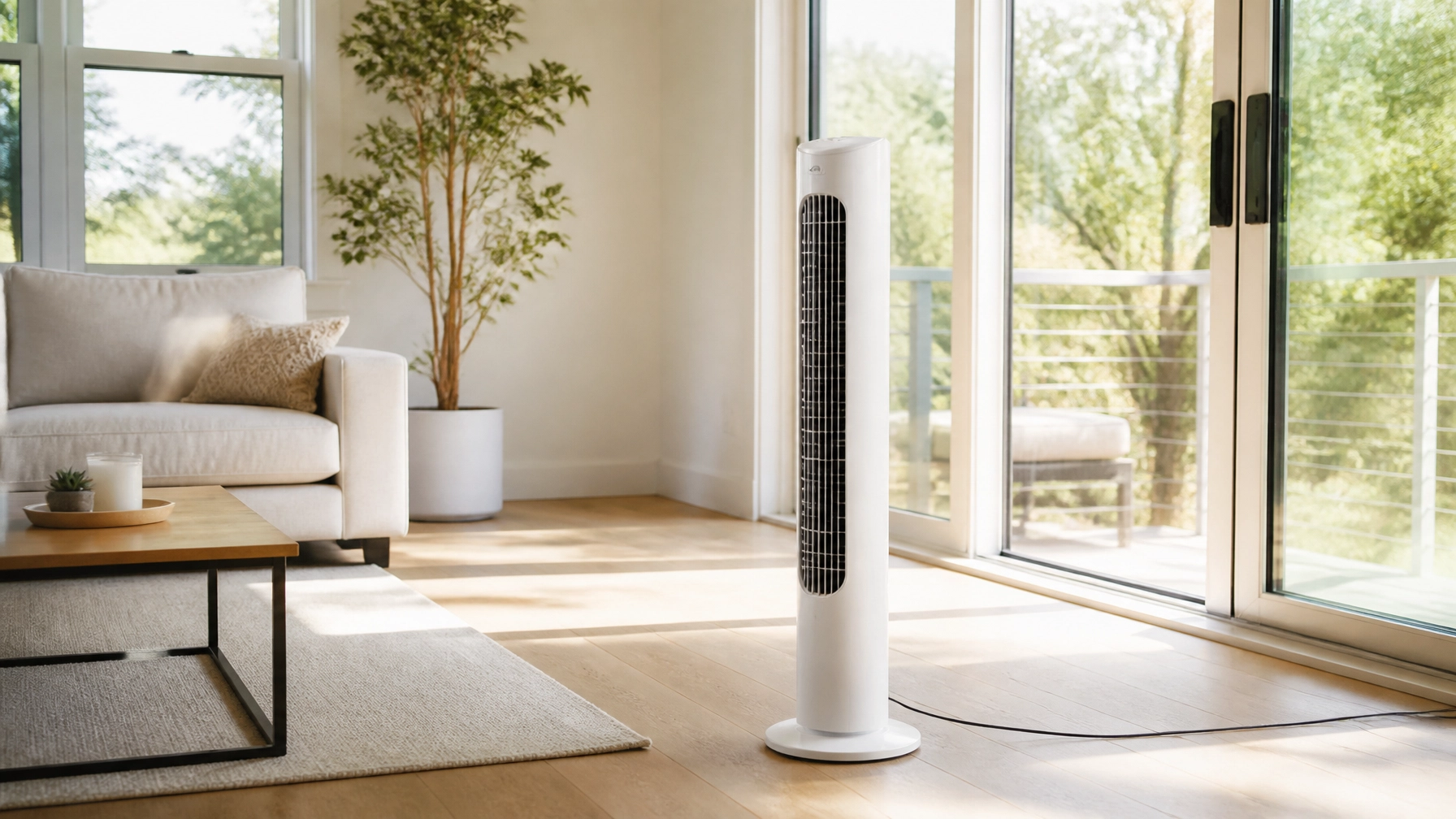
The first step in choosing a fan is determining which category best fits the layout of your home. Most consumers are familiar with the standard desk fan: compact, portable, and designed for localised cooling. While these are ideal for a home office or a bedside table, they are often insufficient for larger communal areas. Pedestal fans offer a similar design but are mounted on a tall, adjustable base, allowing them to push air over furniture. For those who prefer a more discreet aesthetic, tower fans have become increasingly popular. These slim, vertical units take up less floor space and are designed to blend into modern decor while providing a steady, consistent breeze.
Capacity is measured in airflow, specifically cubic feet per minute (CFM). This metric is far more important than the physical size of the unit. According to industry data, a standard desk fan typically delivers between 200 and 400 CFM, which is perfectly adequate for a single person. Larger pedestal or floor fans can move between 1,000 and 2,500 CFM, making them suitable for open-plan living rooms. Tower fans generally sit somewhere in the middle, offering a compromise between power and footprint. Experts warn that one of the most common mistakes is purchasing a fan that is undersized for the room, resulting in the motor running at maximum speed constantly, which increases noise and wear.
Oscillation and tilt functions are also critical features to consider. An oscillating fan moves the head from side to side, distributing the air across a wider arc. This is particularly useful if multiple people are in the room. However, if you are sitting alone at a desk or lying in bed, a stationary fan directed straight at you will provide the most immediate relief. Some high-end models now offer 360-degree oscillation, ensuring that no corner of the room remains stagnant. When selecting a model, look for a sturdy base and adjustable height to ensure the airflow is directed exactly where it is needed most.
Prioritising Performance and Personal Comfort
Noise level is perhaps the most divisive factor when it comes to performance. A fan that seems quiet in a bustling showroom can sound like a jet engine in the middle of a silent bedroom. Experts recommend looking for models with a noise rating below 50 decibels (dB) for general use. For those who are particularly sensitive to sound, some premium models operate at as little as 13dB: only slightly louder than the sound of human breathing. Bladeless fans are often touted as the quietest option because they lack the physical "buffeting" sound created by traditional spinning blades, resulting in a smoother, more consistent stream of air.
Beyond simple cooling, the impact of fans on health and hygiene is a growing concern for many users. While fans do not produce allergens, they can circulate dust, pollen, and pet dander that has settled on surfaces. For individuals with asthma or hay fever, this can lead to sinus irritation or allergic reactions. To combat this, several manufacturers have integrated air purification technology into their cooling units. High-end models can capture up to 99.95% of microscopic particles, including odours and allergens. These multi-purpose machines are particularly useful for those who suffer from "sniffle season" and require clean air alongside a cooling breeze.
Maintenance also plays a vital role in both performance and health. Traditional fans with grills and blades tend to accumulate thick layers of dust over time, which reduces airflow efficiency and forces the motor to work harder. Bladeless models are significantly easier to maintain, requiring only a quick wipe with a cloth. If you opt for a traditional model, ensure the grill is easy to remove for regular cleaning. Furthermore, prolonged exposure to direct airflow can lead to dry skin and sore throats, as the constant breeze evaporates moisture from the eyes and mouth. Positioning the fan so it oscillates or aims slightly away from the face can help mitigate these minor health issues while still providing the necessary cooling effect.
Balancing Budget Against Long-Term Value
One of the most surprising aspects of electric fans is their low running cost. Despite the relief they provide, they are among the most energy-efficient appliances in the modern home. On average, a standard fan costs between 15p and 31p to run for a full 24-hour period. Even during a sustained heatwave where the fan is running for eight hours a day over several months, the total annual cost is unlikely to exceed £30. Some of the most energy-efficient models, particularly those using brushless DC motors, can cost as little as 1.4p per hour to operate. This makes them a far more sustainable and affordable alternative to portable air conditioning units, which can be expensive to purchase and even costlier to run.
When it comes to the initial purchase price, there is a clear distinction between budget and premium tiers. Fans costing under £50 are generally functional but may lack advanced features like remote controls, sleep timers, or ultra-quiet modes. For those on a strict budget, simple desk fans from reputable high-street retailers often provide adequate performance for under £35. The £50 to £100 price bracket is often considered the "sweet spot" for value. In this range, you can find robust tower fans with multiple speed settings and better build quality that will last for several summers. These models often include basic filtration and more refined oscillation mechanics.
For those willing to invest over £100, the benefits include significantly reduced noise, sophisticated air purification, and smart home integration. Premium brands offer models that can be controlled via smartphone apps or voice commands, allowing users to adjust the breeze without leaving their bed. While these high-end machines are undoubtedly an investment, their ability to function as year-round air purifiers adds a layer of utility beyond the summer months. Ultimately, the best fan is one that matches your specific environment and budget. Whether you require a silent companion for the bedroom or a powerful tower for the lounge, the current market offers a solution for every level of the British summer.