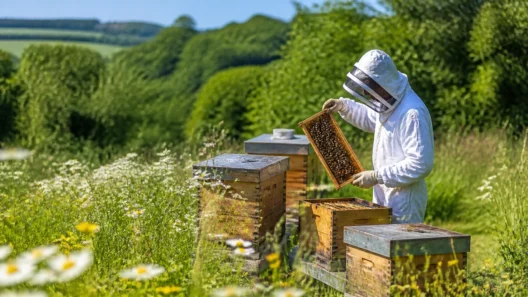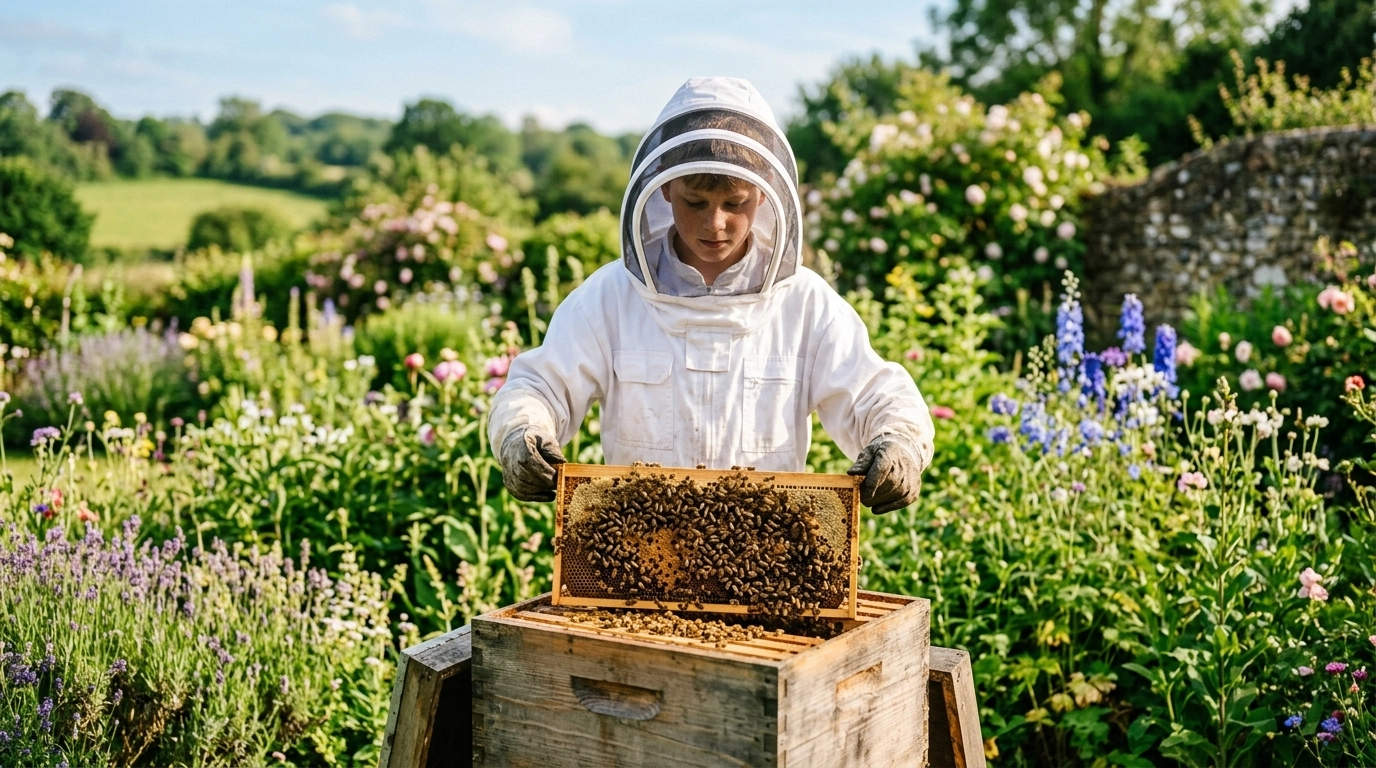
In the heart of the Surrey countryside, a young boy is proving that you are never too young to take on a massive responsibility: especially one that involves tens of thousands of stinging insects. Archie Cridland, a twelve-year-old from Guildford, has become a sensation in the beekeeping community, not just for his age, but for his deep-seated commitment to the environment and the craft of apiculture. While most children his age might be preoccupied with video games or football, Archie is more likely to be found in a protective white suit, carefully smoking a hive or inspecting the intricate wax structures created by his colonies. His journey into the world of bees began much earlier than most, and his dedication has seen him rise to become one of the youngest certified beekeepers in the country, a title he wears with as much pride as his veil.
The quiet gardens of Guildford provide the perfect backdrop for this unusual hobby. Surrey, with its rolling hills and abundance of wildflowers, is a haven for pollinators, but it is the human element that has made Archie’s story so remarkable. Working alongside his grandmother, who has been his mentor and guide since the very beginning, Archie has developed a level of expertise that often surprises seasoned veterans of the craft. To watch him work is to see a young man entirely at peace with nature, moving with a calm and deliberate grace that prevents the bees from becoming agitated. It is a partnership between human and insect that requires patience, respect, and a significant amount of bravery.
A passion born from curiosity
Archie’s fascination with bees did not start with a textbook or a school project; it began with a genuine, early curiosity about the natural world around him. His interest was sparked when he was just a toddler, barely two and a half years old, watching his grandmother, Lorraine, tend to her own hives. Lorraine, an experienced beekeeper and a founding member of a local training organisation, noticed her grandson’s keen interest and decided to nurture it rather than steer him away from the potential dangers. Many parents might have been hesitant to let a small child get so close to a hive, but the family believed that understanding the natural world was the best way to respect it.
In an early and perhaps defining moment for the young beekeeper, Archie was actually stung by a bee when he was just two years old. For many children, such an experience would lead to a lifelong fear of anything that flies and buzzes. However, for Archie, it had the opposite effect. Instead of running away, he became even more intrigued by the creatures. He wanted to know why they stung, how they lived, and what made them so important to the flowers in the garden. This resilience and desire to learn transformed a potentially negative experience into the foundation of a lifelong passion. By the time he was five, he was already wearing his own miniature bee suit and helping with the more complex tasks of hive management, proving that his interest was no passing phase.
His grandmother’s role in this journey cannot be overstated. As a mentor, Lorraine provided the technical knowledge and the safety framework necessary for a child to work with live colonies. She taught him how to read the mood of the hive, how to identify the different castes of bees, and how to handle the delicate frames without harming the brood. This intergenerational transfer of skill is a cornerstone of the beekeeping tradition, but seeing it happen with such a young apprentice has been a source of inspiration for many in the Surrey area. Together, they have spent countless hours in the garden, observing the seasonal changes and ensuring that their bees have the best possible chance to thrive in an increasingly challenging environment.
The youngest master of the hive
The path to becoming a certified beekeeper is not an easy one, involving rigorous testing and a deep understanding of biology and environmental science. Archie did not just play with bees; he studied them. In 2019, at the age of five, he achieved national recognition by passing a junior assessment with the British Beekeepers’ Association. To earn this certification, he had to demonstrate a level of knowledge that would challenge many adults. His preparation involved keeping a detailed beekeeping diary over several months, documenting the health of the colonies, the weather conditions, and the various activities he observed within the hives.
The assessment itself was multifaceted. Archie had to create a project book that covered the complex biology of the honeybee, the life cycle of the hive, and the various diseases that can threaten a colony. One of the highlights of his project was a meticulously crafted paper-mache model of the Varroa mite, a notorious parasite that has devastated bee populations worldwide. Understanding these threats is a vital part of modern beekeeping, and Archie’s ability to grasp these concepts at such a young age was nothing short of extraordinary. The practical side of the exam required him to work through a live colony with an official assessor, answering questions on the fly while managing the bees in real-time. He handled the pressure with the same calm he shows every day in his own garden.
Now twelve, Archie manages a colony of approximately 60,000 honeybees. This is not a hobby that can be ignored for weeks at a time; it requires constant vigilance and a structured routine. During the peak of the summer, he must perform regular hive inspections to check for signs of swarming, ensure the queen is healthy and laying eggs, and monitor the stores of honey. He has also embraced the entrepreneurial side of the craft. Under the watchful eye of his family, he has developed a small business, bottling the honey his bees produce and even making candles from the leftover beeswax. This hands-on experience in production and sustainability has given him a unique perspective on where food and household products come from, a lesson that is often lost in the modern world of supermarkets and global supply chains.
Protecting the future of the environment
Beyond the local fame and the personal satisfaction of a job well done, Archie’s work carries a much more significant message about the state of our planet. Honeybees are among the most important pollinators on Earth, responsible for a vast portion of the food we eat and the wildflowers that decorate our landscape. However, they face unprecedented threats from habitat loss, climate change, and the use of harmful pesticides. By stepping into the world of beekeeping at such a young age, Archie has become a powerful advocate for these essential insects, using his platform to remind people of the vital role they play in our ecosystem.
Archie and his grandmother are keen to stress that beekeeping is about more than just honey; it is about stewardship. They often speak about the importance of planting bee-friendly flowers and reducing the use of chemicals in private gardens. For Archie, every hive inspection is a reminder of how interconnected the world is. He sees firsthand how a late frost or a particularly dry spell can affect the bees' ability to find nectar, which in turn affects the entire local environment. This awareness has fostered a deep sense of environmental responsibility that he carries into all aspects of his life. He isn’t just a beekeeper; he is a young man who understands that the health of the bees is a direct reflection of the health of the world.
As he looks to the future, Archie shows no signs of slowing down. He continues to work with his grandmother at their training centre, helping to inspire other children and adults to take up the craft. His story is a testament to what can be achieved when curiosity is met with mentorship and when a child is given the space to pursue an unconventional passion. In a world that often feels disconnected from nature, Archie Cridland is a bright example of a new generation that is ready to step up and protect the environment, one hive at a time. The buzz in Surrey is not just coming from the bees; it’s coming from the remarkable young boy who has dedicated his childhood to keeping them safe.