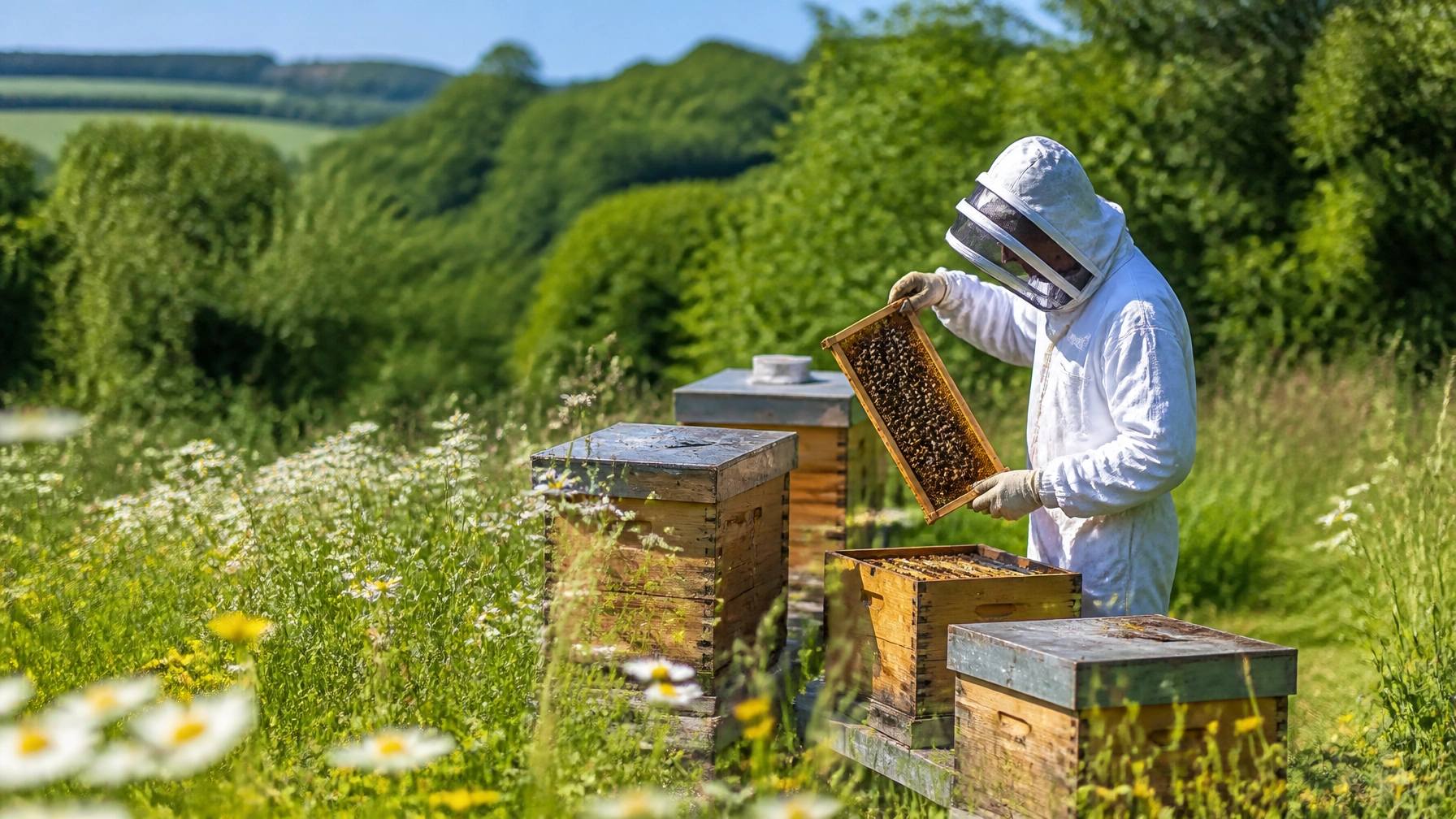
In the coastal town of Bournemouth, where the salt air meets the bustling streets of Dorset, a remarkable transformation is taking place within the quiet confines of a local apiary. For many, the sight of a honeybee is a simple reminder of summer, but for a man known to his community as Chucky, these insects represent a lifeline, a new career, and a hard-won sense of peace. After spending eight years experiencing the harsh realities of rough sleeping, Chucky has found a new purpose amongst the wooden hives of Bee Mission, a pioneering project that is changing the narrative of homelessness in the South West.
The journey from the cold concrete of Bournemouth’s shop doorways to the tranquil, sun-spattered meadows of the Dorset countryside is one marked by resilience and the quiet hum of thousands of wings. Chucky’s story is not just one of survival, but of a profound reconnection with the natural world: a connection that many who live on the fringes of society find themselves severed from. For nearly a decade, his world was defined by the search for warmth, the uncertainty of the next meal, and the often-invisible status that comes with long-term homelessness. Today, that world has expanded to include the intricate social structures of the hive, the delicate management of queen bees, and the seasonal rhythms of honey production.
Bee Mission, the organisation behind this initiative, operates on a philosophy that goes beyond traditional charity. While providing immediate relief is essential, the project focuses on long-term rehabilitation and skill acquisition. By training individuals who have experienced street homelessness in the art and science of beekeeping, they are offering more than just a hobby; they are providing a vocational pathway that fosters responsibility, patience, and a deep-seated sense of achievement. For Chucky, the transition has been both challenging and deeply rewarding, proving that the road to recovery often requires a shift in environment as much as a shift in mindset.
A Life Transformed Through Environmental Stewardship
The transition into beekeeping requires a level of focus and calm that is often diametrically opposed to the hyper-vigilance required to survive on the streets. For Chucky, the hives offered a space where the noise of the town could be replaced by the methodical work of the colony. Learning to handle the bees: understanding their temperaments, monitoring their health, and ensuring the hive is prepared for the changing British weather: demands a presence of mind that has proven therapeutic. This form of environmental stewardship allows participants to see the direct results of their care and attention, as a struggling colony begins to thrive under their supervision.
The training programme at Bee Mission is rigorous, covering everything from the biology of the Apis mellifera to the practicalities of swarm control and honey extraction. For someone who has lived without a fixed address for eight years, the structure of the beekeeping calendar provides a much-needed framework. There are tasks for the spring, when the hives wake up and the first blossoms appear; there are the busy summer months of monitoring nectar flow; and there is the vital preparation for the winter. This cyclical nature of the work helps to ground individuals, providing a sense of continuity that is often missing from the chaotic experience of rough sleeping.
Beyond the bees themselves, the project encourages a broader understanding of the local ecosystem. Participants learn about the importance of biodiversity in Dorset, the role of pollinators in our food systems, and the impact of climate change on local flora. This education empowers those who have often felt powerless, giving them the knowledge to contribute meaningfully to environmental conservation. For Chucky, mastering these skills has led to a newfound confidence, a sense that he is not just a recipient of help, but a guardian of a vital natural resource.
Building Skills and Resilience in the Dorset Countryside
The physical environment of the apiary plays a crucial role in the healing process. Away from the high-pressure atmosphere of urban centres, the open spaces of Dorset provide a sanctuary where the stresses of past traumas can be processed in a safe environment. Beekeeping is an outdoor pursuit that demands physical activity, fresh air, and a connection to the weather: elements that have been shown to significantly improve mental health and well-being. For the team at Bee Mission, the apiary is more than just a place of work; it is a classroom and a therapy room combined.
The technical skills Chucky has acquired are significant. He has learned to identify the different roles within the hive, from the foragers and nurses to the drones and the queen. He has mastered the use of the smoker, a tool used to calm the bees during inspections, and he can now navigate the complex task of checking for pests and diseases like the Varroa mite. These are transferable skills that require manual dexterity, observation, and problem-solving: qualities that are highly valued in many industries. By proving his competence in such a specialised field, Chucky is building a CV that reflects his dedication and ability to learn complex new systems.
The social aspect of the project is equally vital. Rough sleeping can be an incredibly isolating experience, often leading to a breakdown in social skills and a sense of alienation from the wider community. Working within the Bee Mission team has allowed Chucky to rebuild those social bridges. Collaborating on hive inspections, sharing the physical labour of moving equipment, and participating in group learning sessions have all contributed to a renewed sense of belonging. The bees, in their highly social and cooperative nature, serve as a constant metaphor for the strength that comes from community and mutual support.
Creating a Sustainable Path Away from Homelessness
The impact of Bee Mission extends beyond the individuals in the beekeeping suits. The organisation is deeply integrated into the Bournemouth community, operating a meal programme that provides up to fifty hot meals three times a week for those currently sleeping rough. This dual-pronged approach: addressing immediate hunger while offering long-term vocational training: creates a comprehensive support network. It means that while Chucky is tending to his hives, he remains connected to the community he came from, often acting as an inspiration to others who are still searching for a way off the streets.
Honey production also offers a potential revenue stream that can help sustain the project and provide small stipends or future employment opportunities for the participants. The "Bee Mission Honey" produced in the Dorset countryside is a tangible product of the hard work and dedication of the trainees. Selling this honey at local markets and through community partners not only raises funds but also raises awareness about the realities of homelessness. It challenges the stereotypes and stigmas often associated with rough sleepers, showing the public that with the right support and opportunity, everyone has the potential to contribute something sweet to the world.
As Chucky continues his training, his eyes are set on the future. The transition from eight years on the streets is not a journey that ends overnight, but the hives have provided him with a stable foundation upon which to build his new life. He is a testament to the fact that recovery is possible when individuals are given the space to grow and the tools to succeed. In the quiet fields of Dorset, among the buzzing of the bees and the scent of wildflower nectar, a former rough sleeper has found more than just a trade; he has found a home, a community, and a future that is as bright as a summer’s day. The story of Chucky and Bee Mission serves as a powerful reminder that sometimes, the most profound changes come from the smallest of creatures and the most dedicated of hearts.