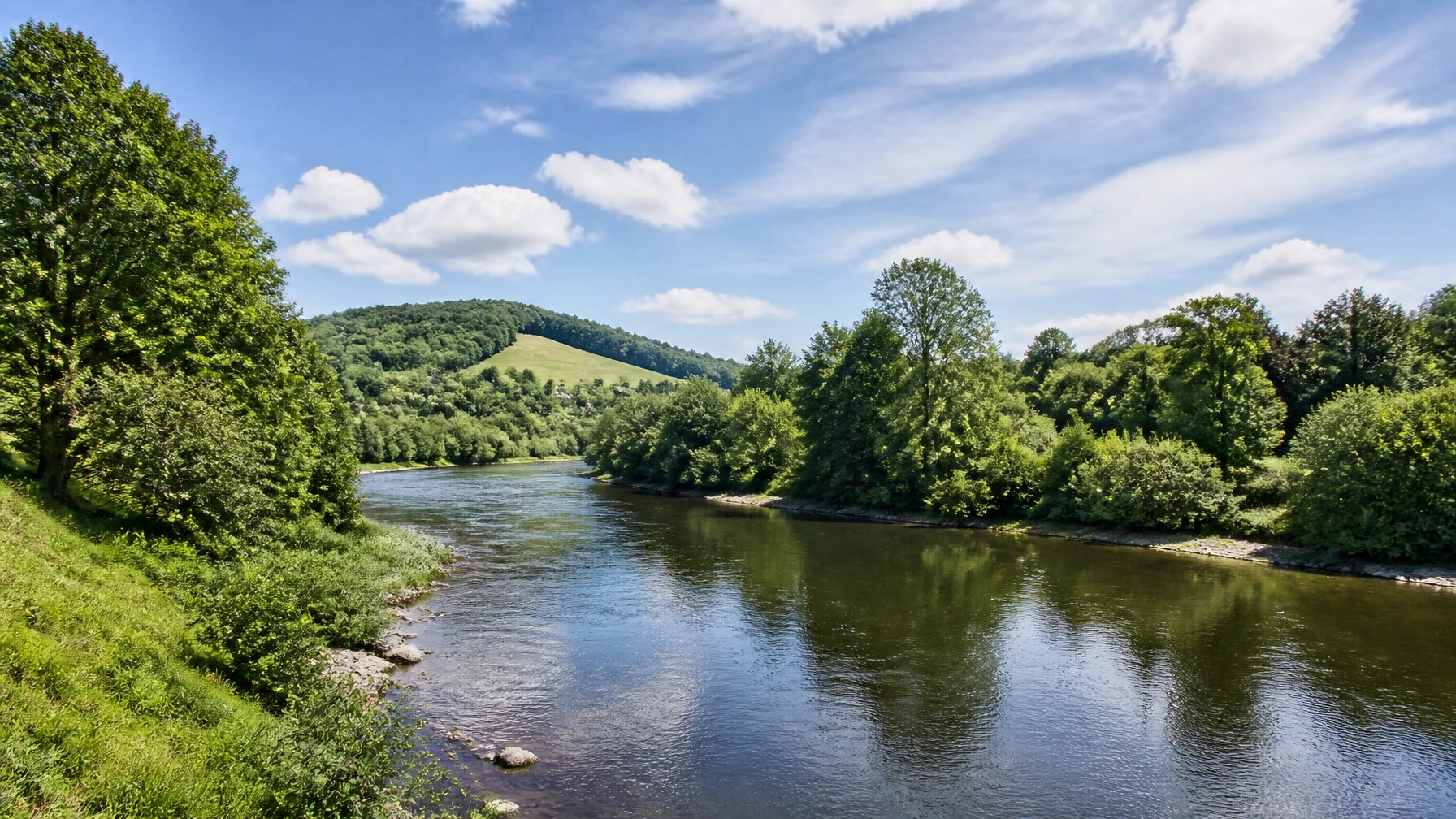
In a landmark decision that marks a profound shift in the way the United Kingdom views its natural environment, the River Wye has become the first waterway in the country to be granted its own charter of rights.
This historic move, formalised by local authorities and environmental partnerships, elevates the river from a mere resource to a living entity with recognised entitlements. For decades, the Wye has been at the heart of both British culture and a growing ecological crisis, but this new legal framework offers a beacon of hope for its restoration and long-term protection. By acknowledging that the river possesses the right to flow, the right to maintain its biodiversity, and the right to be free from pollution, the charter sets a precedent that could transform conservation efforts across the British Isles.
The adoption of the Charter for the Rights of the River Wye represents a significant victory for local campaigners, scientists, and residents who have watched the river’s health deteriorate. While existing environmental laws have often struggled to curb the impact of agricultural runoff and industrial waste, this charter introduces a more holistic approach. It is rooted in the "Rights of Nature" movement, a global philosophy that suggests ecosystems should have similar legal standing to humans or corporations. In practice, this means that every planning application, every land-management decision, and every industrial permit affecting the Wye’s catchment area must now be weighed against the river’s fundamental right to thrive. It is no longer enough to simply mitigate damage; the focus has shifted to active regeneration and the preservation of the river's intrinsic character.
A New Legal Standing for the Natural World
The charter outlines five core rights that are intended to guide all future interactions with the River Wye. Most notably, it asserts the river’s right to perform its natural functions, which include the ability to flow freely and maintain its seasonal rhythms. This is particularly relevant in an era of increasing water abstraction and the construction of barriers that can disrupt the migration of fish and the distribution of nutrients. By formalising the right to flow, the charter provides a robust argument against projects that would further fragment the river's course. Furthermore, the document recognises the river’s right to biodiversity, ensuring that the countless species of flora and fauna that call the Wye home: from Atlantic salmon to the elusive otter: are protected as essential components of a healthy system.
Perhaps the most critical aspect of the charter is the right to be free from pollution. For years, the Wye has suffered from "nutrient overload," primarily caused by phosphate runoff from intensive poultry farming and sewage discharge. This has led to devastating algal blooms that choke the river, turning its once-clear waters into a thick green soup and killing off large swathes of riverbed vegetation. Under the new charter, the river’s right to a healthy catchment area means that activities miles away from the water’s edge must be managed with the river’s health in mind. This is not just an aspirational goal; it is a directive to councils and stakeholders to prioritise the river’s water quality above all else, providing a clear mandate for stricter enforcement and more sustainable farming practices.
The Urgent Need for Ecological Restoration
The impetus for this historic charter is a direct response to the "unfavourable" status currently held by the River Wye in official ecological assessments. Once regarded as one of the cleanest and most beautiful rivers in Europe, its decline has been a source of national concern. The Wye is a designated Special Area of Conservation and a Site of Special Scientific Interest, yet these protections have not been sufficient to prevent its degradation. The charter acknowledges that the river has a right to regenerate, a powerful clause that moves beyond mere preservation. It implies a commitment to restoring the river to its former glory, supporting the natural processes that allow the ecosystem to heal itself after decades of stress.
This focus on regeneration is supported by a growing body of scientific evidence suggesting that rivers are remarkably resilient if given the space to recover. By reducing the chemical load entering the water and allowing natural floodplains to function, the Wye can begin to re-establish the complex habitats required for a thriving ecosystem. The charter also introduces the concept of representation, suggesting that the river should have a "voice" in decision-making processes. This could manifest as a designated guardian or a board of trustees whose sole responsibility is to advocate for the river’s interests. Such a move ensures that the Wye is no longer a passive bystander in its own destruction but a primary stakeholder with a seat at the table.
A Ripple Effect Across the British Landscape
The significance of the River Wye’s charter extends far beyond the borders of Wales and the West Midlands. As the first of its kind in the UK, it serves as a pilot project for a new era of environmental governance. Other communities across the country, from the chalk streams of southern England to the highlands of Scotland, are watching closely to see how the charter is implemented and whether it delivers the promised results. The success of the Wye’s new status could inspire a wave of similar declarations, creating a network of protected waterways that are managed as vital living systems rather than industrial plumbing. This shift in perspective is essential for meeting national biodiversity targets and ensuring that the UK's natural heritage is preserved for future generations.
Community involvement has been the backbone of this movement, and the charter is as much a social document as it is a legal one. Local events, such as those held during the Hay Festival, have allowed thousands of people to pledge their support for the river’s rights. This groundswell of public affection for the Wye demonstrates a deep-seated desire for a more harmonious relationship with nature. By giving the river a charter, the community is making a collective promise to protect the waters that have shaped their history and landscape. It is an uplifting development that proves that even in the face of daunting ecological challenges, focused local action and a rethink of our legal systems can pave the way for a brighter, greener future. The Wye has found its voice, and it is a voice that calls for a new way of living alongside the natural world.