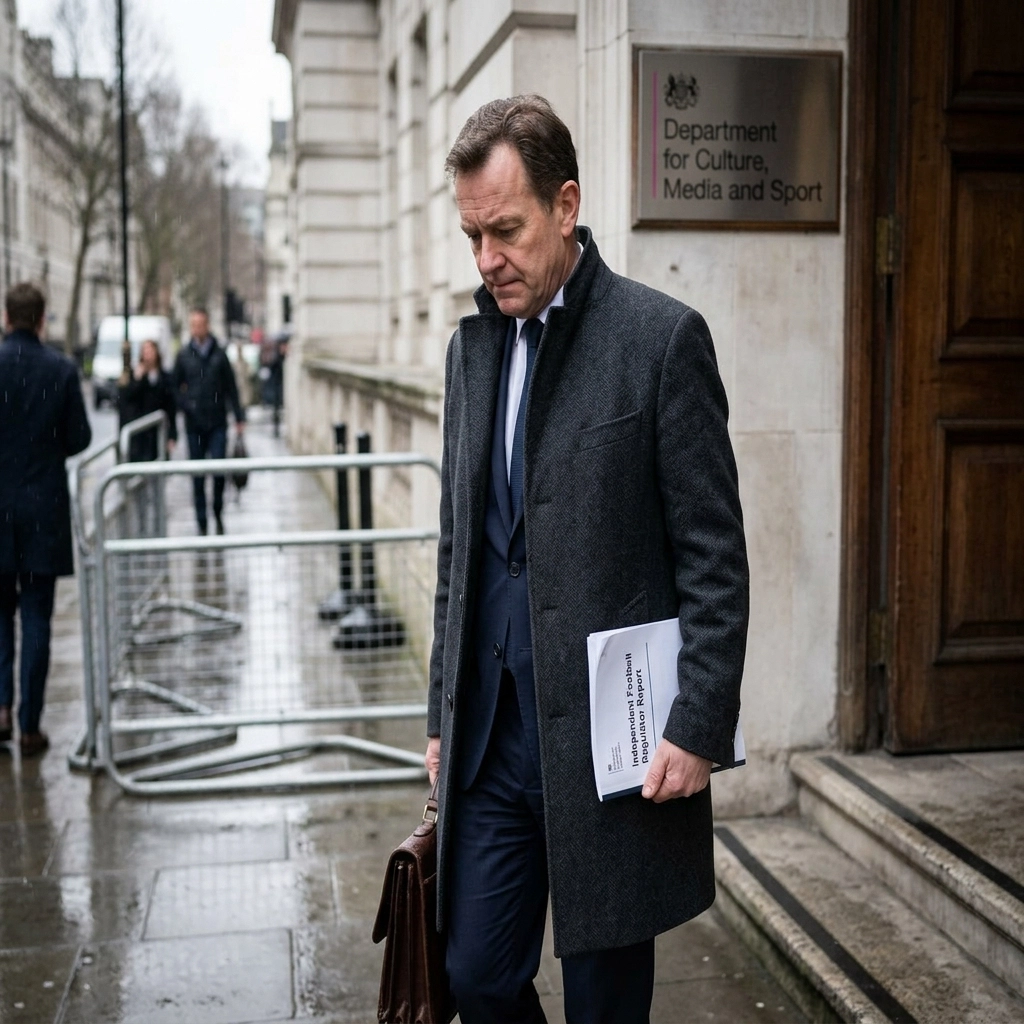
The beautiful game has been waiting for a new referee, but this one won't be blowing a whistle on the pitch. Instead, the Independent Football Regulator (IFR) is designed to oversee the financial sustainability and governance of English football, ensuring that historic clubs don’t vanish overnight and that the pyramid remains intact. However, as we move through April 2026, the seat at the head of the table remains conspicuously empty. The search for a chairperson to lead this ground-breaking body has hit several snags, leaving fans, clubs, and politicians wondering when the promised era of transparency will actually begin.
At NowPWR, we believe in bringing you the untold stories that shape the landscape of our society. The delay in establishing a firm leadership for the football regulator isn’t just a matter of administrative red tape; it is a reflection of the deep-seated tensions within the sport itself. While the government remains committed to the Football Governance Bill, the process of finding the right person to balance the interests of the billionaire-owned Premier League and the struggling clubs of the EFL has proven to be an uphill battle. This is the kind of independent news UK readers need to understand the complexities behind the headlines.
The Leadership Vacuum and the Candidate Shortlist
The search for a chair is the most critical hurdle currently facing the Department for Culture, Media and Sport (DCMS). To be effective, the regulator needs a leader who is seen as impartial but also possesses a deep understanding of the unique economics of football. Rumours have been swirling around several high-profile names, each bringing a different flavour of expertise and potential controversy to the role. Two names that have consistently topped the list are Christian Purslow and Sanjay Bhandari.
Christian Purslow is a name familiar to any follower of the Premier League’s executive dealings. Having served as the CEO of both Liverpool and Aston Villa, his credentials in the high-stakes world of elite football are undeniable. Proponents argue that his experience is exactly what is needed to navigate the complex financial webs of top-flight clubs. However, his deep ties to the "Big Six" and the established elite of the Premier League have raised eyebrows among those advocating for the lower leagues. Critics worry that a figure so entrenched in the current system might be hesitant to implement the radical redistribution of wealth that the regulator was originally conceived to facilitate.
On the other hand, Sanjay Bhandari, the current chair of Kick It Out, offers a different perspective. His background is rooted in governance and social justice within the sport. Bhandari is widely respected for his work in tackling discrimination and improving the culture of the game. For many, he represents the "independent" part of the Independent Football Regulator. Yet, the question remains whether a candidate without direct experience in the cut-throat financial management of a multi-billion-pound club can command the respect of the Premier League’s owners. This tug-of-war between "insider knowledge" and "outside perspective" is precisely what has caused the recruitment process to stall.
Political Hurdles and the Paralysis of Progress
While the hunt for a leader continues, the administrative machinery behind the regulator is also moving at a snail's pace. Even though a "shadow" regulator has been in place for some time, the transition to a fully operational body is not expected until late 2025 or even early 2026. One of the primary reasons for this delay is the requirement for a comprehensive "State of the Game" report. This document is intended to be the foundational evidence base upon which the regulator will make its decisions, but its completion is still a long way off.
This timeline has created a sense of paralysis across English football. In the absence of a firm hand at the tiller, the long-running dispute between the Premier League and the EFL regarding broadcast revenue distribution remains unresolved. The regulator was supposed to have "backstop powers" to step in and force a deal if the two parties couldn't agree. However, without a chair and without the completed State of the Game report, those powers remain theoretical. This has led to a stalemate where neither side is willing to blink, knowing that any deal they strike now might be overridden or altered once the regulator finally takes its seat.
The political fallout is also significant. Successive governments have promised that the regulator would protect fans and prevent another European Super League breakaway. Yet, the slow progress is being viewed by some as a lack of political will to take on the powerful interests of the Premier League. There is a fear that the longer the process takes, the more the original vision of the regulator will be watered down. At NowPWR, we track these shifts closely, providing the independent news UK audiences rely on to see past the PR spin. The delay isn't just a timing issue; it’s a period where lobbyists and stakeholders are working overtime to shape the future of the IFR to their own advantage.
Why the Wait Matters for Fans and Clubs
For the average supporter, the delay might seem like distant boardroom drama, but the consequences are felt on every matchday. While the top flight continues to see revenue growth: reportedly around 27% in recent cycles: the financial gap between the Premier League and the rest of the pyramid is widening into a canyon. This disparity is what drives the "gambling" culture in the Championship, where clubs spend far beyond their means in a desperate bid for promotion, often risking their very existence in the process.
The untold stories of clubs facing winding-up orders or struggling to pay staff are the real human cost of this regulatory vacuum. Without a functional regulator to oversee financial sustainability, more clubs remain at the mercy of volatile owners and unsustainable debt. The promise of the IFR was to provide a safety net, but that net is currently full of holes. The uncertainty has also deterred some potential investors who are wary of putting money into a sport where the rules of engagement are about to change but no one knows exactly how or when.
Furthermore, the delay impacts the game’s ability to address broader issues, such as fan engagement and the protection of club heritage. The IFR is intended to give fans a greater say in the big decisions affecting their clubs, such as changes to crests, colours, or stadium moves. As long as the search for a chair stalls, these protections remain on paper only. It’s a frustrating period for those who believed the Fan-Led Review would bring immediate and meaningful change to the sport they love.
The search for a chairperson for the Independent Football Regulator remains one of the most complex recruitment tasks in modern British sport. The balance between finding someone with the necessary "football brain" and ensuring they are truly independent of the sport's powerful interests is a delicate one. As names like Christian Purslow and Sanjay Bhandari are debated in the corridors of power, the clock continues to tick for clubs in the lower tiers of the pyramid. The paralysis in negotiations between the major leagues suggests that until a leader is appointed and the regulatory framework is solidified, English football will remain in a state of anxious limbo. The eventual appointment will be a watershed moment, determining whether the IFR is a toothless tiger or a genuine force for reform in the world’s most popular sport.
English football stands at a crossroads, and the direction it takes depends heavily on who is chosen to lead this new era. While the delays are frustrating, the importance of getting the leadership right cannot be overstated. A rushed appointment could undermine the regulator before it even begins its work, while a further prolonged delay risks more clubs falling through the cracks of a broken system. The coming months will be telling as the search intensifies and the pressure from fans and parliamentarians grows. For now, the game waits, the negotiations remain stalled, and the future of the English pyramid hangs in the balance.