








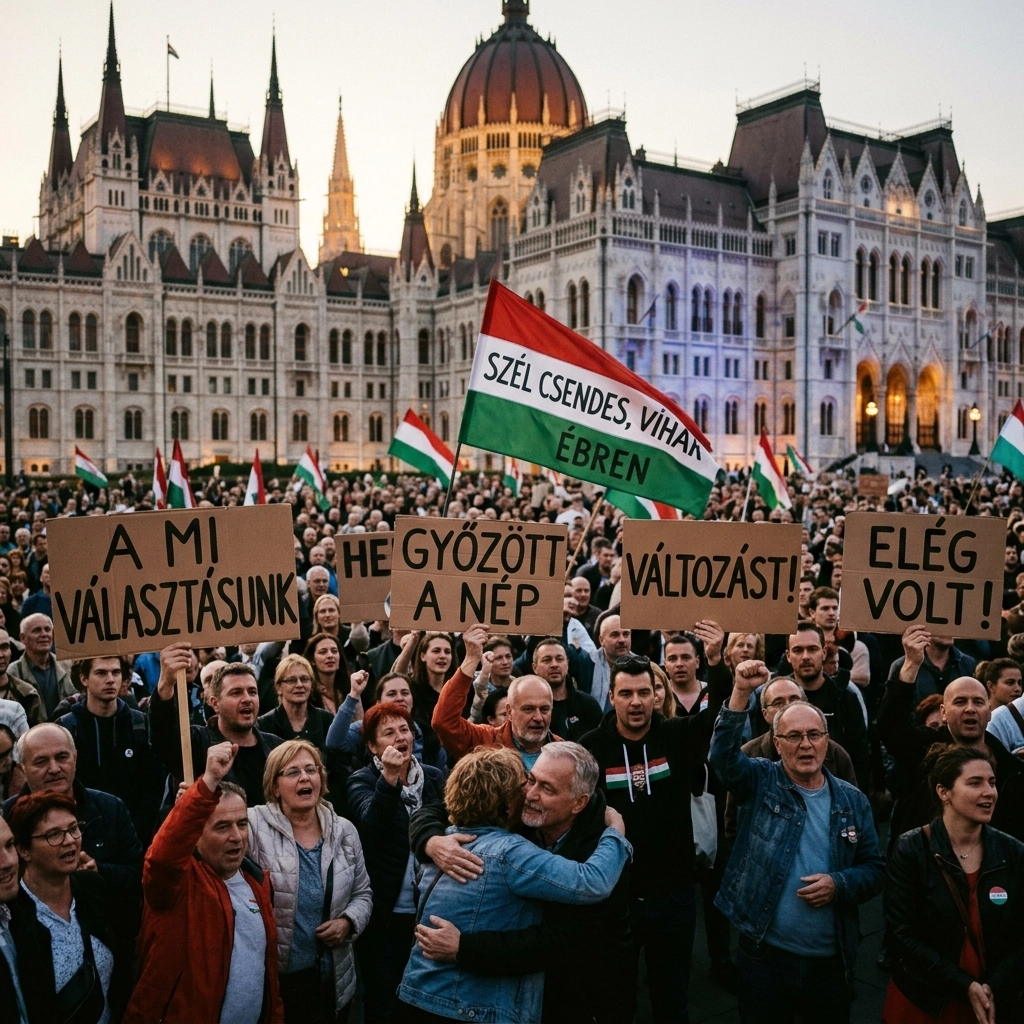
The atmosphere in Budapest this week is unlike anything the city has felt in nearly two decades. There is a palpable sense of a heavy curtain being pulled back, revealing a landscape that many Hungarians had forgotten was even possible. For years, the political narrative in Hungary seemed written in stone, dictated by a centralised authority that appeared immovable. However, the results of the 2026 general election have sent shockwaves across the continent, proving that grassroots movements still hold the ultimate power in a modern democracy.
As independent news UK outlets and global observers scramble to make sense of the landslide, the story emerging isn’t just about a change in leadership; it is about a fundamental shift in how political communication and community organisation work in the digital age. The defeat of Viktor Orbán’s Fidesz party by Péter Magyar’s Tisza party represents one of those rare untold stories where the underdog didn't just win: they rewrote the rules of the game.
The numbers alone are staggering. With a record-breaking turnout of over 79%, the highest in the country’s post-communist history, the Hungarian people didn’t just vote; they showed up with a clear mandate for change. The Tisza party’s projected 137 seats out of 199 in the parliament grant them a two-thirds majority, a mirror image of the dominance Fidesz once enjoyed. But to understand how this happened, we have to look past the polling stations and into the dusty town squares of rural Hungary.
The Unlikely Architect of Change
Just two years ago, Péter Magyar was far from a household name. He was a behind-the-scenes operator, someone who understood the internal machinery of the Fidesz government better than most because he was a part of it. His transition from an obscure insider to a national hero is a fascinating study in political evolution. The catalyst for his break with the establishment was a deeply personal and public scandal in 2024 involving his former wife, the then-Justice Minister. It was a moment that could have faded into the background noise of European politics, but Magyar chose to use it as a springboard to expose what he described as systemic corruption and the erosion of democratic values.
What makes this story so compelling for those of us following untold stories in international politics is that Magyar didn’t try to reinvent the wheel. Instead, he took the very tools used by the establishment: nationalist pride, conservative values, and a focus on Hungarian identity: and recalibrated them. He didn’t run a campaign from a high-rise office in Budapest. Instead, he took to the road.
His movement, named after the Tisza River: a symbol of the Hungarian heartland: was built on the idea of a "middle way." He spoke to the people who felt abandoned by both the traditional opposition and the ruling elite. By framing his movement as a centre-right alternative that respected Hungarian traditions but demanded transparency and a pro-European future, he managed to bridge a gap that many thought was unbridgeable. This wasn't just a political campaign; it was a conversation that resonated in every corner of the country.
Winning Hearts in the Hinterlands
The real secret to the 2026 surge lay in the rural villages and small towns that had long been considered the invincible fortress of the Fidesz party. For years, the state-controlled media landscape meant that rural voters rarely heard alternative viewpoints. Magyar’s strategy to bypass this blockade was as simple as it was exhausting: he went there in person.
Imagine a candidate delivering seven or eight speeches a day, moving from one village square to the next, often with little more than a microphone and a makeshift stage. This grassroots approach allowed him to speak directly to farmers, factory workers, and pensioners. He listened to their concerns about the rising cost of living, the state of the local healthcare system, and the feeling of being left behind by a government that seemed more focused on grand geopolitical battles than local needs.
This "boots-on-the-ground" philosophy is something we often discuss at NowPWR when looking at how communities can regain their voice. It wasn’t about polished television adverts or expensive billboards. It was about the authenticity of standing in a cold village square and looking people in the eye. Magyar used social media effectively, but primarily as a tool to announce where he would be next, turning every small-town visit into a live-streamed event that built momentum day by day.
The high turnout is perhaps the most significant indicator of this strategy's success. People who hadn't voted in years, or who felt their vote didn't matter in a system that seemed rigged against change, suddenly felt they had a stake in the outcome. They saw a candidate who was willing to work for their vote, person by person, rather than treating them as a demographic on a spreadsheet. It was a masterclass in community engagement that has lessons for political movements worldwide.
Shifting the Geopolitical Tectonic Plates
The implications of this election stretch far beyond the borders of Hungary. For the European Union, the results are nothing short of a transformation. For years, Hungary has been at odds with Brussels over issues ranging from the rule of law to the funding of Ukraine. With Magyar’s victory, the prospect of Hungary unlocking €90 billion in frozen EU funds has suddenly become a reality. His pledge to rebuild pro-European relations and restore democratic institutions suggests a much smoother path for EU policy-making in the years to come.
One of the most immediate shifts is expected in Hungary's stance on the conflict in Ukraine. The previous administration’s adversarial position and its blocking of significant aid packages had been a major point of contention within the bloc. Magyar has signaled a sharp departure from this policy, indicating that Hungary will now play a more constructive role in supporting its neighbour. This change doesn't just affect European security; it affects global stability and the international response to aggression.
Domestically, the new government faces a monumental task. Rebuilding institutions that have been shaped by sixteen years of single-party dominance will not happen overnight. There are questions about how the new administration will handle the civil service, the judiciary, and the media landscape. However, the mandate given by the Hungarian people is clear. They want a country that is both proudly Hungarian and a respected member of the international community.
As we continue to provide independent news UK perspectives on global events, the Hungarian election stands as a reminder that political landscapes are never truly permanent. It highlights the importance of keeping an eye on the stories that are often missed: the small-town meetings, the social media whispers, and the quiet shifts in public sentiment that eventually lead to a roar.
The 2026 election in Hungary will be studied by political scientists for decades, but for the people on the streets of Budapest and in the villages along the Tisza, it is simply a new beginning. They have proven that even in the face of an entrenched political machine, a dedicated grassroots movement can bring about a shock that resonates around the world. The surge wasn't just about a man or a party; it was about the power of the people to decide their own future when they are given a reason to believe it is possible.