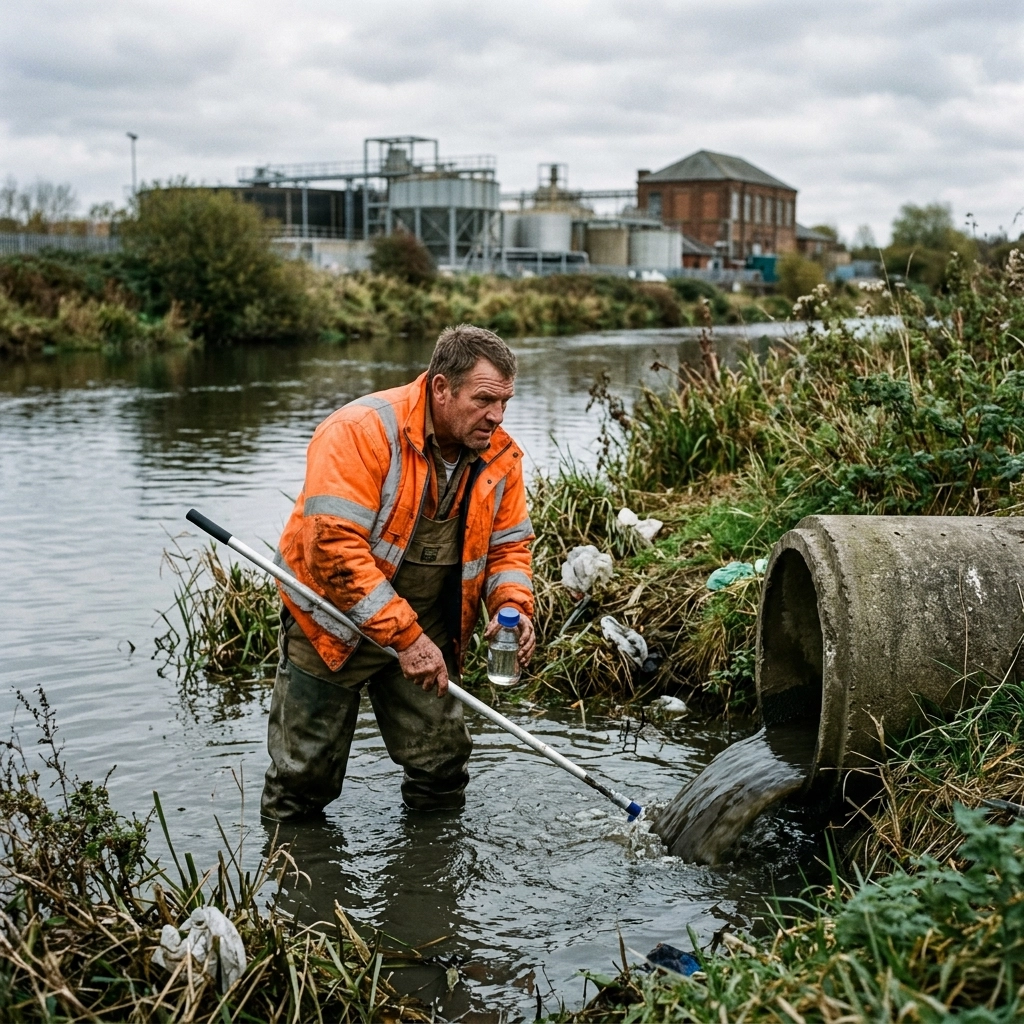
There is something quintessentially British about a weekend stroll along a riverbank. Whether it is the Thames, the Severn, or a small chalk stream in the countryside, our waterways are supposed to be the lifeblood of our landscape. But over the last few years, a murky reality has surfaced. What was once a source of national pride has become a focal point for a growing scandal involving environmental neglect and corporate profit. At NowPWR, we focus on the untold stories that affect daily life, and few issues feel as immediate as the state of our water. As part of our commitment to independent news uk, we are looking closely at the sewage secrets that some would rather keep buried under the silt.
The situation is, quite frankly, a bit of a mess. For decades, the infrastructure that keeps our taps running and our toilets flushing has been under immense pressure. But the issue isn't just about old pipes and heavy rainfall; it is about where the money goes. While residents across the country deal with rising bills and hosepipe bans, the companies responsible for managing our water have been recording massive profits and paying out eye-watering dividends. Meanwhile, the amount of raw sewage being pumped into our rivers and onto our beaches has reached levels that many find difficult to stomach. It is a classic example of a system where the public pays the price while a select few reap the rewards.
To understand how we got here, we have to look at the numbers. They tell a story of a privatised industry that seems to have prioritised shareholder returns over environmental stewardship. But beyond the spreadsheets and the corporate boardrooms, there is a human cost. This isn't just a political debate or an economic theory; it is a crisis that is making people sick and destroying local ecosystems.
The Human Price of Polluted Waters
When we talk about sewage dumping, it is easy to get lost in the statistics of "spill hours" and "overflow events." But for many people across the UK, these aren't just numbers: they are life-altering experiences. Recent investigations have brought to light some truly heartbreaking untold stories of individuals whose lives have been turned upside down by contaminated water. Take the case of Suzi Finlayson, who developed a life-threatening blood infection after a dip in the sea off Bognor Regis. What should have been a refreshing swim ended in open-heart surgery. Then there are the children, like young Willow Clarke, who spent nearly a fortnight battling a severe cryptosporidium infection after playing in the water in Cornwall.
In 2025 alone, over 124,000 hours of sewage were released into designated bathing waters across England. Think about that for a second. That is thousands of hours where the very places we are encouraged to visit for our health and wellbeing were effectively turned into open sewers. Even more concerning is that many of these incidents happened at sites classified as having "good" or "excellent" water quality by official bodies. It suggests that the monitoring systems we rely on might not be giving us the full picture. So far in 2026, the data shows no signs of the trend reversing, with over 46,000 hours of dumping recorded in the first few months of the year.
The physical health risks are obvious: E. coli, hepatitis A, and various gastric illnesses: but there is also the impact on our mental health and community spirit. For surfers like Reuben Santer, who developed the incurable Ménière's disease after catching waves in polluted water, the loss is immeasurable. Our rivers and seas are spaces for recreation, exercise, and peace. When they become toxic, we lose a vital part of our national heritage. It also raises a bigger question about who gets protected, who gets ignored, and why these untold stories so often take so long to reach the surface.
A Deep Dive into the Dividend Dilemma
If the environmental and health situation is so dire, where is the money going? This is the question that sits at the heart of the sewage scandal. Since the water industry was privatised in 1989, the financial management of these companies has come under intense scrutiny. The numbers are staggering: over the last 34 years, water companies in the UK have accumulated a collective debt of around £73 billion. At the same time, they have paid out approximately £88.4 billion in dividends to their shareholders.
From a business perspective, dividends are a standard way to reward investors. However, when those dividends are being funded by debt while the core infrastructure is failing, the logic starts to look a bit shaky. Critics argue that the prioritisation of profit has led to a chronic lack of investment in the very things that would prevent sewage spills, such as larger holding tanks and modernized treatment works. It feels like a "pay now, suffer later" model, except the public is doing the paying and the suffering simultaneously.
The argument often put forward by water companies is that the system was never designed to cope with modern population levels and the extreme weather events brought on by climate change. While there is some truth to that, it doesn't explain why so much capital has been extracted from the system rather than being reinvested. This isn't just a corporate oversight; it is a systemic failure of regulation. When the primary motivation is to keep shareholders happy, the untold stories of dying fish and polluted riverbeds often get pushed to the bottom of the priority list. That is exactly why independent news uk matters: it gives these issues proper scrutiny and keeps the focus on communities dealing with the fallout.
Transparency and the Path to Cleaner Rivers
So, where do we go from here? The public outcry has reached a fever pitch, and for good reason. There are growing calls for radical reform of the water industry, ranging from tighter regulations and massive fines that actually hurt the bottom line, to the complete nationalisation of the network. The goal is simple: to ensure that the water we pay for is managed in a way that protects the environment and public health, rather than just delivering a return on investment.
Transparency is the first step. For too long, the true extent of sewage dumping was hidden by a lack of monitoring. It was only thanks to the efforts of campaigners, citizen scientists, and investigative journalists that the scale of the problem was revealed. We need real-time, accurate data on every single overflow pipe in the country, and that data needs to be easily accessible to everyone. We also need to rethink how we value our natural world. If we continue to treat our rivers as a convenient disposal system for waste, we will eventually lose them entirely.
At NowPWR, we believe that holding power to account starts with information. The story of our rivers is really a story about priorities. Do we value short-term profit for a few, or the long-term health and beauty of our country for the many? The answer feels pretty clear. As we move further into 2026, pressure on water companies and the government is only likely to grow. The secrets are out, and the cost of doing nothing is simply too high for our rivers: and ourselves: to bear.
The state of our waterways is a reflection of how we manage our most precious resources. While the financial figures and the environmental data can be disheartening, the rise in public awareness and the passion of local communities offer a glimmer of hope. By continuing to shine a light on these issues and demanding transparency, there is a chance to turn the tide. Our rivers deserve better than to be a byproduct of a profit-driven system; they deserve to be clean, vibrant, and safe for everyone to enjoy. For now, the fight for our water continues, and we will be here to cover every development in this ongoing story.