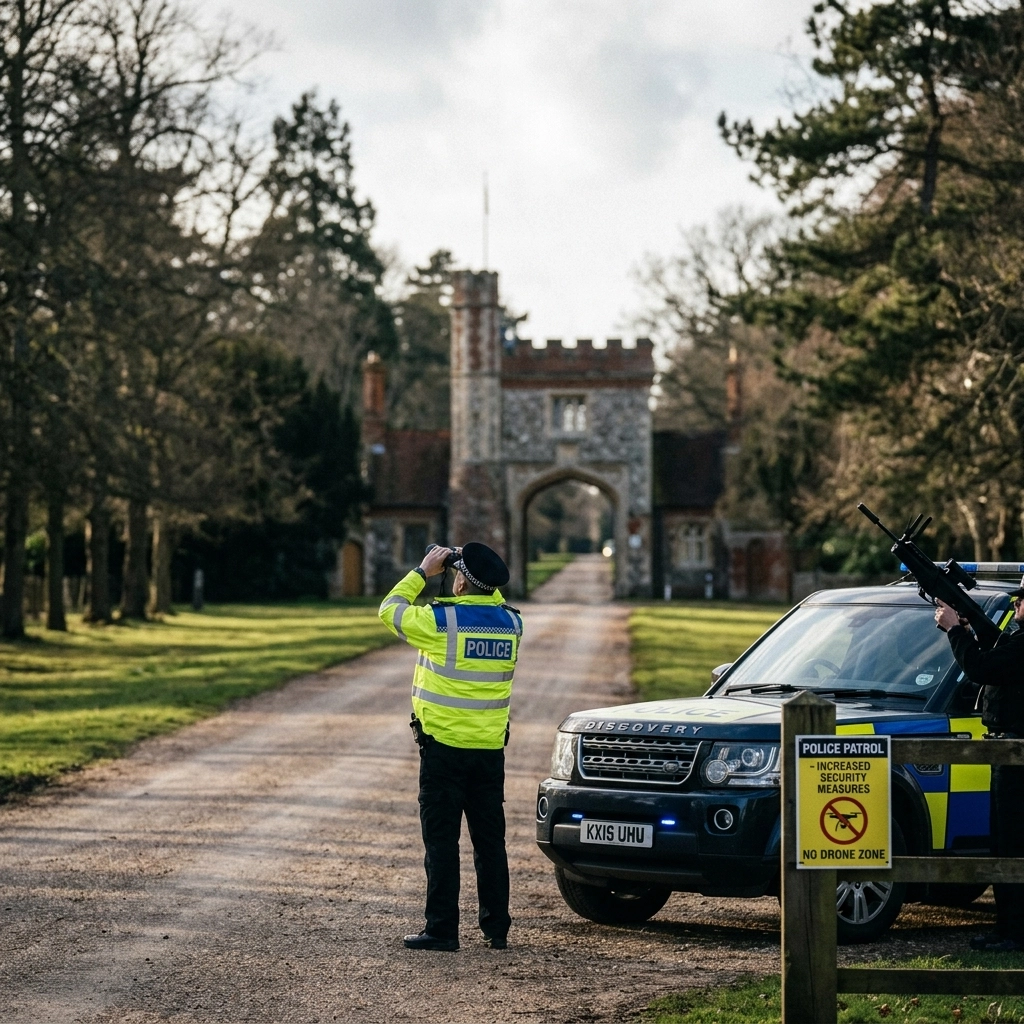
The quiet, rolling landscapes of Norfolk are usually associated with the crunch of gravel under wellies and the gentle rustle of the royal woods. However, Sandringham has recently been the centre of a much more high-tech drama. While the estate is known as a private retreat for the Royal Family, a series of security breaches involving drones has turned this peaceful sanctuary into a strictly monitored no-fly zone. This sudden lockdown didn’t just happen out of the blue; it was sparked by a series of sightings that occurred during a very high-profile visit from Ukrainian President Volodymyr Zelenskyy.
When we look at independent news UK, it is often these smaller, localised security shifts that tell the bigger story of how our national security landscape is changing. The incident at Sandringham isn't just about a few hobbyist pilots getting too close to a palace; it represents a significant escalation in how the state protects both the monarchy and international guests. The "untold stories" behind these security cordons often involve a mix of rapid-response tactical decisions and long-term legislative changes designed to keep pace with modern technology.
The Uninvited Guests in the Norfolk Sky
The trouble began in early March 2026, when King Charles was hosting President Zelenskyy at the Norfolk estate. The visit was already a high-security affair, given the ongoing international tensions and the stature of the guests involved. However, the atmosphere shifted when security teams spotted several unidentified drones hovering over the property. In the world of modern protection, a drone isn't just a toy; it’s a potential surveillance tool or, worse, a delivery system for something far more dangerous.
According to reports, the sightings occurred over the weekend of the President's arrival. While security services are used to dealing with the press and the occasional curious member of the public, these drones were different. They were persistent and, in several cases, completely untraceable. One operator was eventually tracked down by local authorities. He was found sitting in a vehicle parked near the perimeter of the estate. When questioned, it turned out he had no press credentials, no security clearance, and no clear reason for being there other than "getting a look."
While that individual was dealt with, other drones remained a mystery. Security experts noted that not all the craft detected could be linked back to a person on the ground nearby. This level of anonymity is what truly worries the teams responsible for the King’s safety. It led to an immediate request from security services for a permanent, year-round ban on all flight activity over the estate. The Department for Transport and the Civil Aviation Authority didn't take long to agree, implementing a strict no-fly zone that came into force on March 10.
A Shield Over the Royal Estate
This isn't a small restriction. The no-fly zone covers a significant 60-acre portion of the Sandringham estate. It doesn't just apply to drones; it bans all light aircraft, private planes, and helicopters that haven't been specifically cleared by the authorities. The ban is designed to create a "bubble" of safety around Sandringham House and Anmer Hall, which is the Norfolk residence of the Prince and Princess of Wales.
What’s particularly interesting is how this zone has evolved. Initially, the focus was purely on the main house, but recent updates have seen the restricted area extended. One such extension includes Marsh Farm in Wolferton, which sits about two miles west of the main house. This specific move is reportedly linked to the planned relocation of Prince Andrew to the estate. By expanding the zone, the security services are essentially creating a continuous corridor of protected airspace that prevents anyone from getting a "bird's eye view" of the private movements of the Royal Family.
For those living in the surrounding Norfolk villages, the change is noticeable. The familiar buzz of local light aircraft from nearby airfields has been silenced over the estate. It’s a stark reminder that even in the most rural parts of the UK, the digital age has brought new risks that require physical boundaries. Our focus at NowPWR is to bring you these untold stories that highlight the intersection of tradition and technology, showing how even an estate as old as Sandringham must adapt to the 21st century.
The Future of Royal Security in a Digital Age
The lockdown at Sandringham is part of a broader trend we are seeing across the country. As drones become more sophisticated, more affordable, and harder to detect, the "old school" methods of high walls and police patrols are no longer enough. The implementation of this no-fly zone is a reactive measure to a specific threat, but it sets a precedent for how other royal sites and government buildings might be protected in the future.
There is a delicate balance to strike here. On one hand, the public's right to use the sky for photography or recreation is a cherished freedom. On the other, the safety of the head of state and visiting world leaders is paramount. The fact that security services recommended a year-round, permanent ban: rather than a temporary one just for the duration of Zelenskyy’s visit: suggests that they believe the threat from drones is a permanent fixture of modern life.
This move also highlights the role of the Civil Aviation Authority (CAA) in national security. Usually, the CAA is concerned with flight safety and air traffic management. Now, they are increasingly being called upon to act as a gatekeeper for national security, working hand-in-hand with intelligence services to decide who gets to fly where. It is a quiet revolution in how our airspace is governed, and Sandringham is currently the most visible example of this shift.
The security response at Sandringham reflects a necessary adaptation to the evolving landscape of modern threats. While the drones spotted during President Zelenskyy’s visit may have been the catalyst, the resulting year-round no-fly zone represents a long-term commitment to safeguarding the privacy and safety of the Royal Family. As technology continues to advance, the boundaries of security will likely continue to expand, ensuring that even in an age of total connectivity, some spaces remain truly private.