For decades, the global music press has pointed its cameras at the bright lights of Manchester and London, obsessing over the legendary clubs and the rain-soaked streets that supposedly birthed the sound of a generation. But tucked away in a former wool town, far from the polished marble of the big city centres, lies one of the most important untold stories in British music history. Rochdale, a town often overlooked in the grand narrative of cool, was the secret engine room of the post-punk movement.
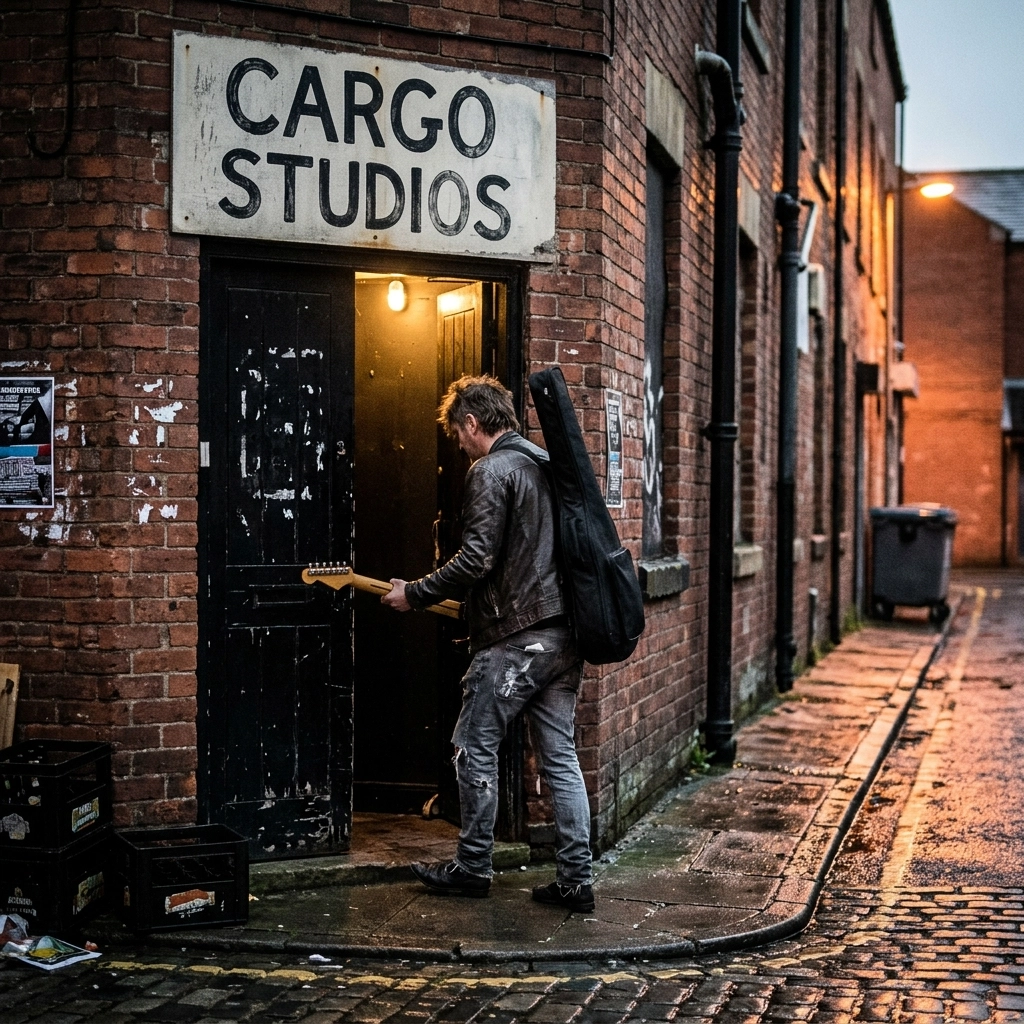
At the heart of this sonic revolution was a unassuming building on Kenion Street. This wasn't a high-end facility with gold-plated taps and velvet sofas. It was Cargo Studios, a place of grit, innovation, and raw creativity. Between 1977 and 1984, this single location acted as the incubator for some of the most influential sounds ever recorded. As we look at the 'Rochdale Rocks' movement today, it’s clear that the town is finally reclaiming its crown as a heavyweight of independent news uk music culture.
The story of Cargo Studios is not just about a building; it is about a specific moment in time when the DIY ethos of punk collided with the technical curiosity of the North. It was here that the transition from the three-chord thrash of 1976 evolved into the complex, atmospheric layers of the 1980s. While Manchester had the Hacienda, Rochdale had the hardware.
The Sound of Kenion Street: Where Legends Found Their Voice
The genesis of Cargo Studios began with John Brierley. Originally operating out of a shop called Tractor Music, which specialised in building PA systems, Brierley realised that the upstairs of the premises had the potential for something special. When the studio officially opened its doors in 1977, it was entering a world that was rapidly changing. Punk had broken the doors down, but the bands following in its wake wanted to explore deeper, darker, and more experimental territory.
Cargo quickly became known for its unique acoustic properties and Brierley’s willingness to experiment with recording techniques. This wasn't a place for corporate pop; it was a sanctuary for the outsiders. The studio was affordable, which was vital for the burgeoning independent labels of the time, most notably Factory Records. Tony Wilson, the visionary behind Factory, recognised that the "Rochdale sound" offered a level of production that rivalled the expensive London studios but retained a northern edge.
The technical setup at Cargo was a mix of custom-built gear and industrial-strength reliability. This environment allowed artists to push boundaries without the pressure of a ticking clock and a massive bill. It provided a sense of isolation that forced bands to look inward, resulting in music that felt both claustrophobic and expansive. This paradox defined the post-punk era. The untold stories of late-night sessions on Kenion Street are etched into the grooves of vinyl that still sells for hundreds of pounds to collectors today.
As the word spread, the studio became a magnet for every band with a synthesizer and a chip on their shoulder. It wasn't just about the music; it was about a shared identity. Rochdale provided the perfect backdrop: a town built on industry that was now finding a new way to manufacture culture. This era cemented the town’s reputation, even if it took the rest of the world nearly fifty years to truly appreciate it.
From Joy Division to The Fall: A List of Musical Revolutionaries
To understand the weight of Cargo Studios' legacy, one only needs to look at the list of tracks and albums that were tracked within its walls. The roster of artists who made the pilgrimage to Rochdale reads like a "who’s who" of alternative music history. Here is a look at the key moments that defined the studio's golden era:
-
Joy Division – "Atmosphere": Perhaps the most iconic recording to ever emerge from Rochdale. Recorded in 1978, this track is often cited as the pinnacle of the goth and post-punk movement. Producer Tony Wilson brought the band to Cargo specifically because he knew the studio could capture the haunting, ethereal quality they were searching for. The result was a masterpiece that remains one of the most respected songs in rock history.
-
The Fall – "Dragnet": Mark E. Smith and his revolving door of band members found a home at Cargo for their second studio album. The raw, abrasive production perfectly complemented Smith’s caustic lyrics. It was at Cargo that The Fall truly refined their "anti-music" approach, proving that you didn't need a polished sound to make a lasting impact.
-
Orchestral Manoeuvres in the Dark (OMD) – "Electricity": Before they were global synth-pop superstars, OMD were recording their debut single at Cargo. The studio’s ability to handle electronic experimentation was crucial for the emerging new wave scene. "Electricity" was a blueprint for the decade to follow, blending catchy melodies with the cold, industrial textures of the north.
-
The Chameleons – "Script of the Bridge": Hailing from nearby Middleton, The Chameleons are often called the most underrated band of the 80s. Their atmospheric guitar work and layered production were a perfect match for the Cargo setup. Their debut album, largely crafted in Rochdale, is a cult classic that influenced everyone from Interpol to The Killers.
-
Gang of Four – "Damaged Goods": This record brought a funk-infused, political edge to the post-punk sound. The tight, dry production of Cargo allowed the jagged guitar lines and driving bass to cut through with clinical precision.
The influence of these sessions cannot be overstated. When Peter Hook of Joy Division later purchased the studio in 1984 and renamed it Suite 16, he wasn't just buying a business; he was preserving a piece of his own history. Under Hook’s ownership, the legacy continued into the "Madchester" era, with bands like the Happy Mondays, The Stone Roses, and The Charlatans all utilising the space to find their feet. The torch had been passed, but the flame was still very much lit in Rochdale.
The Legacy Lives On: Rochdale’s Modern Musical Revival
Today, the spirit of Cargo Studios is experiencing a powerful renaissance through the 'Rochdale Rocks' movement. For a long time, the building on Kenion Street sat in relative silence, its history known only to obsessive music historians. However, that has changed. The building is now home to Voltalab Sound Studios, a high-spec recording facility that honours its heritage while looking firmly toward the future.
The formal recognition of the site with a blue plaque has served as a catalyst for local pride. Rochdale is no longer just a town that "used to have a studio." It is becoming a destination for music tourism and a hub for new talent. The 'Rochdale Rocks' movement is about more than nostalgia; it is about leveraging this incredible history to inspire a new generation of creators. By highlighting these untold stories, the town is creating a narrative of resilience and creativity that resonates with modern independent news uk audiences.
This revival is also reflected in the town’s cultural calendar. Festivals, exhibitions, and local initiatives are all centring on the Kenion Street legacy. There is a growing understanding that music is one of Rochdale’s greatest exports. The same DIY spirit that fuelled John Brierley in 1977 is alive in the young producers and bands currently working out of the town’s rehearsal spaces. They are walking the same streets as Ian Curtis and Mark E. Smith, drawing inspiration from the grey skies and red-brick heritage.
The importance of preserving these spaces cannot be underestimated. In an era where many legendary studios are being converted into luxury flats, the survival and thriving nature of the Kenion Street site is a win for independent culture. It proves that a town's identity is shaped by its noise, its rhythm, and its willingness to let the weird and the wonderful take root. Rochdale’s secret is finally out, and the music world is all the better for it.
The history of Cargo Studios provides a vital lesson in the power of local scenes. It shows that you don't need a massive budget or a city-centre postcode to change the world. You just need a room, some gear, and a group of people who aren't afraid to make some noise. As Rochdale continues to celebrate its rock and roll heritage, it stands as a reminder that some of the best stories are found in the places you least expect.