If you have been following the saga of clean energy, you’ll know that nuclear fusion has long been the "holy grail" that is perpetually thirty years away. However, in the heart of Oxfordshire, the timeline is finally beginning to shrink. The UK Atomic Energy Authority (UKAEA) has just upped the ante by establishing the Diagnostics Innovation Centre of Excellence (DICE) at its Culham Campus. This isn't just another laboratory; it is the construction of a "fusion brain" designed to solve the most temperamental physics problem in the known universe: how to keep a miniature star from throwing a tantrum and melting its container.
At NowPWR, we believe in bringing you the independent news UK readers deserve, focusing on the untold stories of British engineering that often get lost in the noise of global tech giants. The £10 million investment into DICE represents a pivotal moment for the UK’s fusion strategy, shifting the focus from simply building bigger machines to building smarter ones. If fusion is the engine of the future, DICE is the sophisticated onboard computer and sensory array that makes sure the engine doesn't overheat and stall.
Breaking Down the £10m Bet on Real-Time Data
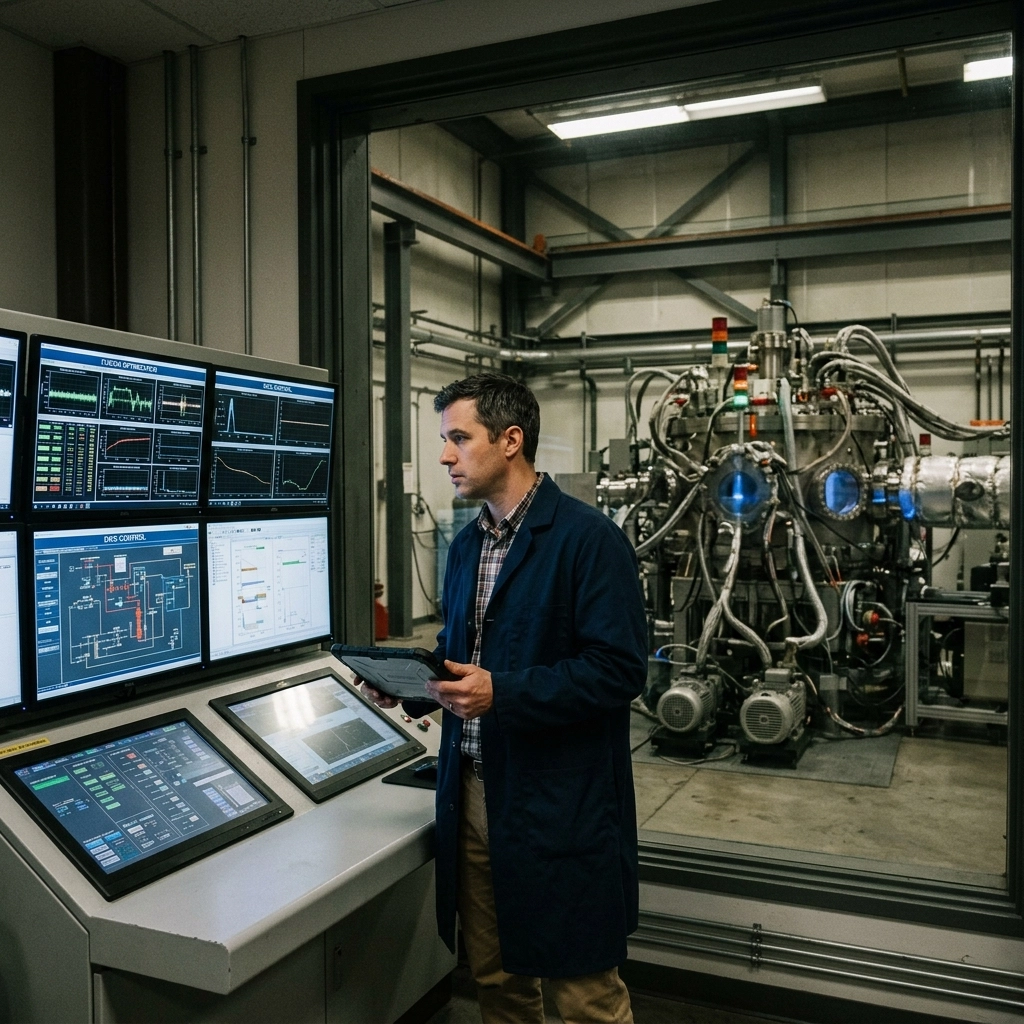
The central challenge of fusion isn't just heat: it’s control. When you are dealing with plasma at 150 million degrees Celsius, things move fast. The DICE facility is dedicated to the "diagnostics" side of the equation, which is essentially the science of seeing what the hell is going on inside a magnetic bottle. Here is why this £10 million investment is such a significant "roll of the dice" for the Oxfordshire tech corridor:
- Real-time Reflexes: Traditional fusion experiments often involve running a "shot" of plasma and then spending weeks or months analysing the data to see what happened. DICE aims to pioneer real-time diagnostics. Think of it as moving from developing a roll of film in a darkroom to using a high-speed digital camera with instant playback.
- The £10 Million Toolkit: The funding isn't just for bricks and mortar; it is for high-precision instrumentation. This includes advanced spectroscopy, microwave diagnostic tools, and laser-based scattering systems that can measure the density and temperature of particles moving at ballistic speeds.
- Standardising the "Fusion Brain": One of the biggest hurdles in fusion energy is that every experimental reactor (Tokamak) currently uses bespoke, one-off sensors. DICE is intended to act as a hub where these diagnostic tools can be standardised and tested before they are deployed to the STEP (Spherical Tokamak for Energy Production) programme.
- The AI Integration: You cannot have a modern "brain" without artificial intelligence. DICE will be working in tandem with the newly announced Sunrise supercomputer at Culham. The goal is to use machine learning to predict "disruptions": those moments when the plasma loses stability: and correct them in milliseconds.
- Bridging the Prototype Gap: The UK is currently moving from the research phase to the delivery phase. DICE is the bridge between "let's see if this works" and "let's make this an industrial reality." Without the sensors being developed here, a commercial fusion power plant would be impossible to monitor safely.
- Attracting Global Talent: By creating a dedicated centre for excellence, the UK is planting a flag. This facility is designed to attract the world's best plasma physicists and sensor engineers to Oxfordshire, ensuring that the "untold stories" of our energy transition are written by the brightest minds in the field.
Why Oxfordshire is the Silicon Valley of Stars
When people think of Oxfordshire, they often think of dreaming spires and rowing on the Thames. But for the tech-savvy, the real action is happening in Culham. The region has quietly become a global hub for fusion energy, a "Silicon Valley of Stars" where the future of the power grid is being mapped out. As an independent news UK platform, we want to highlight why this specific geography matters so much for the global energy race:
- The Legacy of JET: Culham was the home of the Joint European Torus (JET), which recently concluded its operations after decades of record-breaking results. The expertise gathered during the JET era hasn't disappeared; it has been absorbed into the local ecosystem, providing DICE with a ready-made workforce of experts.
- The Fusion Cluster: It isn’t just the government-funded UKAEA in the area. Oxfordshire is home to a "fusion cluster" of over 20 private companies and hundreds of supply chain partners. DICE will act as a collaborative space where these private firms can test their own diagnostic hardware against gold-standard benchmarks.
- Economic Gravity: The presence of DICE and the broader Culham Campus creates a gravitational pull for investment. We are talking about high-value jobs that don't just involve sitting at a desk, but building the literal hardware of the future. This is the kind of industrial strategy that actually yields results.
- Educational Synergy: With Oxford University nearby, the pipeline from academic theory to practical application is incredibly short. Students who are currently studying plasma physics can walk into a world-leading facility like DICE and see their theories tested in real-time.
- Infrastructure for the Impossible: Building a facility like DICE requires more than just money; it requires high-power electrical grids, cryogenic cooling systems, and specialized shielding: all of which are already embedded in the Culham infrastructure. You couldn't just build this in a standard business park.
- Untold Stories of Manufacturing: While the headlines often focus on the "big science," the untold stories involve the local manufacturers who are creating the mirrors, lenses, and vacuum seals for DICE. These are the unsung heroes of the fusion revolution, proving that British manufacturing still has a world-class edge in high-precision engineering.
The Future of Clean Energy: From Lab to Grid
The ultimate goal of the DICE facility isn't just to produce better charts for physicists to look at; it is to enable a world where clean, limit-less energy is a reality. The road to a fusion-powered grid is long, but the milestones being set in Oxfordshire are the coordinates we need to follow. The "brain" developed at DICE will eventually manage the reactors that power our cities.
- Supporting the STEP Roadmap: The UK’s flagship fusion project, STEP, is slated to be built in Nottinghamshire, but its "nervous system" is being designed in Oxfordshire. DICE will ensure that when STEP goes online in the 2040s, it isn't flying blind.
- Safety as a Selling Point: One of the main reasons fusion is safer than traditional fission is that it cannot have a "meltdown." If the plasma becomes unstable, it simply cools and stops. However, to make it commercially viable, we need to avoid these stops. DICE provides the diagnostics to keep the plasma "burning" for months at a time rather than seconds.
- The Decarbonisation Deadline: As we move toward 2050 net-zero targets, the pressure is on. While wind and solar are vital, they need a baseload partner that doesn't depend on the weather. Fusion is that partner, and DICE is accelerating the timeline to get it ready.
- Exporting the Tech: The diagnostic tools developed at DICE won't just stay in the UK. They represent a massive export opportunity. As other countries (like the US, France, and China) ramp up their fusion efforts, they will need the "brains" that Oxfordshire is currently building.
- Beyond the Reactor: Interestingly, the sensors developed for fusion have "spin-off" applications. High-speed imaging and radiation-hardened electronics are needed in space exploration, medical imaging, and advanced manufacturing. The DICE roll might pay off in industries we haven't even considered yet.
- A New Chapter for UK Energy: For years, the UK has been a consumer of energy technology. With facilities like DICE, we are becoming the architects. This is about sovereignty, security, and a proactive approach to the climate crisis that relies on innovation rather than just restriction.
The establishment of the Diagnostics Innovation Centre of Excellence marks a shift in the fusion narrative. It is a move away from the "brute force" of larger magnets toward the "finesse" of sophisticated data. By investing £10 million into the ability to see and understand plasma in real-time, the UK is ensuring that when the first commercial fusion reactor finally lights up, we won't just be watching from the sidelines: we will be the ones who designed the system that keeps the star in check.
Oxfordshire’s new fusion brain is a testament to the power of targeted investment and local expertise. In the grand gamble of the energy transition, the DICE roll looks like a very safe bet for the future of the planet. Through the lens of independent news UK, these are the developments that truly matter: the quiet, high-stakes engineering that will eventually change the way every human on Earth consumes power.
The transition to a fusion-led economy will not happen overnight, but the foundations are being laid in the Culham soil. As DICE begins its work, the "untold stories" of fusion will become the headline news of the next decade, proving that sometimes, the most important part of a machine is the brain that tells it what to do.