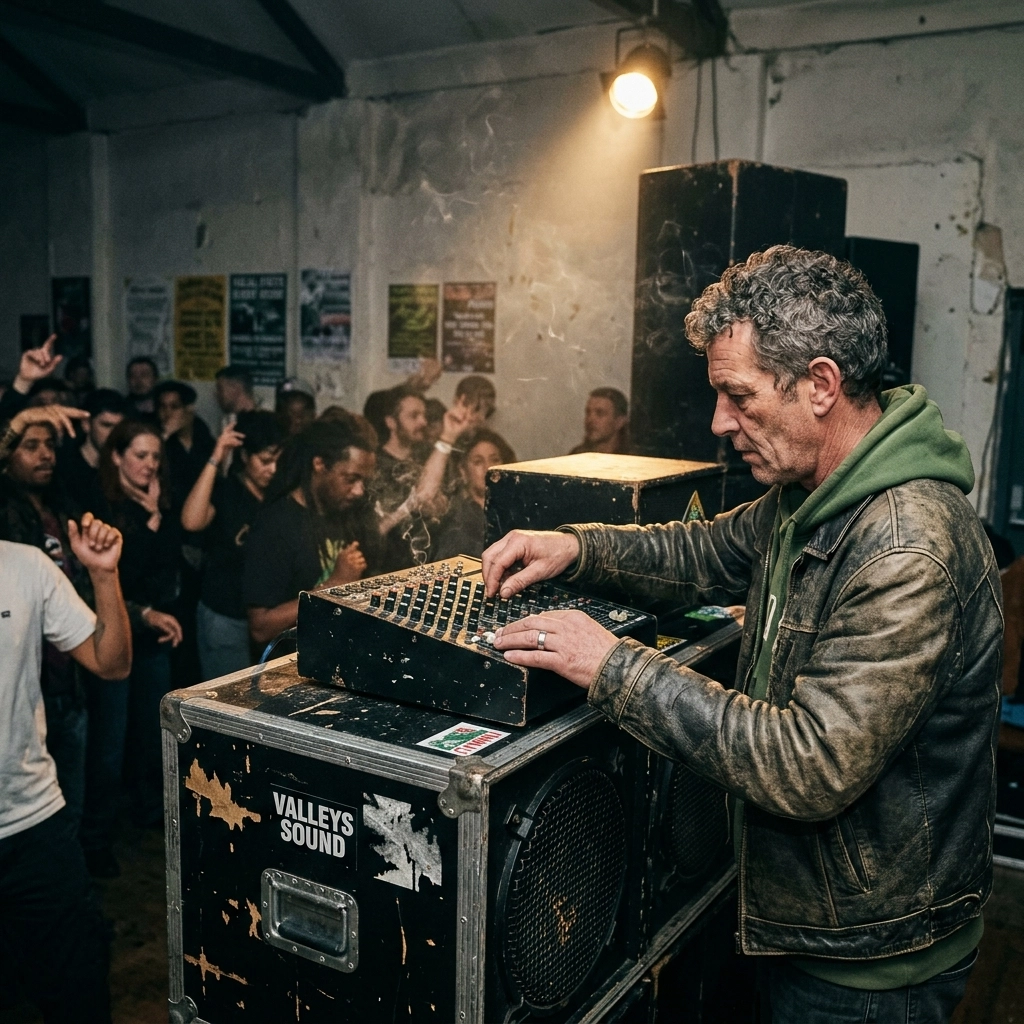
If you walked through the streets of Butetown in the late 1970s, you wouldn't just hear the music; you would feel it. Before the digital age and before Cardiff was rebranded as a generic hub of modern glass and steel, there was a sonic earthquake happening in the backrooms, community centres, and basement clubs of the city’s docks. This is the story of the Welsh reggae sound systems, a vibrant, underground movement that remained one of the best-kept secrets in the UK’s musical history. It is a narrative of untold stories that speaks to the heart of independent news uk: tales of resilience, DIY ingenuity, and a community that refused to be silenced.
While London, Bristol, and Birmingham often hog the limelight when it comes to British reggae history, Cardiff’s scene was perhaps more remarkable because of its total isolation. There were no pirate radio stations broadcasting roots and dub over the Welsh valleys. There was no mainstream media coverage. There were no major record labels scouting the Casablanca Club for the next big thing. Instead, there was a dedicated group of innovators who built their own world from the ground up, wire by wire and speaker by speaker.
The DIY Pioneers of the Tiger Bay Bassline
The origin of the Cardiff sound system scene is rooted in the migration of the Windrush generation and the unique multicultural melting pot of Tiger Bay. By the mid-1970s, a younger generation of Black Welshmen was looking for a way to express an identity that was simultaneously Caribbean and distinctly Cardiffian. They didn't find that expression in the city centre’s "white" clubs, where they were often met with "No Entry" signs or the hostile gaze of the police. So, they did what any community of creators does: they built their own spaces.
In 1975, the landscape changed forever with the arrival of Conqueror Hi Power. Founded by Gilbert Anthony Watt, Conqueror wasn't just a collection of speakers; it was a statement of intent. The "sound" in sound system culture refers to the entire collective: the DJs, the selectors, the engineers, and the physical stacks of handcrafted wooden speaker boxes. Building a system was an act of engineering prowess. These crews didn't buy off-the-shelf equipment from high-street shops. They spent months in garages, sourcing the heaviest magnets and the thickest plywood to ensure the bass could be felt in the marrow of your bones.
Following in the wake of Conqueror came Black International, and later, the heavyweights known as Countryman. Founded by Tylo and Gary Jemmett, Countryman became a legendary name that resonated far beyond the borders of Wales. These crews were the architects of a secret sonic architecture. They were operating in a vacuum, which meant their sound developed a specific local flavour: a raw, unfiltered version of roots reggae that was as tough as the docks it was born in.
Resilience in the Face of Cultural Isolation
To understand the importance of these sound systems, one must understand the social climate of 1970s and 80s Cardiff. The Black Welsh community was concentrated in Butetown, a district that was physically and socially cut off from the rest of the city by the railway lines and the heavy hand of urban planning. In this environment, the sound system became more than a source of entertainment; it was a form of social survival.
The "secret" nature of the scene wasn't necessarily by choice. It was a byproduct of a society that wasn't interested in documenting Black life in Wales. While the London scene had the benefit of a larger population and closer links to the music industry, Cardiff’s crews had to be entirely self-reliant. This DIY culture extended to everything they did. If they wanted a particular record from Jamaica, they had to coordinate complex delivery routes or travel hours to find specialist shops in England.
The pressure from the authorities was a constant shadow. The "sus" laws and aggressive policing meant that setting up a sound system in a local hall was often viewed by the police as a precursor to trouble. However, the crews showed incredible resilience. They turned local community hubs and legendary venues like the Casablanca Club into sanctuaries. Inside those walls, the outside world didn't matter. The only thing that mattered was the weight of the bass and the message of the lyrics. It was a space where the community could gather, celebrate, and protest through the medium of the dancehall.
This isolation actually fostered a fierce sense of pride. When Cardiff crews travelled to other cities like Bristol or Birmingham for "sound clashes": competitive musical battles: they often shocked their rivals. Nobody expected a crew from Wales to turn up with such high-calibre engineering and such a deep selection of "dubplates" (exclusive, unreleased recordings). They were the underdogs of the UK reggae scene, a status they wore like a badge of honour.
The Echoes of Butetown’s Sonic Revolution
The pinnacle of this movement was felt every year during the Butetown Carnival. For a few days, the secret sound systems of Cardiff came out into the open air. The carnival was the one time of year when the city’s residents couldn't ignore the culture that had been brewing in the docks. Legendary figures like Eric "Beefy" Howard of Conqueror recall the sheer power of the systems during these events. It is said that when Countryman or Lionheart set up their stacks, you didn't need a map to find the party: you just had to follow the vibrations in the pavement.
As the 1980s progressed into the 1990s, the landscape began to shift. The rise of digital production and the changing nature of the UK’s nightlife meant that the massive, hand-built speaker stacks were harder to maintain and find venues for. Gentrification also began to creep into the Cardiff Bay area, slowly erasing the physical spaces where this culture had flourished. The "Tiger Bay" of the past was being replaced by a version of the city that felt increasingly sterilised.
Yet, the legacy of these untold stories remains. The influence of the sound systems can be heard in the DNA of modern Welsh music, from the drum and bass scenes of the late 90s to the contemporary grime and hip-hop artists coming out of Cardiff today. The spirit of self-reliance: the idea that if you aren't given a seat at the table, you build your own house: is a direct inheritance from the sound system pioneers.
Today, there is a growing movement to document this history before it fades from living memory. For many years, these stories were kept in private photo albums and shared through oral histories within the community. Now, they are being recognised as a vital part of the Welsh national story. These weren't just "secret" parties; they were the heartbeat of a community that used music to assert its right to exist in a space that often tried to ignore it.
The story of Conqueror Hi Power, Countryman, and Black International is a reminder that some of the most important cultural movements happen far away from the cameras and the headlines. They happen in the gaps, in the silences, and in the deep, resonant bass frequencies of a speaker stack in a Cardiff backroom. It is a history of Welsh reggae that proves, even in isolation, the power of a community's voice can never truly be dampened.
The resilience shown by the Black Welsh community during this era is a testament to the enduring power of music as a tool for social cohesion. While the physical boxes may have been dismantled or stored away in garages, the echoes of those secret sound systems still ring through the streets of Cardiff, reminding us that the most powerful stories are often the ones we have to listen the hardest to find. In the world of independent news uk, these are the narratives that define our cultural landscape, proving that the heart of a city is often found in its most underground rhythms.