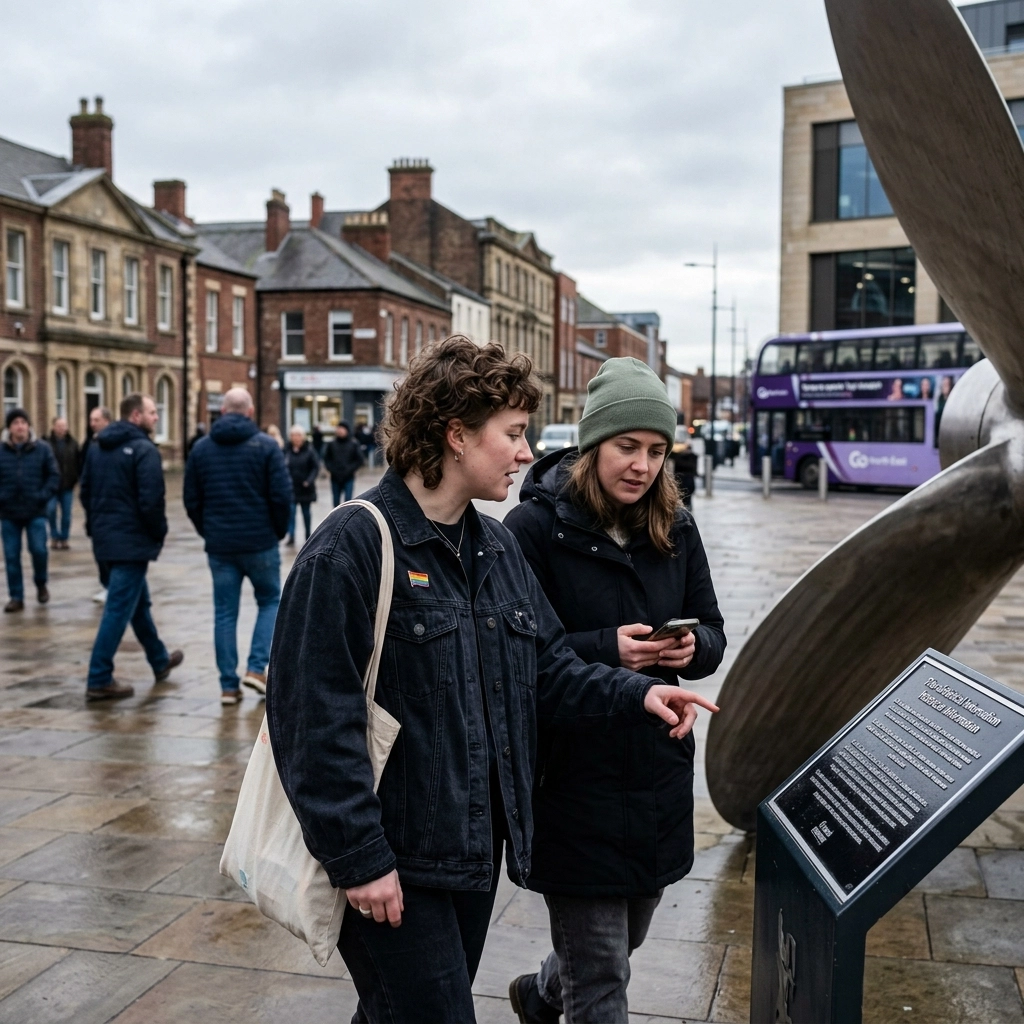
Sunderland is a city often defined by its grit, its industrial heritage, and the rhythmic pulse of the River Wear. For generations, the narrative of the North East has been one of shipyards, coal mines, and football terraces. While these elements are undeniably vital to the city's identity, they only tell part of the story. Beneath the surface of the Mackem heartland lies a rich, vibrant, and often hidden tapestry of LGBTQIA+ life. For decades, these experiences were whispered in the corners of pubs, shared through coded glances on the Roker seafront, or lived behind closed doors in the city's terraced streets.
Today, there is a movement to ensure these voices are no longer relegated to the shadows. The Sunderland’s Curious Histories project has taken on the vital task of collecting and preserving the memories of the city's queer community. It is an act of cultural archaeology, digging through the layers of the past to find the moments of joy, struggle, and resilience that have otherwise been left out of the history books. As a platform for independent news uk, we recognise that the strength of a community lies in its ability to tell its own story, especially those chapters that have been intentionally erased or overlooked.
The importance of this work cannot be overstated. As the older generation of the LGBTQIA+ community passes away, there is a real danger that their lived experiences will vanish with them. By documenting these untold stories, the project ensures that the queer history of the North East is recognised as an essential component of the region’s broader heritage. It is about more than just dates and locations; it is about the human spirit’s capacity to find connection and identity in a world that wasn't always ready to accept it.
The Secret Geography of the Wear
For a long time, being queer in Sunderland meant navigating a secret geography. In an era when legal discrimination was the norm and social stigma was high, the community developed a sophisticated system of coded signals and hidden meeting spots. These were the spaces where people could truly be themselves, away from the prying eyes of a society that often viewed their existence with suspicion or hostility.
Historians and community leaders like Anth Pullen have spent years piecing together this map of the past. It wasn't just about the well-known gay bars that eventually emerged; it was about the subtle ways people found each other. There were specific benches on the promenade where a certain way of sitting or a particular accessory might signal one's identity. There were pubs where, on specific nights, the back room became a sanctuary. These locations were vital lifelines for people who felt isolated in their daily lives.
In the mid-20th century, the North East was a place of traditional gender roles and a strong emphasis on heteronormative family life. For many LGBTQIA+ individuals, growing up in this environment meant a constant performance of 'fitting in'. The secret spots along the Wear or in the city centre were the only places where the mask could slip. These stories of secret signals are a testament to the ingenuity and courage of a community that refused to be extinguished. They remind us that even in the most challenging times, people will always find a way to reach out and connect with their own.
Recovering Our Untold Stories
The Sunderland’s Curious Histories project is driven by the belief that every voice deserves to be heard. By focusing on the North East, the project highlights a region that is often neglected in national LGBTQIA+ narratives, which tend to focus heavily on London or Manchester. The reality of being queer in a northern industrial city had its own unique challenges and triumphs, and these untold stories provide a much-needed perspective on the diversity of the UK’s queer experience.
One of the most powerful aspects of this project is the range of stories it uncovers. It isn't just about the 1967 partial decriminalisation of homosexuality in England and Wales; it’s about the decades of struggle that followed. It’s about people like Jenny Gray, born Robert Coulthard in the 1880s, who lived across the North East including South Shields and Gateshead. Jenny challenged the social norms of the time by refusing to be shamed for living as a woman, often facing magistrates with a level of defiance that was incredibly brave for the era.
There is also the legacy of Sam Green, who is believed to be the UK’s first openly gay politician. Elected to Durham City Council in 1972 as a member of the Gay Liberation Front, Green’s victory was a landmark moment for the region. These figures show that the North East has always been a place of quiet revolution. The Curious Histories project works to bridge the gap between these historical milestones and the personal, everyday memories of local residents. Whether it’s a story about a first Pride event or the memory of a long-lost friend, each contribution adds a vital piece to the puzzle of Sunderland’s identity.
A Legacy for the Future
As we look toward the future, the preservation of these histories serves as a foundation for the next generation of LGBTQIA+ people in Sunderland. Knowing that you come from a long line of resilient, creative, and courageous individuals can be incredibly empowering. It changes the perception of the city from a place where you might feel like an outsider to a place where you have deep, historical roots.
The shift in public attitude over the decades has been documented in fascinating ways. A television clip from Sunderland in 1980 captures a range of public opinions on homosexuality, showing that even then, the city was more divided and nuanced than the stereotypes might suggest. While some expressed prejudice, others showed a growing sense of tolerance and understanding. Seeing this progression helps us appreciate how far the community has come, while also highlighting the work that still needs to be done.
By centring these narratives in our coverage of independent news uk, we aim to support the ongoing efforts to make Sunderland a truly inclusive city. The work being done by local networks and historians isn't just about looking backward; it’s about creating a culture where everyone feels their history is valued. The "untold stories" of the North East are finally being told, and in doing so, they are reshaping the way we understand our past and how we envision our collective future. The secrets of the Wear are being brought into the light, ensuring that the queer history of Sunderland is never forgotten again.
The preservation of local heritage is a communal responsibility. Projects like Curious Histories remind us that history is not just made by kings and politicians, but by ordinary people living extraordinary lives in the face of adversity. By honouring these memories, we ensure that the full spectrum of Sunderland’s human experience is archived for posterity. The stories of resilience, secret codes, and community triumph continue to inspire, providing a roadmap for future generations to build upon a legacy of authenticity and pride.