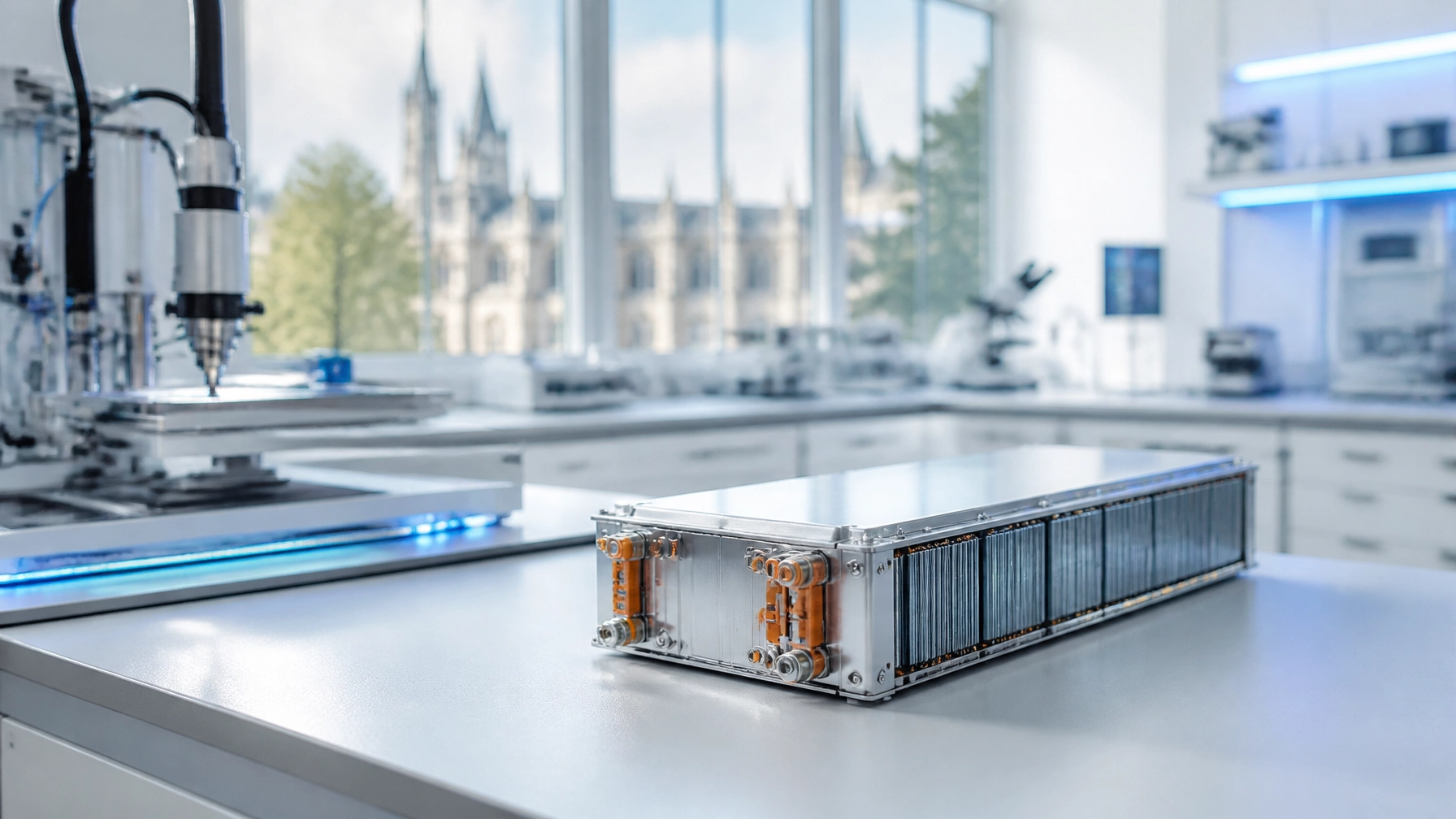
Cambridge has long been the beating heart of British innovation, but the city has just minted its latest heavyweight champion in the global race for energy dominance. Nyobolt, a battery technology firm that started as a university spin-out, has officially galloped into unicorn territory. Following a fresh £47 million ($60 million) injection of Series C funding, the company’s valuation has soared to the magic $1 billion mark, proving that the future of power might just be "made in Britain."
The funding round was led by the American robotics giant Symbotic, a move that signals a significant shift in how the industry views energy storage. For years, the bottleneck in the world of autonomous machines and artificial intelligence has not been the software, but the hardware: specifically, how long it takes to juice up a robot before it can get back to work. Nyobolt’s technology promises to delete that downtime entirely. By developing lithium-ion batteries that can charge in a matter of minutes, or even seconds, they are solving the literal power struggle of the 21st century.
This isn’t just another tech start-up with a glossy pitch deck. The foundations of Nyobolt are built on decades of high-level research at the University of Cambridge. Co-founded by the world-renowned battery scientist Professor Dame Clare Grey and CEO Dr Sai Shivareddy, the firm has spent years quietly perfecting the chemistry required to make ultra-fast charging a reality without destroying the lifespan of the battery. Their success is a testament to what happens when academic brilliance meets aggressive commercial ambition.
The science of the sub-minute charge
At the core of Nyobolt’s breakthrough is a fundamental rethink of battery materials. Most conventional lithium-ion batteries suffer from a slow-and-steady approach; try to shove energy into them too fast, and they overheat or degrade. Nyobolt’s proprietary niobium-based anode materials allow for a much faster transfer of ions, meaning energy can be dumped into the cells at breakneck speeds. In practical terms, this means a vehicle or a warehouse robot that usually takes hours to charge could be back at full capacity in the time it takes to grab a cup of coffee.
The implications for the robotics industry are massive. In the sprawling logistics hubs that power modern e-commerce, every second a robot spends tethered to a wall is a second it isn’t moving parcels. Symbotic, which uses AI-enabled robotics to automate warehouses, clearly saw the writing on the wall. By integrating Nyobolt’s batteries into their own systems, they can create a more fluid, non-stop operational cycle. It is a partnership born of necessity, as the world demands faster deliveries and more efficient supply chains.
But it isn't just about speed. Nyobolt’s cells are also designed to be incredibly durable. One of the main criticisms of fast-charging technology has traditionally been the "burn fast, die young" trade-off, where rapid charging cycles lead to a shorter overall battery life. The Cambridge team has managed to bypass this hurdle, claiming their batteries can last up to ten times longer than standard lithium-ion cells even under heavy-duty use. This durability is the key that unlocks industrial applications, where equipment needs to run 24/7 for years on end without expensive battery replacements.
Powering the rise of the machines and AI
While the headlines are focused on the "unicorn" status, the real story lies in the explosive growth of AI and what it means for the electrical grid. As we build more massive data centres to process the world's artificial intelligence needs, the demand for reliable, high-power energy storage is skyrocketing. Nyobolt is positioning itself as the infrastructure layer for this "Physical AI" revolution. It is one thing to have a smart brain, but that brain needs a heart that can keep up with the electrical demands of high-performance computing and autonomous movement.
The company has reported that its revenues have grown fivefold year-on-year, a staggering figure that reflects the desperate need for better energy solutions across the board. From autonomous delivery drones to the heavy machinery used in mining and construction, the transition away from fossil fuels depends entirely on the efficiency of the battery. If you can’t charge a digger or a delivery van in a reasonable timeframe, the transition stalls. Nyobolt is effectively greasing the wheels of the green revolution by making the "electric" option as convenient as the "petrol" one.
This funding boost will be used to accelerate the company’s manufacturing capabilities. It is a critical stage for any British tech firm: moving from the lab to the factory floor. The UK has a history of inventing brilliant things only to see the manufacturing and subsequent profits move overseas. Nyobolt seems determined to buck that trend, scaling up its development pipeline and ensuring that the intellectual property remains firmly rooted in Cambridge while it services a global client list.
A bright spot for the British tech landscape
In a period where the UK economy has faced its fair share of headwinds, the rise of Nyobolt provides a much-needed shot of optimism. It serves as a reminder that the "Golden Triangle" of London, Oxford, and Cambridge remains one of the few places on earth capable of producing world-class deep-tech companies. The fact that they have reached a $1 billion valuation during a relatively tight period for venture capital investment speaks volumes about the perceived value of their intellectual property.
The involvement of existing heavyweights like IQ Capital and Scania Invest alongside the new lead from Symbotic shows a rare consensus among investors. Usually, there is a divide between financial investors looking for a quick exit and industrial investors looking for a strategic advantage. Here, both sides seem to agree that Nyobolt is the real deal. For the UK government, which has long championed the idea of Britain becoming a "science superpower," Nyobolt is the ultimate poster child.
Looking ahead, the challenge for the firm will be managing the sheer scale of the demand. With the energy transition in full swing and the AI boom showing no signs of slowing down, every major industry is looking for a way to stay powered up. The Cambridge unicorn has the technology and now it has the capital. The race is on to see if they can become the global standard for high-power, fast-charging energy. If they succeed, the billion-dollar valuation might just be the beginning of a much larger story for the future of British industry.