The recent by-election in Gorton and Denton has been a bit of a whirlwind, even by the standards of British politics in 2026. While the headline news was undoubtedly the Green Party’s Hannah Spencer clinching a victory, the conversation quickly shifted from the ballot box to the police station. Allegations of "family voting" began to circulate almost as soon as the results were read out, prompting a full-scale investigation by Greater Manchester Police. For anyone following independent news uk, this story has become a prime example of why we need to look closer at the mechanics of our democracy.
By-elections are usually high-stakes affairs, often serving as a litmus test for the mood of the country between general elections. However, the Gorton contest took on a life of its own when Reform UK’s Nigel Farage stepped in to report concerns over electoral integrity. The focus was on a specific practice that, while sounding relatively harmless to the uninitiated, is actually a serious breach of the law under the Ballot Secrecy Act 2023.
As the dust settles on the count, many are left wondering what exactly happened behind the curtains of those polling booths. The probe into these claims wasn't just about one party or one candidate; it was about the fundamental right to a secret ballot. In an era where untold stories often slip through the cracks of mainstream coverage, the details of this police investigation offer a fascinating look at the challenges facing modern elections in the UK.
Understanding the Rules of the Secret Ballot
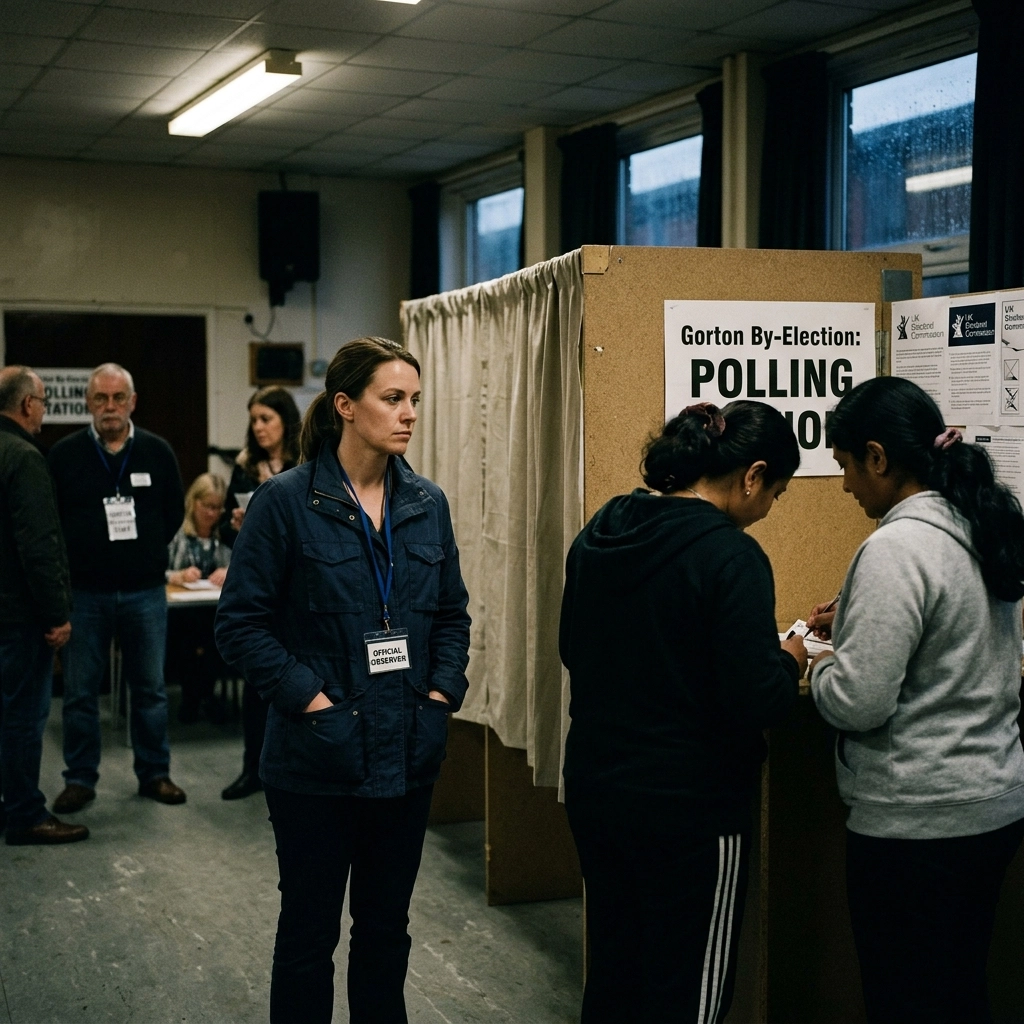
To understand why the police were involved in the first place, we have to look at what "family voting" actually means in a legal context. Historically, the UK has always prided itself on the secrecy of the vote. When you walk into that wooden booth, it is supposed to be just you and your conscience (and a pencil on a string). However, "family voting" refers to the practice where multiple people enter a single polling booth together, or where one person oversees or directs how another person marks their ballot paper.
This isn't just a matter of poor etiquette; it became a specific criminal offence under the Ballot Secrecy Act 2023. The law was introduced to prevent coercion and ensure that every individual can vote freely without pressure from family members, spouses, or community leaders. During the Gorton by-election, an election observer group called Democracy Volunteers flagged some very specific concerns. They weren't just guessing; they had boots on the ground at 22 different polling stations across the constituency.
According to their data, they witnessed instances of what they termed "family voting" in 68 per cent of the stations they monitored. That is a staggering figure. They reported seeing people looking over shoulders and multiple voters entering booths simultaneously on 32 separate occasions. For those who champion the integrity of British elections, these reports were a massive red flag. The idea that a significant portion of voters might not have been making their choice in total privacy is something that naturally sparked a heated debate about whether the result truly reflected the will of the people.
The Investigation and the Legal Threshold
When Greater Manchester Police (GMP) took up the mantle to investigate these claims, the stakes were high. They interviewed observers who had been on the scene and reviewed the evidence provided by Reform UK and the independent monitors. The investigation was thorough, looking into the 15 specific polling stations where the issues were allegedly most prevalent. However, as with many things in the legal world, the difference between "concerning behaviour" and a "prosecutable crime" is a very high bar.
The police eventually concluded that there was no evidence of intent to influence votes in a way that met the legal threshold for prosecution. While the observers definitely saw people in booths together, the law requires more than just physical presence. To secure a conviction for family voting, there usually needs to be evidence of verbal instruction or physical conduct that demonstrates coercion. In other words, simply standing next to your spouse while they vote might be against the spirit of the rules, but unless you are actively telling them which box to tick, the police find it very difficult to bring charges.
This outcome has left a bit of a sour taste for some, particularly those who feel that the rules should be more strictly enforced to prevent any hint of impropriety. The Green Party’s victory stands, and Hannah Spencer has taken her seat, but the conversation about how we monitor our polling stations is far from over. The police noted that while the observations were accurate, they did not find the "directing or coercing conduct" necessary to move forward. This highlights a tricky grey area in our electoral law: how do you prove what was whispered inside a booth without violating the very secrecy you are trying to protect?
The Role of Independent News and Untold Stories
This entire saga brings to light the vital importance of independent news uk in today’s political landscape. Mainstream outlets often focus on the "who won" and "who lost," but the "how" is often where the most important stories live. These untold stories about the friction between traditional cultural practices and modern electoral laws are essential for a healthy democracy. If it weren't for independent observers and the willingness of smaller parties to challenge the status quo, many of these incidents might have gone entirely unnoticed.
The Gorton by-election probe serves as a reminder that democracy is a fragile thing that requires constant maintenance. The Electoral Commission has since weighed in, stating that they take all allegations of fraud and coercion seriously. They expressed gratitude for the police’s work in establishing the facts, even if those facts didn't lead to a day in court. It’s a classic case of the system working: even if the result isn't a headline-grabbing arrest.
Moving forward, there is a growing call for better training for polling station staff. If the law says one person per booth, then that needs to be enforced on the ground, at the moment it happens, rather than being unpicked by detectives weeks later. The casual nature of some "family voting" suggests that many people might not even realise they are breaking the law; they might just see it as helping a relative who is unsure of the process. Education, as much as investigation, will be the key to ensuring that every vote in future UK elections remains truly secret and truly free.
The investigation into the Gorton by-election has officially concluded with no further action being taken against individuals. While the allegations of "family voting" raised significant concerns regarding the adherence to the Ballot Secrecy Act 2023, the legal requirements for proving coercion were not met. The victory of the Green Party candidate remains the official result of the contest. The findings highlight the ongoing challenges in monitoring polling station conduct and the importance of continued oversight by both independent observers and law enforcement to maintain the integrity of the democratic process.