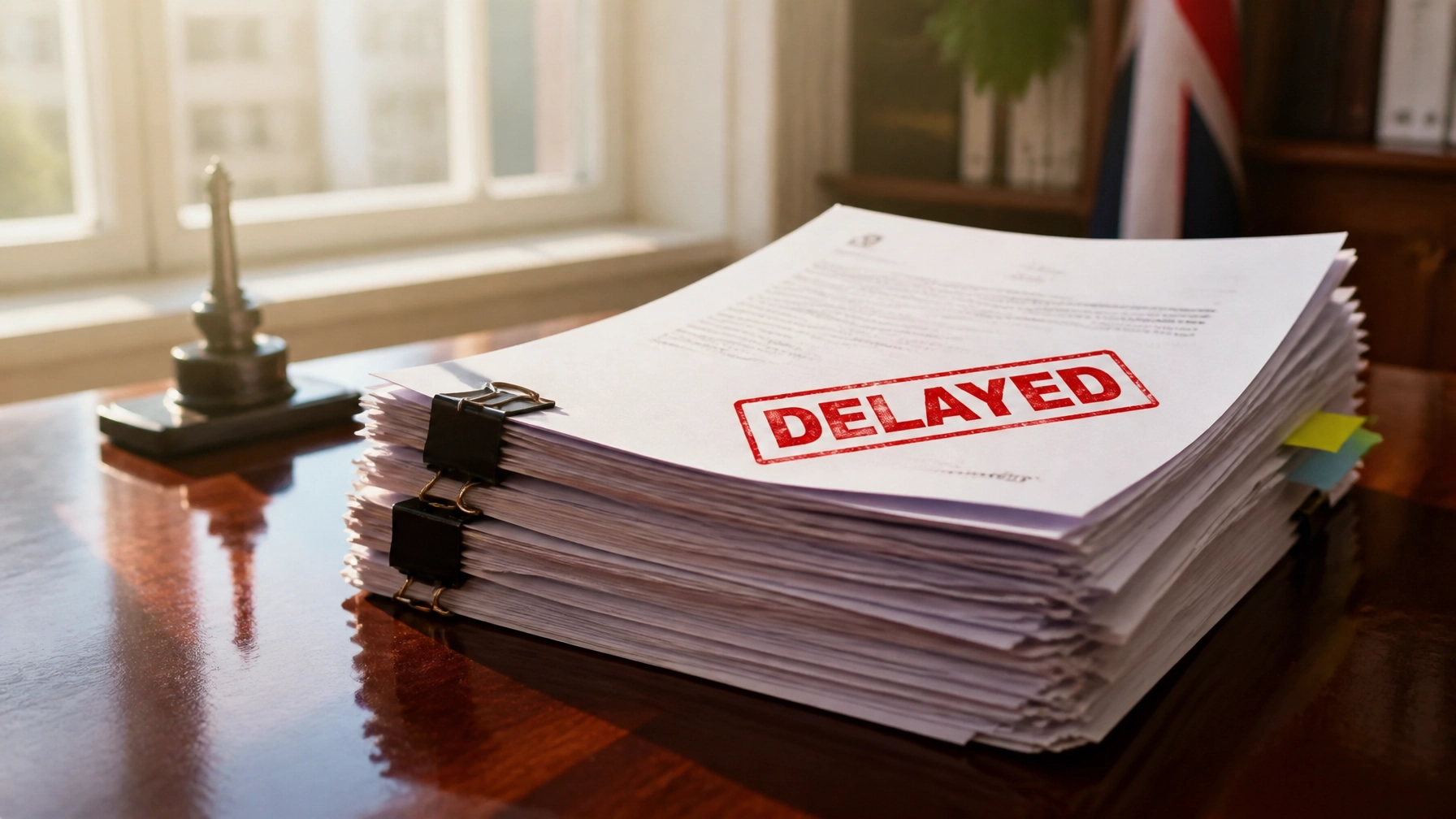
The government has confirmed a significant delay in the release of the second tranche of documents concerning Lord Mandelson’s short-lived and controversial tenure as the United Kingdom’s ambassador to the United States. This latest setback has sparked a fresh wave of accusations from across the political spectrum, with critics suggesting that the administration is attempting to bury embarrassing details under the guise of legal necessity.
The documents in question were supposed to provide a comprehensive look into the appointment process and the subsequent conduct of the former Labour cabinet minister, who resigned from the diplomatic post in September 2025. While a first batch of files was made public in March, this second, more substantial collection was expected to shed light on the specific interactions and policy decisions that led to his sudden departure. However, officials within the Cabinet Office have now stated that "technical complexities" and "ongoing legal sensitivities" mean the public will have to wait longer for the truth to emerge.
This postponement is not merely a matter of administrative paperwork. It strikes at the heart of a burgeoning scandal that has gripped Westminster for months. The government was initially reluctant to release any information regarding the Mandelson appointment, only relenting after a coordinated "pincer movement" by opposition parties forced a parliamentary vote. The promise was total transparency: a commitment to "release everything" connected to the peer's time in Washington. With this new delay, that promise is looking increasingly fragile.
Transparency Concerns Over Sensitive Redactions
The frustration among transparency campaigners and opposition MPs is palpable. There is a growing sense that the government is selectively applying redactions to protect not just the integrity of diplomatic relations, but the reputation of high-ranking officials who were involved in Mandelson’s vetting and oversight. The first release in March was notable for its heavy use of black ink, with entire pages of correspondence between London and the British Embassy in Washington obscured from view.
Advocates for the release argue that the public has a right to know how a figure as divisive as Mandelson was selected for such a pivotal role in the first place. The appointment, made in December 2024, was seen by many as a return to "cronyism," placing a political heavyweight with deep, often opaque international connections into the UK’s most important overseas mission. The documents currently being withheld are believed to contain the internal assessments and "red flags" that may have been ignored during the recruitment phase.
Furthermore, there are concerns about the influence of the "security apparatus" in the decision to delay. In the corridors of power, the justification often cited is the need to protect "national interests," a broad term that critics argue is used as a catch-all for anything that might prove politically damaging. If the second batch of documents reveals that senior ministers were warned about potential conflicts of interest or security risks associated with Mandelson and chose to proceed regardless, the political fallout could be catastrophic for the current leadership.
The Shadow of the Epstein Investigation
The most significant hurdle to full disclosure remains the ongoing police investigation into Lord Mandelson’s past associations. Specifically, the inquiry is focused on allegations that he passed confidential government material to the late financier and convicted sex offender Jeffrey Epstein. It has been alleged that these exchanges were not merely social but may have been motivated by the prospect of commercial benefit. Lord Mandelson has vehemently denied all such allegations, maintaining that his interactions with Epstein were entirely professional and above board.
The police investigation has provided the government with a potent legal shield. Under the principle of "sub judice," materials that could potentially prejudice an active criminal inquiry are often withheld from public view. However, legal experts are now questioning whether this principle is being used too broadly. While specific evidence related to the criminal case must be protected, the bulk of the documents regarding the ambassadorial role: such as travel expenses, policy briefings, and official meeting minutes: should, in theory, be separate from the criminal allegations.
The delay of the second tranche suggests that the overlap between the diplomatic files and the police investigation is more extensive than previously admitted. This raises uncomfortable questions about what Mandelson was doing during his months in the United States. Was the embassy being used as a platform for private business interests? Were official channels being utilised to maintain or expand a network of controversial global contacts? Without the documents, the public is left with only speculation and the official line of "denial," which is proving insufficient to quiet the growing unrest.
Pressure Mounts for Full Disclosure
The political pressure on the Prime Minister and the Chief Secretary is reaching a boiling point. The opposition has already indicated that they will seek an urgent question in the House of Commons to demand a definitive timeline for the release. They argue that every day the documents remain hidden is another day the government appears to be complicit in a cover-up. The narrative of "untold stories" is one that the current administration is desperate to avoid, yet their own actions are fueling the fire.
There is also a broader concern about the precedent this sets for British diplomacy. If the appointment of an ambassador can be shrouded in such secrecy, and if the documents explaining a high-profile resignation can be delayed indefinitely, it undermines the credibility of the UK’s foreign policy. The US-UK "Special Relationship" relies on a degree of trust and shared standards of governance. The spectacle of a British ambassador being investigated by the police while his official records are locked away in a government vault does little to inspire confidence in London’s international standing.
As the May deadline passes without the promised disclosure, the focus shifts to the Information Commissioner and the potential for a formal appeal. If the government continues to stall, the battle for the Mandelson files may move from the floor of the House of Commons to the courts. For a public that is increasingly weary of political obfuscation, the demand is simple: release the papers and let the facts speak for themselves. The "Mandelson Files" are no longer just about one man; they have become a litmus test for the government’s commitment to honesty and the rule of law.
The coming weeks will be a defining period for the administration. They can choose to honour their commitment to transparency, even if the resulting revelations are embarrassing, or they can continue to hide behind "technical delays" and legal technicalities. In the age of instant information and a public that values the truth over political convenience, the latter strategy is unlikely to succeed for long. The untold stories of the Mandelson ambassadorship are beginning to leak out through other channels, and the longer the official record is suppressed, the more damaging the eventual exposure will be.