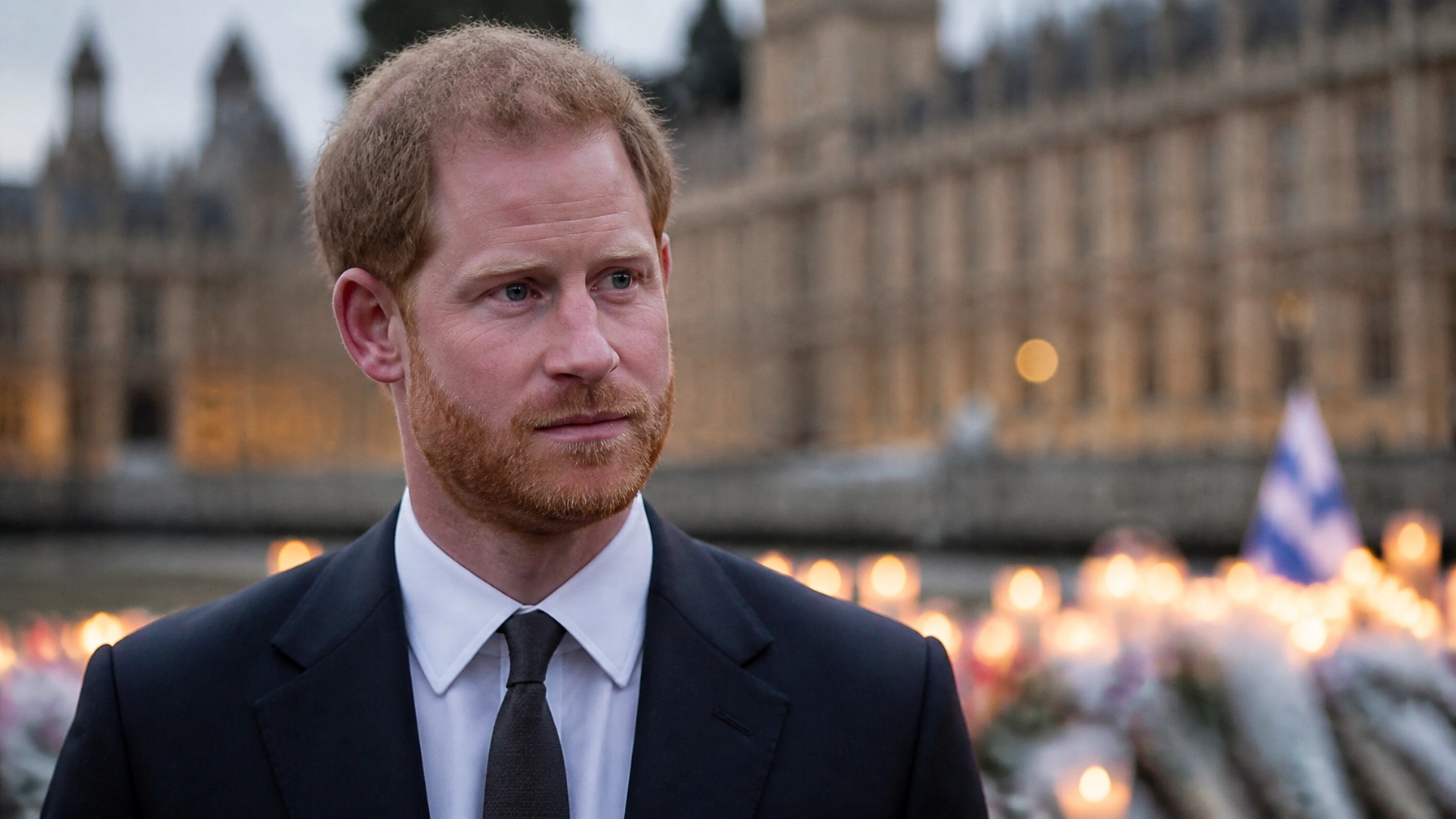
The Duke of Sussex has issued a stark warning regarding the social fabric of the United Kingdom, describing the recent surge in antisemitism as "deeply troubling." In a detailed essay published this week, the Prince addressed the growing atmosphere of hostility that has permeated British streets and digital spaces. His intervention comes at a time of heightened tension, where global conflicts have increasingly reflected back onto local communities, leading to a rise in reported hate crimes and a sense of insecurity for many British citizens. By speaking out, the Duke has added a significant voice to a conversation that many believe has been overlooked by mainstream political discourse, focusing on the human impact of prejudice rather than just the statistics.
The essay marks a rare foray into domestic social issues for the Prince, who now resides in the United States but maintains a close watch on developments in his home country. He expressed a profound concern that the UK, often celebrated for its multiculturalism and tolerance, is witnessing a regression into old prejudices. The Duke highlighted that the current climate is not merely about differing political opinions but represents a fundamental shift in how people treat one another based on their faith and identity. This shift, he argues, is corrosive to the values that define a modern and inclusive society, threatening to undo decades of progress in community relations and mutual respect.
The Escalation of Hostility and Violence
The data surrounding antisemitism in the UK has reached record levels, with community monitoring groups reporting a significant spike in incidents over the past year. These figures are not just abstract numbers; they represent real-world trauma for individuals and families. The Duke specifically pointed to recent violent incidents in major hubs like London and Manchester, where members of the Jewish community have been targeted in broad daylight. These acts of aggression range from verbal abuse and intimidation to physical assaults, creating an environment where people feel unsafe wearing traditional clothing or expressing their identity in public spaces. Such a reality is a far cry from the ideals of safety and freedom that should be guaranteed to every citizen.
The rise in these incidents is often linked to the spillover of international tensions, yet the Duke was clear that local communities should not bear the brunt of global political failures. When schools must increase security and places of worship require constant guarding, it indicates a societal failure to protect its most vulnerable members. This escalation of hostility is often fuelled by online platforms where misinformation and extremist rhetoric can spread unchecked. The digital landscape has become a breeding ground for old tropes and new conspiracies, making it harder for younger generations to distinguish between legitimate historical fact and harmful propaganda. The psychological toll on those targeted is immense, leading to a sense of isolation and a withdrawal from public life.
Addressing this escalation requires more than just condemnation; it necessitates a robust response from law enforcement, educational institutions, and community leaders. The Prince’s comments suggest that the current measures may not be enough to stem the tide of rising hate. There is a need for a deeper understanding of how these prejudices are formed and how they are being exploited in the modern age. By highlighting the specific violence in London and Manchester, the Duke has brought the focus back to the tangible harm being done, urging a move away from complacency. The safety of the Jewish community is a barometer for the health of the nation’s democracy, and current trends suggest that this barometer is flashing a warning signal that cannot be ignored.
Distinguishing Political Critique from Religious Hatred
A central theme of the Duke’s message is the crucial distinction between the right to criticise government policies and the unacceptable act of targeting an entire faith or ethnic group. In a healthy democracy, debate over international relations and the actions of foreign states is vital. However, the Prince noted that this debate has frequently devolved into a form of collective punishment, where British Jews are held responsible for the actions of a government thousands of miles away. This conflation is not only logically flawed but is inherently discriminatory. It ignores the diversity of opinion within the Jewish community itself and reduces individuals to a single identity that is then used as a target for misplaced anger.
The Prince argued that while outrage over global suffering and conflict is a natural and often moral response, it must never be allowed to manifest as hatred toward one’s neighbours. When criticism of a state crosses the line into the use of antisemitic tropes or the demonisation of a people, it ceases to be a pursuit of justice. Instead, it becomes a reinforcement of the very cycles of prejudice that many claim to be fighting against. This nuance is often lost in the fast-paced, reactionary world of social media, where complex geopolitical issues are boiled down to slogans and hashtags. The Duke’s intervention serves as a reminder that the language used in these debates has real-world consequences and that responsibility in communication is paramount.
To combat this, there must be a concerted effort to improve literacy regarding what constitutes antisemitism and how it differs from legitimate political discourse. Education plays a pivotal role in ensuring that the next generation can navigate these complexities without falling into the trap of prejudice. The Duke’s essay calls for a renewed focus on historical context, particularly the lessons learned from the darkest chapters of the twentieth century. By understanding the roots of antisemitism, people are better equipped to recognise it in its modern, often subtler forms. Preserving the truth of history is not just about the past; it is about protecting the future from repeating the same catastrophic mistakes.
A Call for Collective Responsibility and Unity
The path forward, according to the Duke of Sussex, lies in a unified front against all forms of identity-based hatred. He emphasised that the fight against antisemitism cannot be fought by the Jewish community alone; it requires the active participation of every member of society. Silence in the face of prejudice is often seen as a form of tacit approval, and the Prince urged people to find the courage to speak up when they witness injustice. This collective responsibility extends to standing against anti-Muslim hatred and all other forms of discrimination, as they often stem from the same sources of ignorance and fear. When one community is targeted, the security of all communities is diminished.
Unity is not about ignoring differences or avoiding difficult conversations, but about finding common ground in shared values of humanity and compassion. The Duke highlighted the importance of interfaith dialogue and community-led initiatives that bring people together to build bridges rather than walls. These efforts are often the most effective way to dispel stereotypes and foster genuine understanding. By sharing stories and experiences, individuals can see the human face behind the labels that are so often used to divide them. The Prince’s call to action is a plea for a return to empathy, where the pain of one group is felt and addressed by the whole.
Ultimately, the Duke’s message is one of hope, but it is a hope tempered by the reality of the challenges ahead. He believes that the UK has the capacity to overcome this period of division if there is a genuine commitment to social cohesion. This involves holding those who spread hate accountable, whether they are individuals on the street or large-scale digital platforms. It also involves a commitment from every citizen to reflect on their own biases and to choose dialogue over confrontation. The "deeply troubling" rise in antisemitism is a challenge to the conscience of the nation, and the response to this challenge will define the character of the country for years to come. By speaking out, the Prince has challenged everyone to be part of the solution rather than bystanders to a growing crisis.