When we talk about the UK justice system, the conversation often stays focused on sentencing or rehabilitation. However, a recent and deeply sobering review into prison staff safety has shifted the spotlight onto the people who walk the wings every day. Following a high-profile attack at HMP Frankland, the Ministry of Justice has had to take a long, hard look at whether the current kit issued to prison officers is actually fit for purpose. The big question on everyone’s lips is simple: is it time for guards to wear body armour?
As an independent news uk source, we believe in looking at the practicalities of these dangerous environments. For years, the standard uniform has been relatively "soft": think shirts and trousers rather than tactical gear. The idea was to keep things low-key and avoid creating a "them vs. us" atmosphere. But after the events involving Hashem Abedi at HMP Frankland, that philosophy is being tested like never before.
The Reality of Risk on the Modern Prison Wing
The incident that sparked this latest safety review was nothing short of brutal. Hashem Abedi, who was already serving a life sentence for his role in the Manchester Arena bombing, was involved in a coordinated attack on a prison officer. It wasn’t just a momentary flare-up; it was a calculated assault that left an officer with significant injuries. When stories like this break, they often highlight the untold stories of the men and women working in high-security estates who face the threat of violence as a daily reality.
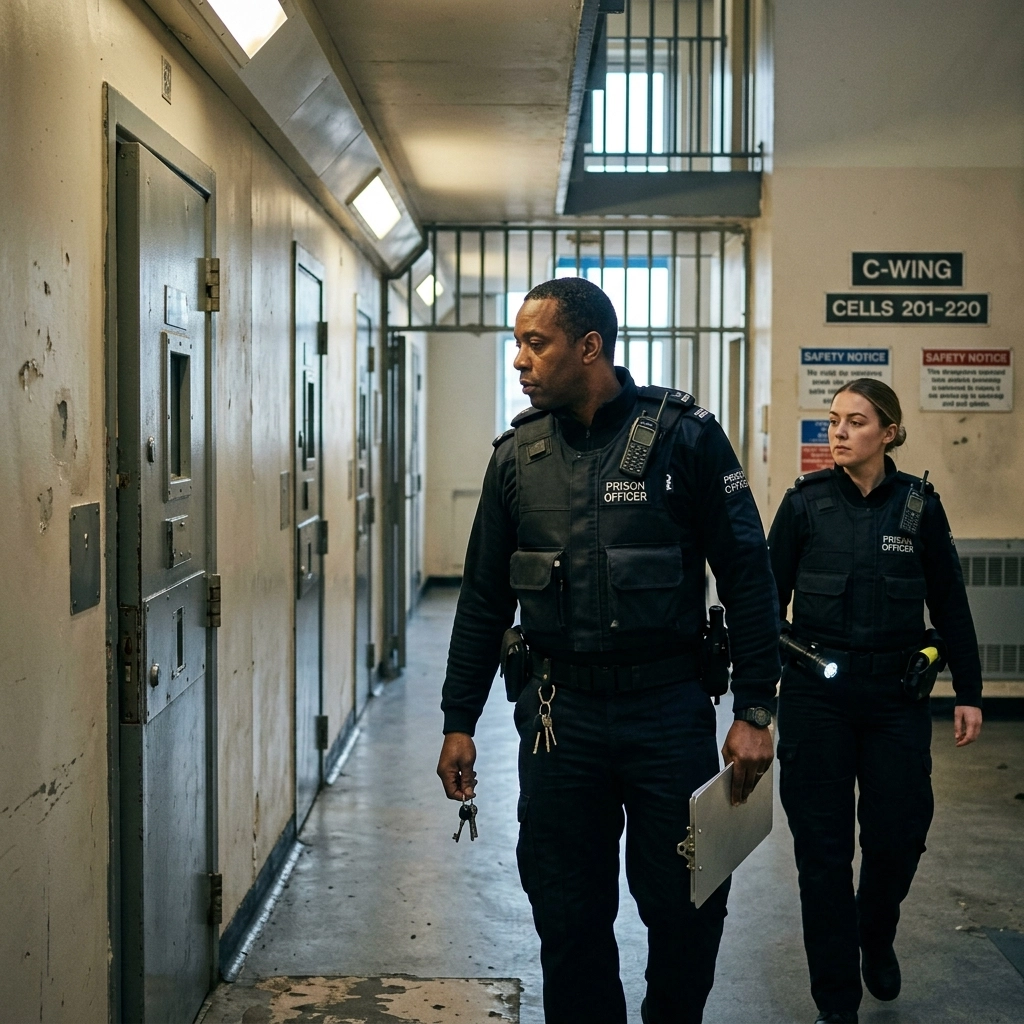
Working in a Category A prison like Frankland means dealing with some of the most dangerous individuals in the country. In these environments, the weapons aren't usually high-tech; they are improvised "shanks" or "spikes" made from everyday items like toothbrushes, razor blades, or plastic cutlery. Because these weapons are designed to puncture or slash, the argument for stab-resistant or spike-resistant vests has become much harder to ignore.
Critics of the current system point out a strange contradiction. If you see a police officer on a standard patrol in a quiet suburb, they are almost certainly wearing body armour. Yet, a prison officer tasked with supervising convicted violent offenders in a confined space for twelve hours a day often has nothing more than a thin shirt between them and a sharpened piece of plastic. This disparity is at the heart of the new safety review. The review isn't just about Frankland; it's about the systemic way we protect: or fail to protect: those working within the wire.
Weighing Up Protection Against the Prison Atmosphere
One of the main reasons the UK has resisted rolling out body armour across the entire estate is the concern over "de-escalation." The prison service has long prided itself on a "relational" approach to security. The theory is that if officers look like soldiers, prisoners will treat them like an occupying force. This can lead to increased tension, making the environment more volatile rather than safer.
However, as we dig into the untold stories of frontline staff, many officers argue that the "soft" look doesn't actually stop someone who is intent on causing harm. In fact, many feel it makes them look like easy targets. This is where the debate gets tricky. How do you balance the need for a non-confrontational appearance with the absolute right of a worker to go home in one piece at the end of their shift?
Looking abroad provides some interesting context. New Zealand, for example, made the leap to issue stab-resistant body armour to all its frontline prison staff several years ago. Initially, there were the same fears we hear in the UK today: that it would provoke inmates or make the officers feel "robotic." But the results told a different story. Not only did the armour significantly reduce the severity of injuries during assaults, but it also became a normal part of the uniform. It didn't lead to a spike in violence; if anything, it gave staff the confidence to handle situations more effectively because they felt protected.
The current UK review is looking at "covert" versus "overt" armour. Covert armour is worn under the shirt, providing protection without changing the officer's silhouette. Overt armour is worn on top, often with pockets for radios and other equipment. While covert armour seems like a good compromise, it can be incredibly hot and uncomfortable to wear for long shifts in poorly ventilated Victorian-era prisons. These are the practical, gritty details that independent news uk outlets need to highlight: it’s not just a policy decision; it’s a comfort and health issue for the staff on the ground.
A Legal and Moral Duty to Protect Staff
Beyond the tactical arguments, there is a significant legal mountain to climb. Under the Health and Safety at Work Act, employers have a "duty of care" to ensure, as far as is reasonably practicable, the health, safety, and welfare of their employees. Following the Abedi attack, the question is whether the Ministry of Justice is meeting that legal threshold if they continue to deny staff access to protective vests in high-risk zones.
Assaults on prison staff have seen a worrying trend over the last decade. While numbers fluctuate, the severity of the incidents often leaves lasting physical and psychological scars. When an officer is attacked, it doesn't just affect them; it affects their family, their colleagues, and the overall stability of the prison. A wing where staff feel unsafe is a wing where control can be lost very quickly.
The safety review isn't just looking at vests, though. It’s looking at the whole package: better training, improved CCTV, and perhaps most importantly, the ratio of staff to prisoners. But body armour remains the most visible and contentious part of the puzzle. If the review concludes that armour is necessary, it will represent one of the biggest shifts in UK prison culture in decades. It marks a move away from the "gentlemanly" image of the warder and an admission that the risks inside our modern jails have evolved into something much sharper and more dangerous.
Providing body armour is also a matter of morale. When the government invests in high-quality protective gear, it sends a message to the staff that their lives are valued. For too long, many in the service have felt like the forgotten emergency service. While the police, fire, and ambulance services are often praised, prison officers work behind closed doors, their successes rarely celebrated and their dangers rarely acknowledged. Addressing the safety concerns raised by the HMP Frankland attack is a vital step in showing that the "untold stories" of these workers are finally being heard.
The conclusion of the safety review will likely be a watershed moment for the Prison Service. Whether the department opts for a full rollout or a targeted approach in high-security "dispersal" prisons, the status quo is clearly no longer an option. Protecting those who protect the public is a fundamental responsibility, and in an increasingly violent environment, a thin blue shirt may no longer be enough.
The discussion surrounding prison safety and the implementation of body armour is complex, touching on institutional culture, staff welfare, and the evolving nature of threats within the justice system. As the review following the HMP Frankland incident progresses, the priority remains ensuring that prison officers are equipped with the necessary tools and protection to perform their duties safely. The outcome of this review will fundamentally shape the working environment for thousands of staff members across the UK.