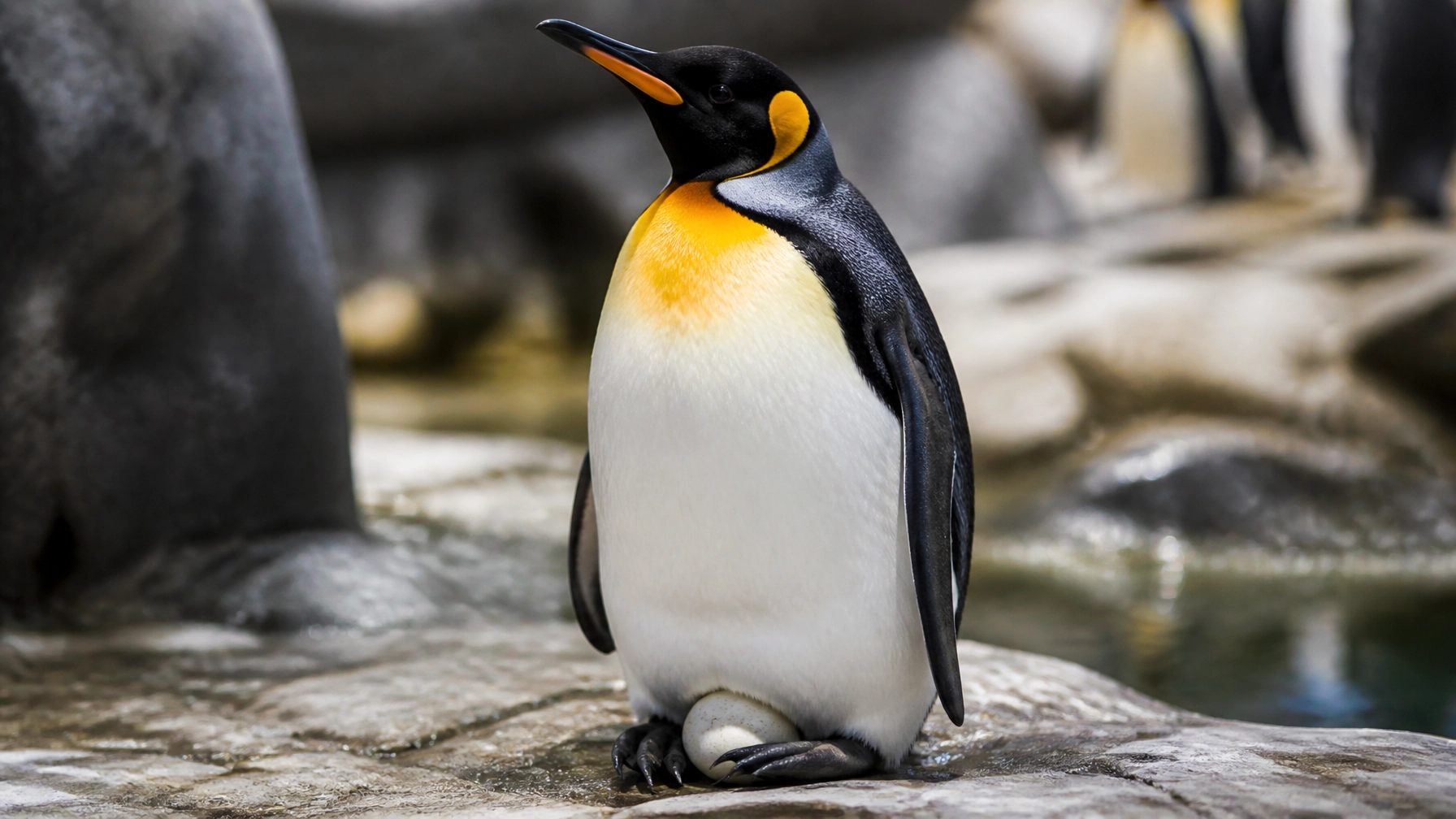
The keepers at Birdland Park and Gardens in Bourton-on-the-Water have welcomed a remarkable arrival this week, marking a significant milestone for the Gloucestershire wildlife destination. For the first time in six years, a rare King Penguin egg has been laid, sparking a wave of cautious optimism and excitement throughout the park. The event is being hailed as a major achievement, as King Penguins are notoriously difficult to breed in captive environments, requiring specific conditions and a level of stability that can take years to establish.
The egg, which weighs approximately 289 grams, was discovered during a routine check of the colony. While the park is home to a variety of penguin species, including the more common Humboldt penguins, the King Penguin remains the star attraction due to its size, striking orange markings, and the sheer complexity of its breeding cycle. This latest development represents the culmination of years of dedicated care by the husbandry team, who have worked tirelessly to ensure the colony remains healthy and stress-free.
A Milestone for Gloucestershire Wildlife
The arrival of a King Penguin egg is not merely a local curiosity; it is a testament to the high standards of animal welfare maintained at the park. King Penguins are the second-largest species of penguin in the world, and their breeding habits are unique and fascinating. Unlike many other birds, they do not build nests. Instead, they carry their single egg on top of their feet, tucked under a loose fold of skin known as a brood patch. This provides the necessary warmth and protection from the elements, a biological feat that requires incredible balance and patience from the parent.
The difficulty of achieving a successful egg-laying in captivity cannot be overstated. These birds are highly sensitive to their environment, requiring precise temperatures, light cycles, and social dynamics. For a bird to feel secure enough to produce an egg, every factor must be perfectly aligned. The fact that six years have passed since the last successful egg at Birdland highlights just how rare and precious this moment is. During this hiatus, the keepers have been refining the habitat, ensuring the water quality is optimal and that the diet of the colony is rich in the necessary nutrients to support reproductive health.
The presence of this egg is also a significant boost for the park’s wider mission of education and conservation. By showcasing the beauty and complexity of these birds, the park helps to foster a deeper understanding of the challenges facing wildlife in the sub-Antarctic regions where King Penguins naturally reside. While the wild population is currently considered of 'least concern' by conservationists, they remain vulnerable to the effects of climate change, particularly as shifting ocean temperatures impact the availability of their primary food sources, such as lanternfish and squid.
Frank the Father and the Incubation Process
At the heart of this success story is Frank, an experienced male penguin who has long been a fixture of the Birdland colony. Frank has earned a reputation among the staff as one of the most reliable and attentive fathers in the group. His experience is vital in the days and weeks ahead, as the responsibility for incubating the egg is often shared or led by the male in many penguin species. In this case, Frank's steady presence and prior history of successful chick-rearing provide the keepers with a sense of confidence that the egg is in the best possible hands: or rather, on the best possible feet.
The mother, a younger female named French, is also playing a crucial role. For a younger bird, laying an egg for the first time is a demanding physical process, and the keepers have been monitoring her health closely. The social structure of the colony is complex, and the arrival of an egg can sometimes cause a stir among the other birds. However, the team reports that the colony has remained relatively calm, allowing the expectant parents to focus on their vital task.
The incubation period for a King Penguin egg is approximately 53 to 55 days. During this time, the parent must remain incredibly still, moving only with great care to avoid dislodging the egg. The "egg-on-feet" method is a precarious one; even a small stumble or a moment of inattention could result in the egg rolling onto the cold ground, where it would quickly lose the heat necessary for the embryo to survive. The keepers observe from a distance, using CCTV and discreet physical checks to ensure that the egg remains properly positioned. They are also looking for signs of "pipping," the moment when the chick begins to break through the shell from the inside, which usually occurs toward the end of the two-month wait.
Cautious Optimism for the Breeding Programme
While the laying of the egg is a cause for celebration, the team at Birdland is maintaining a level of professional caution. In the world of wildlife breeding, an egg does not always guarantee a healthy chick. There are many hurdles to overcome, from the fertility of the egg to the successful hatching and the critical first few days of a chick's life. The keepers are well aware that much can still go wrong, but the initial signs are very positive. The egg appears to be well-formed and is being dutifully attended by Frank and French.
The technical expertise required to manage a King Penguin colony is immense. The staff must balance the need for intervention with the necessity of allowing the birds to follow their natural instincts. In some cases, if a parent appears to be struggling, keepers might temporarily move the egg to an incubator, but the preference is always for the birds to rear their own young. This ensures the chick learns the social cues and behaviours necessary to integrate into the colony.
If all goes well, the hatching of this chick will be a major event for the UK’s zoological community. It would mark the first successful King Penguin birth at the park in over half a decade, reinforcing Birdland's status as a leader in the care of these majestic birds. For the visitors who flock to the park each year, the sight of a fluffy King Penguin chick would be an unforgettable experience, providing a rare glimpse into the life cycle of a species that is usually found in the remote, icy reaches of the Southern Ocean.
For now, the atmosphere at the park is one of quiet anticipation. The keepers continue their daily rounds, the visitors admire the penguins from across the water, and Frank stands firm, his precious cargo safely tucked away. It is a slow, methodical process that mirrors the pace of life in the wild, a reminder that some of nature's most beautiful moments cannot be rushed. The next two months will be a period of intense focus for the Birdland team as they wait to see if their six-year wait will finally end with the arrival of a new member of the colony. Regardless of the outcome, the laying of the egg is a victory in itself, a sign that the birds are thriving and that the future of the King Penguin colony in Gloucestershire remains bright.