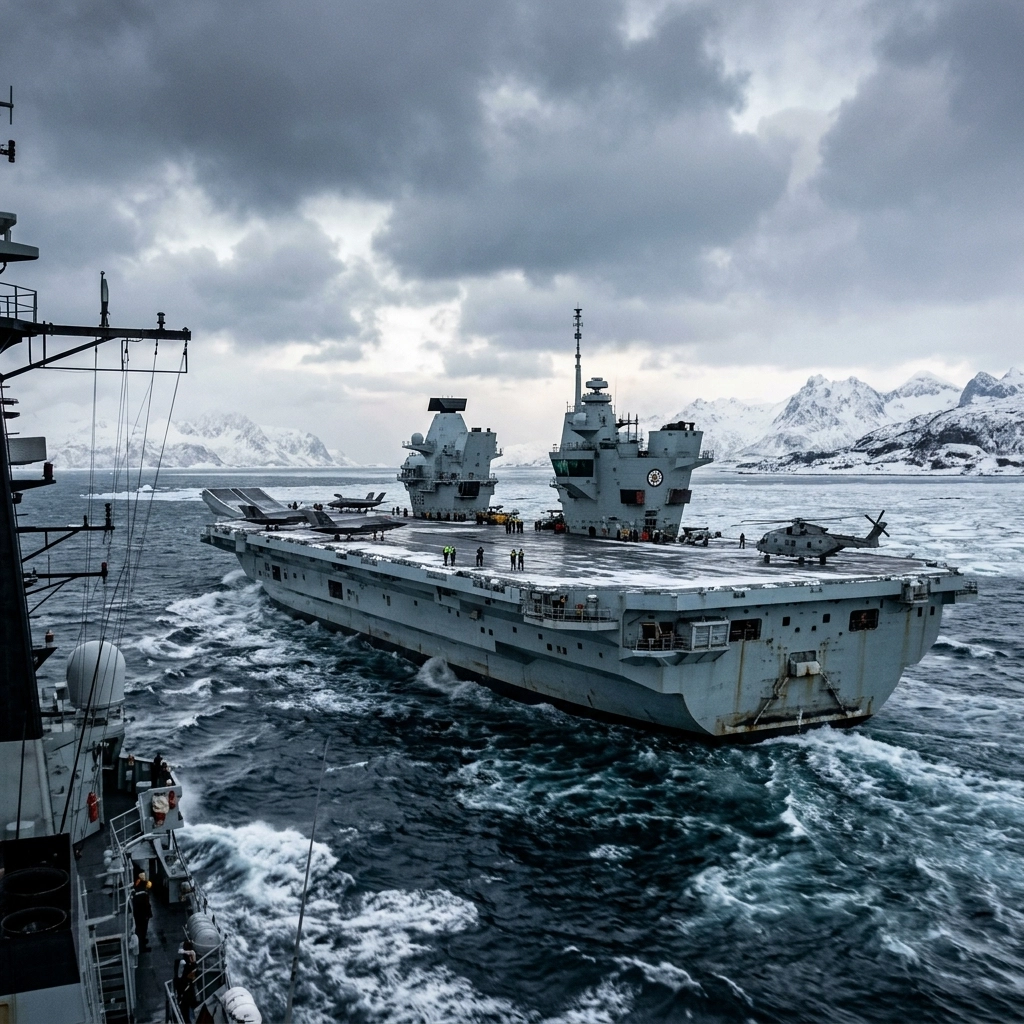
The grey, churning waters of the North Atlantic have a way of making even the most formidable machines look small. But as the 65,000-tonne hull of HMS Prince of Wales cuts through the swell this April morning, it is clear that this is no ordinary transit. This is a statement of intent. For those of us following the movement of the UK’s most expensive military assets, the deployment of the £3 billion carrier to the High North isn’t just about maritime training; it’s about a fundamental shift in how the West guards its northern flank.
As we sit in April 2026, the geopolitical temperature is arguably colder than the sub-zero air currently whipping across the carrier’s flight deck. Operation Firecrest, the official designation for this mission, has moved from the planning rooms of Whitehall to the front lines of the Arctic Circle. It is a mission that bridges the gap between conventional naval exercises and the very real necessity of protecting the invisible infrastructure that keeps the United Kingdom running. While much of the world’s attention remains fixed on land-based conflicts, the "untold stories" of the deep sea are where the next great shift in global security is happening.
The HMS Prince of Wales is not alone. She leads a formidable task force, a floating city of steel and cutting-edge technology, supported by Type 45 destroyers and a silent, lethal presence beneath the waves in the form of an Astute-class nuclear-powered attack submarine. The mission is part of the broader "Arctic Century" initiative, a NATO-led coordination effort designed to ensure that the High North remains a region of stability rather than a playground for expansionist naval powers. For NowPWR, providing independent news uk, the focus is on what this means for the average citizen: energy security, digital connectivity, and the maintenance of peace in our own backyard.
The Geopolitical Chessboard of the High North
The Arctic was once considered a "zone of peace," a frozen wilderness where the harsh environment dictated a level of cooperation between nations. That era has ended. As the ice retreats, new shipping lanes are opening, and the competition for vast mineral resources is heating up. More importantly for the UK, the waters between Greenland, Iceland, and the United Kingdom: the famous GIUK gap: have become a motorway for Russian naval activity.
Russian submarines, increasingly sophisticated and silent, have been observed with high frequency near the vital undersea cables that carry 95% of the world’s internet traffic and billions in daily financial transactions. If these cables were to be tampered with, the result wouldn’t just be a slow internet connection; it would be a total economic blackout. HMS Prince of Wales is serving as a massive, floating deterrent to this exact scenario. By maintaining a constant, visible presence, the UK is signaling that its "Sea Shield" is active and that any attempt to interfere with these critical lifelines will be met with overwhelming force.
This isn’t just British bravado. The deployment is a response to a documented increase in Russian northern fleet exercises. The Kremlin has never been shy about its desire to dominate the Arctic, treating the Northern Sea Route as its private territory. By leading a NATO task force into these waters, the UK is asserting the principle of freedom of navigation. The presence of F-35B Lightning II jets on the carrier’s deck provides a protective umbrella that extends for hundreds of miles, ensuring that the Royal Navy can dominate both the surface and the air in an environment where land-based support is thousands of miles away.
Operation Firecrest: More Than Just a Training Drill
Operating a carrier strike group in the Arctic is a logistical nightmare that would break most navies. The salt spray freezes instantly on the flight deck, creating a surface as slick as a skating rink. Every piece of equipment, from the delicate sensors on the F-35Bs to the heavy-duty winches on the support ships, must be "winterised." The crew of HMS Prince of Wales has been training for months to handle these conditions, where the wind chill can drop to minus 40 degrees Celsius.
Operation Firecrest is the ultimate test of this preparation. It’s one thing to run drills in the English Channel; it’s quite another to coordinate a multi-national fleet in the middle of an Arctic storm. The mission involves the Royal Navy taking command of Joint Force Command (JFC) Norfolk, which is responsible for the Atlantic’s security. This is a significant moment for the UK’s post-Brexit military standing. It proves that despite the domestic debates about defence spending, the Royal Navy remains one of the few maritime forces capable of projecting power into the world’s most hostile environments.
The "Sea Shield" mission also focuses heavily on anti-submarine warfare. The Type 45 destroyer, HMS Dragon, is part of the escort, providing a sophisticated air defence bubble, while specialized frigates hunt for the "acoustic signatures" of Russian vessels. In the casual but high-stakes world of modern naval warfare, it’s a game of cat and mouse played out in total silence. The goal of Operation Firecrest is to prove that the UK can not only detect these threats but can also neutralise them before they ever reach the sensitive infrastructure closer to our shores. It is a bold, proactive stance that shifts the UK’s defence posture from reactive to preventative.
The Nordic Shield and the Future of NATO
One of the most critical aspects of this deployment is the integration with our Norwegian allies. Norway is the "eyes and ears" of NATO in the Arctic, and their response to HMS Prince of Wales’ arrival has been one of total cooperation. The Norwegian military is currently conducting its own massive exercises, which mesh perfectly with Operation Firecrest. This unified front is essential for the security of the High North.
The Norwegian coastline is dotted with high-tech listening posts and radar stations that feed data directly to the carrier strike group. In return, the HMS Prince of Wales provides the heavy-hitting firepower that the smaller Nordic navies lack. It’s a symbiotic relationship that has been strengthened by Norway’s recent investments in P-8 Poseidon maritime patrol aircraft, which work alongside the carrier to monitor the vast reaches of the North Sea. This partnership is the backbone of the "Arctic Century" initiative, ensuring that no single nation can be bullied by its larger neighbours.
Looking forward, the deployment of HMS Prince of Wales signifies a permanent shift in British strategic thinking. The Arctic is no longer an optional area of interest; it is a primary theatre of operation. As climate change continues to alter the physical geography of the north, the geopolitical geography is following suit. The presence of the carrier ensures that the UK has a seat at the table when the future of the Arctic is discussed. It isn’t just about hardware and guns; it’s about diplomacy backed by the credible threat of force. The "untold stories" of this mission are the quiet conversations between commanders in Oslo, London, and Washington, all agreeing that the North must remain free and secure.
The deployment of HMS Prince of Wales into the Arctic Circle marks a significant milestone in the UK’s maritime strategy. By leading Operation Firecrest, the Royal Navy is demonstrating its ability to operate in the most challenging environments on Earth while simultaneously deterring threats to national infrastructure. The collaboration with Norwegian forces and the broader NATO alliance ensures that the "Sea Shield" remains robust. As the carrier continues its mission through the icy waters of the North Atlantic, it serves as a powerful reminder of the UK’s role as a leading global maritime power, dedicated to the protection of its interests and the stability of the international order.